Western Australia's population growth remains subdued, with the state recording a 0.8 per cent increase for the 12 months to December, according to the latest data from the Australian Bureau of Statistics.
Western Australians still have higher median incomes than those in other states despite recent softening, according to data released today, with Ashburton and Peppermint Grove the nation's top local government areas by the measure.
The latest data from the Australian Bureau of Statistics shows Perth's house prices are down on the last quarter, while the ANZ is forecasting further house price falls for the state in the next two years.
Western Australia's unemployment rate fell slightly in May to 6.4 per cent despite the local economy losing nearly 2,000 jobs, according to the latest data from the Australian Bureau of Statistics.
Western Australia has recorded its first year-on-year economic growth in more than four years, while the national economy expanded 1 per cent in the March quarter, official figures show.
Despite adding 8,300 jobs in April, Western Australia has retained the highest unemployment rate in the country, according to latest data from the Australian Bureau of Statistics.
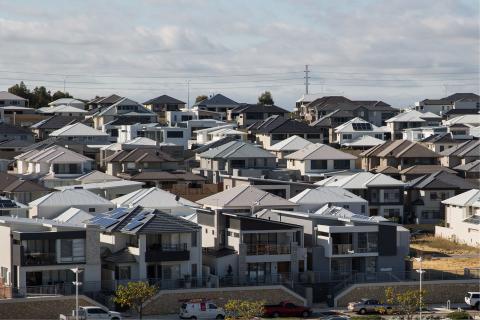
The bulk of Western Australia's population growth is occurring in Perth's outer suburbs, despite long-running efforts to encourage residential development in established inner suburbs, new data out today shows.
Western Australia's unemployment rate has hit its highest level in more than 16 years, despite the state's economy adding jobs in March, according to the latest data from the Australian Bureau of Statistics.
Western Australian unemployment was up 0.2 per cent in February to be 6 per cent in seasonally adjusted terms, according to the Australian Bureau of Statistics, while Australia-wide employment grew by a record amount.
Western Australia has continued its trend of marginal population growth, with the state registering growth of 0.9 per cent for the 12 months to September, as interstate migration remains in negative territory.
Western Australia's unemployment rate has steadied at 5.7 per cent in January, seasonally adjusted, despite a slight dip in the number of people employed.
Australia's inflation rate has risen slightly in the December quarter, lifting the annual headline rate closer to the central bank's target range of between 2 per cent and 3 per cent.
Building approvals in Western Australia have dropped to the lowest levels in 16 years, according to the latest figures from the Australian Bureau of Statistics, while a new housing affordability survey has labelled the Perth housing market ‘severely unaffordable'.
Western Australia's unemployment rate has fallen by a surprising 0.9 per cent in the month of December, while job numbers were up for a record-equalling 15th consecutive month nationwide, with economists giving positive assessments of the labour market.
The education, arts, accommodation and agriculture sectors were the state's biggest job creators in the five years to November 2017, according to data recently released by the Australian Bureau of Statistics.
Western Australian merchandise exports were up 22 per cent in the year to November compared with the previous corresponding period, despite the month being slightly softer, according to the Australian Bureau of Statistics.
Western Australia's unemployment rate rose to 6.6 per cent in November despite 8,500 jobs being created, while the national unemployment rate has remained unchanged even though the economy added far more jobs than expected in November.
Western Australia's adverse population trends have continued in the 12 months to June, with overall growth of just 0.8 per cent while less people are coming from interstate and overseas.
SPECIAL REPORT: Data from the annual BNiQ Search Engine biggest employers list suggests an economic recovery is under way as mining and civil contractors boost their workforce numbers.
The Australian economy expanded at a slower-than-expected rate in the three months to September, however WA's domestic economy appears to be on the mend, growing 0.9 per cent for the quarter.
Australia's inflation rate lifted at a lower-than-expected rate in the September quarter, after a collapse in fruit and vegetable prices offset an upward surge in electricity costs.
Western Australia's unemployment rate fell 0.2 percentage points last month, putting it among the top performing states for annual employment growth, according to new data.
Western Australia's exports are continuing to grow, with $122.5 billion shipped overseas in the past 12 months, up 22 per cent from the same period to August 2016, but retail sales data shows that it is too early to call a recovery.
Unemployment in Western Australia is at its lowest level in more than two years, with Treasurer Ben Wyatt saying it was pleasing to see the rise in employment driven by full-time work.
Western Australia recorded its lowest level of wages growth in the year to June since at least 1999, at 1.4 per cent, according to data from the Australian Bureau of Statistics.
Australia's inflation rate has cooled in the June quarter, dragging the annual headline rate below the central bank's target in the 2 to 3 per cent range.
There are signs of recovery in the local economy, with employment and sales activity numbers showing improved performance in June and a major report predicting further recovery next year.
Western Australia's population grew by just 0.7 per cent for the 12 months to December, after only 400 people migrated from overseas, while nearly 11,000 moved interstate.
More than 13,000 Western Australians found jobs in April in seasonally adjusted terms, according to the latest data from the Australian Bureau of Statistics, as unemployment in the state dropped 0.6 percentage points to 5.9 per cent.
Belgium and Luxembourg have been among the biggest contributors to growing overseas investment in Australia, as the level of foreign-owned assets in Australia doubled in the past 10 years to hit nearly $3.2 trillion at the end of calendar 2016.
Retail spending has slowed for a second consecutive month, official figures have shown, as consumers tighten their purse strings amid low wages growth.
Merchandise exports from Western Australia were up 35.4 per cent in March compared with that same month in 2016, as a clear trend emerges of improving trade figures for the state.
Rising fuel and home prices have helped lift headline inflation into the Reserve Bank of Australia's target band for the first time in more than two years.
Western Australian merchandise exports were up 36 per cent in February compared to the same month in 2016, according to the latest data from the Australian Bureau of Statistics, while the national trade surplus reached the second highest level on record.