Tattarang is one of the largest, most diverse and arguably least understood private companies in Australia.
Its wholly owned operations include Australia’s largest wind farm developer and Western Australia’s biggest cattle processor.
It is a major property developer, has extensive mining interests and owns iconic clothing brands RM Williams and Akubra.
For good measure, its portfolio includes the Western Force rugby team and hospitality venues such as Cape Lodge.
Most critically, it continues to be the largest shareholder in iron ore miner Fortescue, which has made the Forrests two of Australia’s wealthiest individuals.
They have spent billions of dollars buying and building the Tattarang businesses, which collectively employ nearly 5,000 people.
Chief executive John Hartman, who also leads the Forrests’ philanthropic arm, Minderoo Foundation, says the group is not slowing down.
“We are investing and growing every year,” he said.
“We have invested more in the past two years than ever before in the history of Tattarang.”
Mr Hartman says Tattarang has evolved in a way that is very different from the typical family office, which tends to focus on passive investments.
“Tattarang is not a conglomerate, it’s not a private equity group,” he said.
“It’s a family-owned investment group with diversified operating businesses and that is quite unique.”
The group has experienced enormous growth in recent years.
Its biggest move was the $4.2 billion purchase of east coast wind farm developer CWP Renewables, which is now part of its Squadron Energy business.
“That was a big shift for Tattarang from being a very West Australiancentric business,” Mr Hartman said.
The CWP deal has spurred a lot more investment in wind farms – Squadron’s latest annual report shows it spent $568 million on property, plant and equipment.
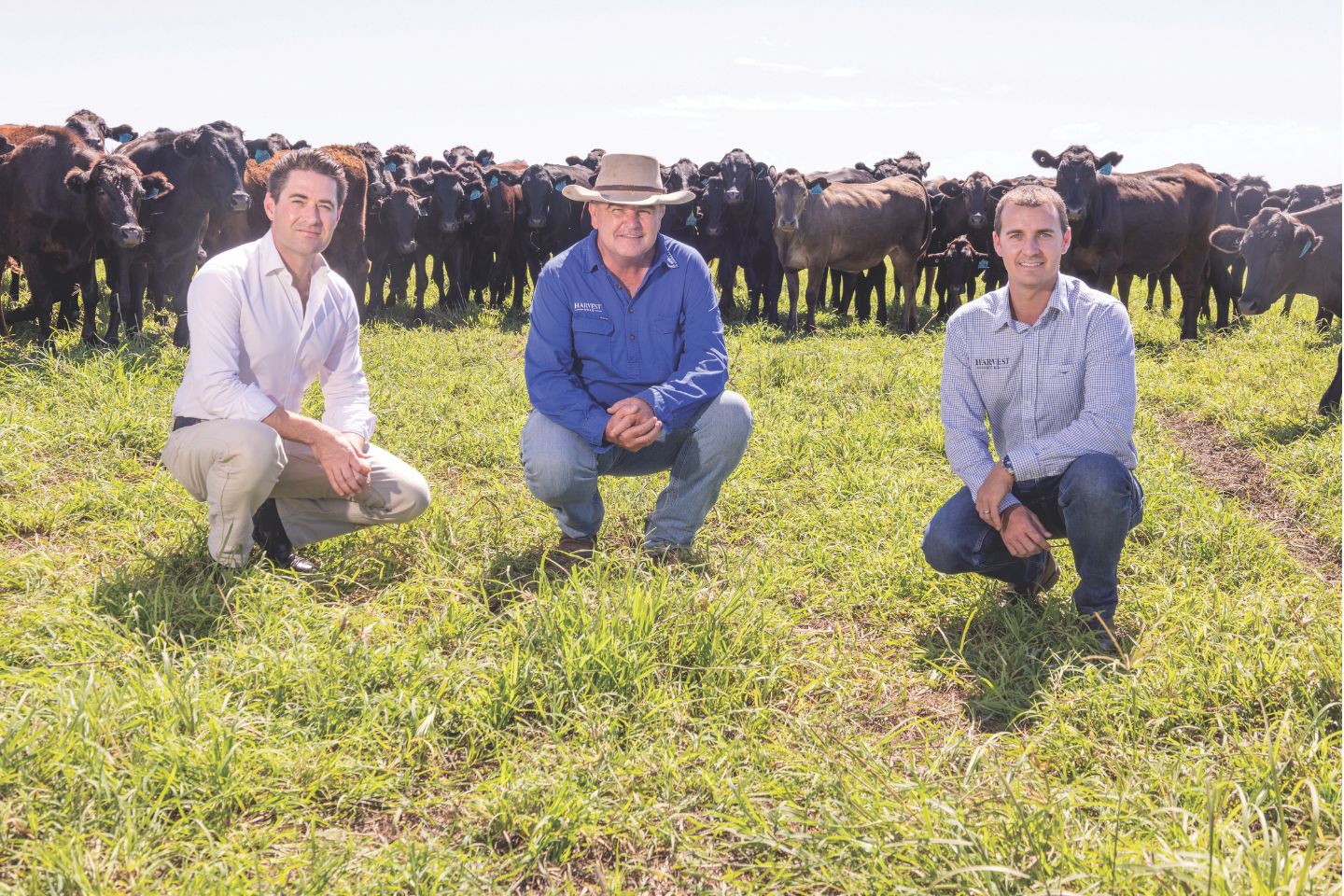
Tattarang has also been spending big in its agribusiness arm Harvest Road Group, including a $100 million investment in WA’s largest cattle feedlot near New Norcia.
At the same time, the group has had some large setbacks, notably an ill-timed $1 billion foray into nickel in Canada and Australia.
Its property arm Fiveight has also faced challenges, with some of its major developments such as Exmouth Lighthouse struggling to gain approvals and proceed to construction.
Mr Hartman said that was the nature of Tattarang’s business.
“The nature of having a diversified portfolio is there will always be some really positive things happening in some parts of the portfolio balanced by challenges in others,” he said.
“That is why any responsible investor should diversify well.”
He describes the diversity as “one of the fun parts of my job”.
“Every day there is something exciting happening and something challenging happening at the same time,” he said.
“It balances you out, never to get ahead of yourself.”
New insights
Mr Hartman has shared new data on Tattarang’s operations to highlight some of its notable successes.
Footwear and clothing company RM Williams, for instance, has achieved rapid growth since it was bought in 2020.
Annual sales have grown by 80 per cent since the purchase and totalled $273 million in FY24.
It has taken on 350 extra staff and employs more than 1,200 people in its manufacturing operations in South Australia and retail stores around the country.
Similarly, he said, the Akubra business was flying along after one year of ownership, with sales up 21 per cent.
Like at RM Williams, the group has been investing in local manufacturing at Akubra’s workshop in Kempsey.
These investments fit with Tattarang’s philosophy of ‘capital for good’. “What we do isn’t just about returns,” Mr Hartman said. “It’s about getting the right balance.
“We want returns, but we want to do great things for society as well, whether that is the energy transition or trying to have industry-leading animal welfare standards.”
Mr Hartman expects this approach to pay off.
“There is now a lot of evidence which shows that ultimately over the very long-term, that If you invest in businesses that are doing the right thing, they end up being betterreturning investments.”
Along the way, he said Tattarang had made some very profitable exits.
“People ask me all the time: does Tattarang ever sell things?”
The short answer is yes.
It sold a stake in ASX company Ridley Corporation for $46 million, reaping a $30 million profit.
It also sold out of Huon Aquaculture, for proceeds of $29 million and a $9 million profit.
Another success was its investment in the Roe Highway Logistics Park, developed by Hesperia.
Charter Hall bought out early investors in the project, led by Tattarang’s property arm, Fiveight, in a deal worth about $300 million.
The group is sitting on big paper profits from some of its other equity investments, such as its 19 per cent stake in shipbuilding company Austal, but Mr Hartman emphasised he was not chasing short-term trading profits.
“Ultimately, we are not traders in shares, we are investors in businesses for the long-term,” he said.
“But when we think value has been realised [we will sell].”
Another success he points to is the One Circular Quay development in Sydney, where property arm Fiveight has partnered with Lendlease to develop a high-rise complex that will include Australia’s first Waldorf Astoria hotel and a premium shopping strip.
“We have invested half a billion dollars in building One Circular Quay,” he said.
“I think we did a great deal, picked it up at a great price, and to see the growth in demand for high-quality hotels in Sydney and the demand from institutional investors for hotels.
“It’s been one of the best-performing parts of the property sector.
“For every challenging project, it’s been good to see things like Roe Highway or One Circular Quay.”
Portfolio managers
As Tattarang has expanded, it has become more structured in its approach.
It has built a substantial investment team to support Mr Hartman, who describes his core role as follows: “To recommend to Andrew and Nicola the investments we make and to make portfolio-level capital allocation decisions.”
The group has both investment managers and a portfolio operations team that partners with the management of the portfolio companies, to pursue business development opportunities and optimisation projects.
“We are very active shareholders and getting that setting right between what you do as an investment manager and what you do as management in a portfolio company, that is how we seek to maximise value for Tattarang,” Mr Hartman said.
Another change has been the addition of external directors to the boards at its subsidiary companies.
RM Williams, for instance, has recruited former Levi Strauss & Co president and chief executive John Anderson, former David Jones chief executive Ian Nairn and former Camilla boss Jane McNally.
Squadron Energy has recruited former regulator Audrey Zimmelman and former Macquarie banker Murray Coleman.
Harvest Road has signed up local agribusiness executive David Lock and former Coles general manager Allister Watson to its advisory board.
Mr Hartman said these non-executive directors added “institutional-grade thinking”. At a group level, by contract, the Tattarang board has been slimmed down.
Mr Hartman, who was one of just three directors on the Tattarang board, stepped down in September after four years in the role.
The Forrests, who announced their separation in 2023, are the only remaining directors.
Mr Hartman cautioned against reading much into his move. “We’re a family owned business and these things aren’t typical,” he said. “There has been no change in a practical sense for my job.
“It just made sense with me taking on the CEO role to have Andrew and Nicola as the directors.
“They are the two shareholders, and they are the directors.”
For the record, Mr Hartman continues as chairman or a director of Tattarang’s operating subsidiaries.
Energy focus
Of all the businesses in the group, Squadron Energy is by far the largest.
It has total assets of $6.6 billion, with 1 gigawatt of wind farms in operation and 900 megawatts under construction.
Its revenue more than doubled to $200 million last financial year as new wind farms came online.
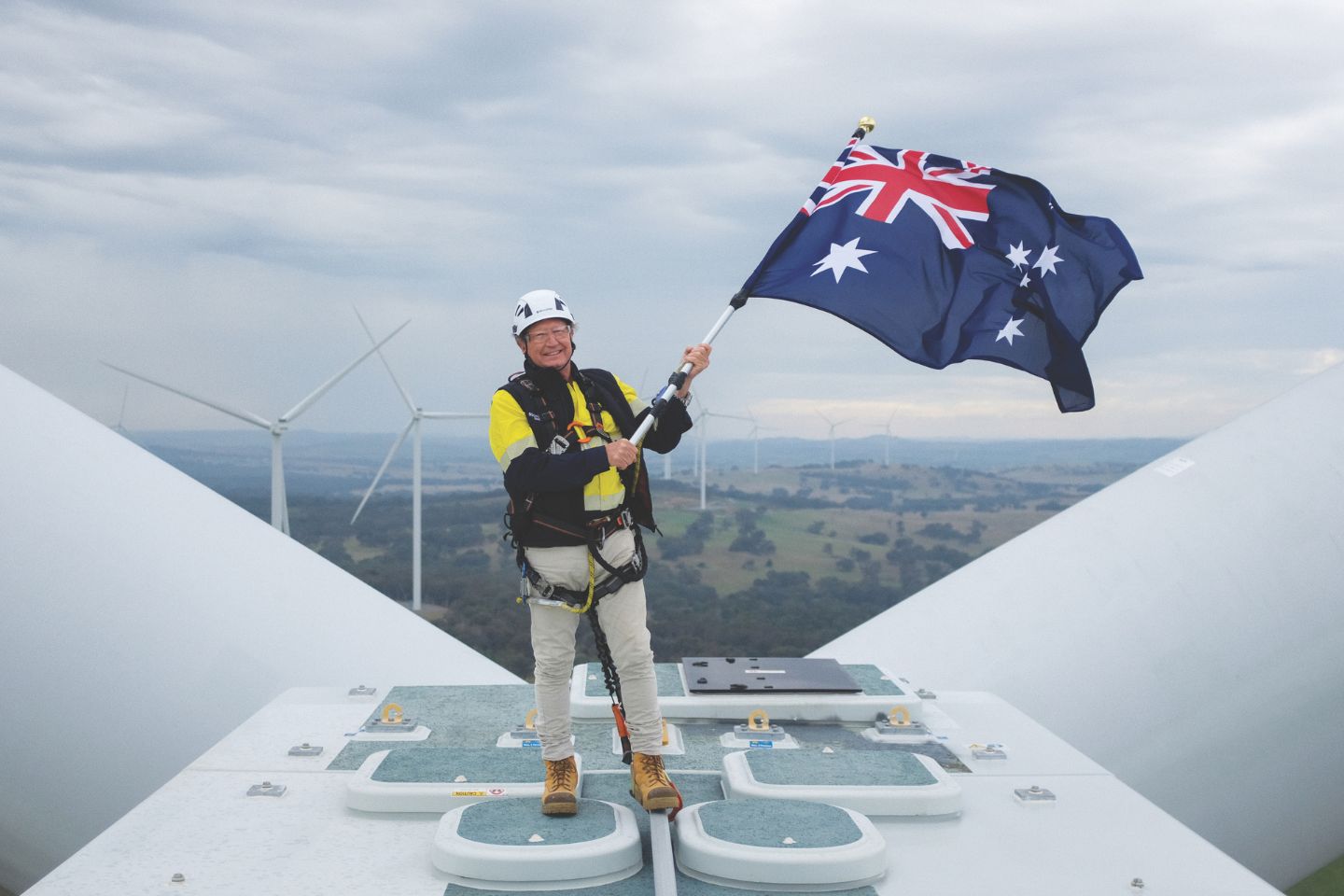
Andrew Forrest celebrating completion of the Bango wind farm in southern NSW last year. Photo: Supplied
Mr Hartman speaks with pride about the impact a private WA-owned company is having at a national level.
“Squadron Energy is absolutely key to Australia meeting its renewable energy targets,” he said.
“We have the largest operating portfolio of wind farms, the most megawatts under construction currently and the largest pipeline of future wind farm projects.
“We are looking at the next 10 to 20 years of how we build out that pipeline.”
Its projects are spread across Queensland, New South Wales, Victoria and the Australian Capital Territory but there are no plans to come west.
The group’s investments in renewables started well before the CWP purchase, in December 2022.
It already had a majority stake in wind farm developer Windlab, which continues as a separate business, and owned the Clark Creek wind farm – the largest wind farm in Australia under construction.
“We already had close to $2 billion invested in Squadron Energy before the investment in CWP,” Mr Hartman said.
At a time of growing community pushback against wind farms, he believes the advanced status of Squadron’s projects is a plus.
“If anything, I think it has increased the value of our projects,” he said.
“We have projects that are fully environmentally approved, [that] is getting harder and taking longer.”
He said Squadron endeavoured to have a positive impact at a local level.
“What we are very vocal about is the need for communities that host these projects to benefit as well,” he said.
“Squadron has tried to lead the way when it comes to community benefit.”
In Dubbo, for example, he lists the many things Squadron has supported, such as a wastewater treatment plant, free internet, a helicopter rescue service and co-investment opportunities.
“I think you would be surprised when you talk to the communities where we operate, the feedback we get is one of strong welcome,” he said.
“Especially for farmers that host the wind turbines, it’s the best crop they could hope for, it’s allowed them to stabilise their operations by having constant income.
“It can get beaten up in the media at times.”
Mining moves
While mining (of iron ore) underpins the Forrests’ fortune, their attempts to diversify into other minerals have not fared so well.
Tattarang subsidiary Wyloo Metals spent more than $1 billion buying WA nickel miner Mincor Resources and Canadian project developer Noront Resources.
Mincor’s operations were put on care and maintenance in May last year, around the same time most other Australian nickel miners did the same thing.
Mr Hartman admits Wyloo got its timing wrong but insists the long-term prospects are good.
“Our overall thesis of growing demand for nickel hasn’t changed,” he said.
In anticipation of better times, Wyloo is continuing to explore its tenements and has achieved some success.
Its exploration drilling and mineral resource re-estimation has enabled Wyloo to fully replace the resource that was mined between 2021, when the Kambalda mines reopened, and 2024 when they were shut down.
He believes the Canadian assets hold great promise.
“The Noront story is less fully appreciated; it’s not just a nickel mine, it’s a whole province with lots of different resources,” he said.
These include copper, chrome, platinum and palladium.
“We think it’s a world-class project we have there,” he said.
Wyloo has fared better with its investment in Greatland Gold, which has gained strong investor backing for its acquisition of the Telfer mine and the neighbouring Havieron gold project in the Pilbara.
Less promising is its $150 million loan to struggling project developer Hastings Technology Metals.
With accumulated interest, the loan is now worth $200 million but Hastings’ ability to repay is questionable.
Despite the setbacks, Wyloo still generated about $150 million in revenue last year, from its Kambalda operations and the sale of equity positions, most notably a $90 million stake in Canada’s Queens Road Capital.
Agribusiness
Tattarang’s largest business in WA is Harvest Road Group, which employs more than 1,300 people.
The agribusiness arm generated income of $420 million last financial year from a mix of export and local sales, with its Harvey Beef brand increasing its WA retail market share to 7.7 per cent.
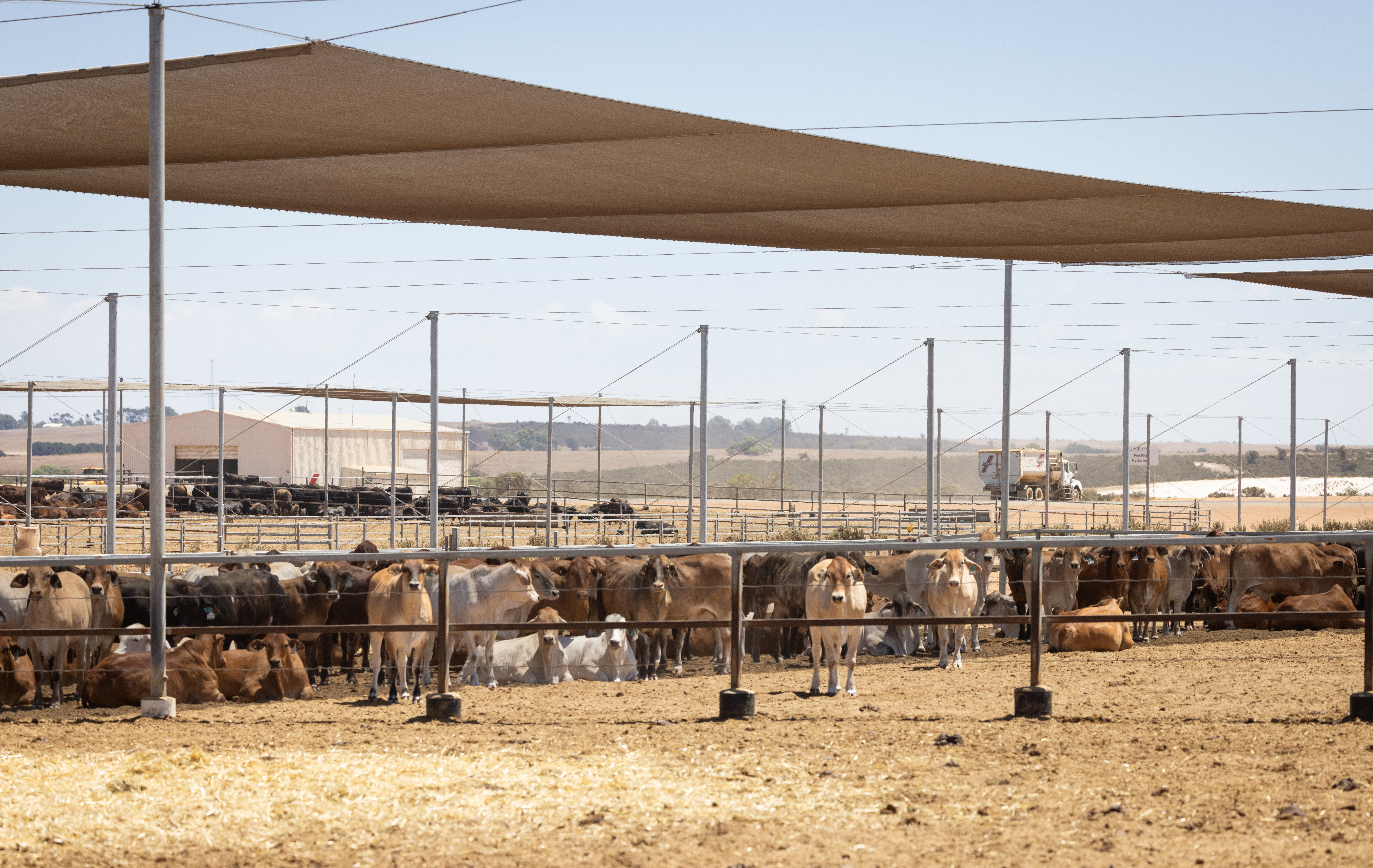
Koojan Downs has capcity for 20,000 head of cattle. Photo: Michael O'Brien.
Its operation spans 15 sites, from pastoral stations in the Kimberley and Pilbara to the state’s largest beef processing facility at Harvey.
In the middle, near New Norcia, the group has developed the state’s largest feedlot, which has up to 20,000 cattle at any point in time.
The feedlot is complemented by multiple nearby farming properties that Harvest Road has purchased, allowing cattle to graze on pasture.
This integrated operation enabled the group to increase the number of cattle processed by 47 per cent to 205,219 last year.
It’s not just cattle from the group’s pastoral stations that are ‘fattened up’ at the feedlot.
The group partners with 1,200 cattle producers across the state, buying livestock when other farms do not have enough feed.
The location of the feedlot was carefully chosen, with one key attribute being an underground aquifer that supports more intensive grazing.
The plentiful water supply enables Harvest Road to maintain lush grass on selected paddocks during summer.
The group is also cultivating perennials that will provide feed during summer when surrounding paddocks are barren.
There is one key metric that signals the success of Harvest Road – its farms and pastoral stations are estimated to be 40 per cent above their acquisition values.