Western Australia is entering another significant investment cycle, with billions of dollars flowing into defence, resources and infrastructure.
Major defence investment is set to reshape parts of Perth’s industrial economy, the resources sector continues to invest in exploration, new projects and expanded production, and infrastructure will be needed to support growth across the state.
Attracting capital is only part of the equation. How effectively WA converts that investment into sustained economic growth will depend on the infrastructure, planning and policy environment that sits around it.
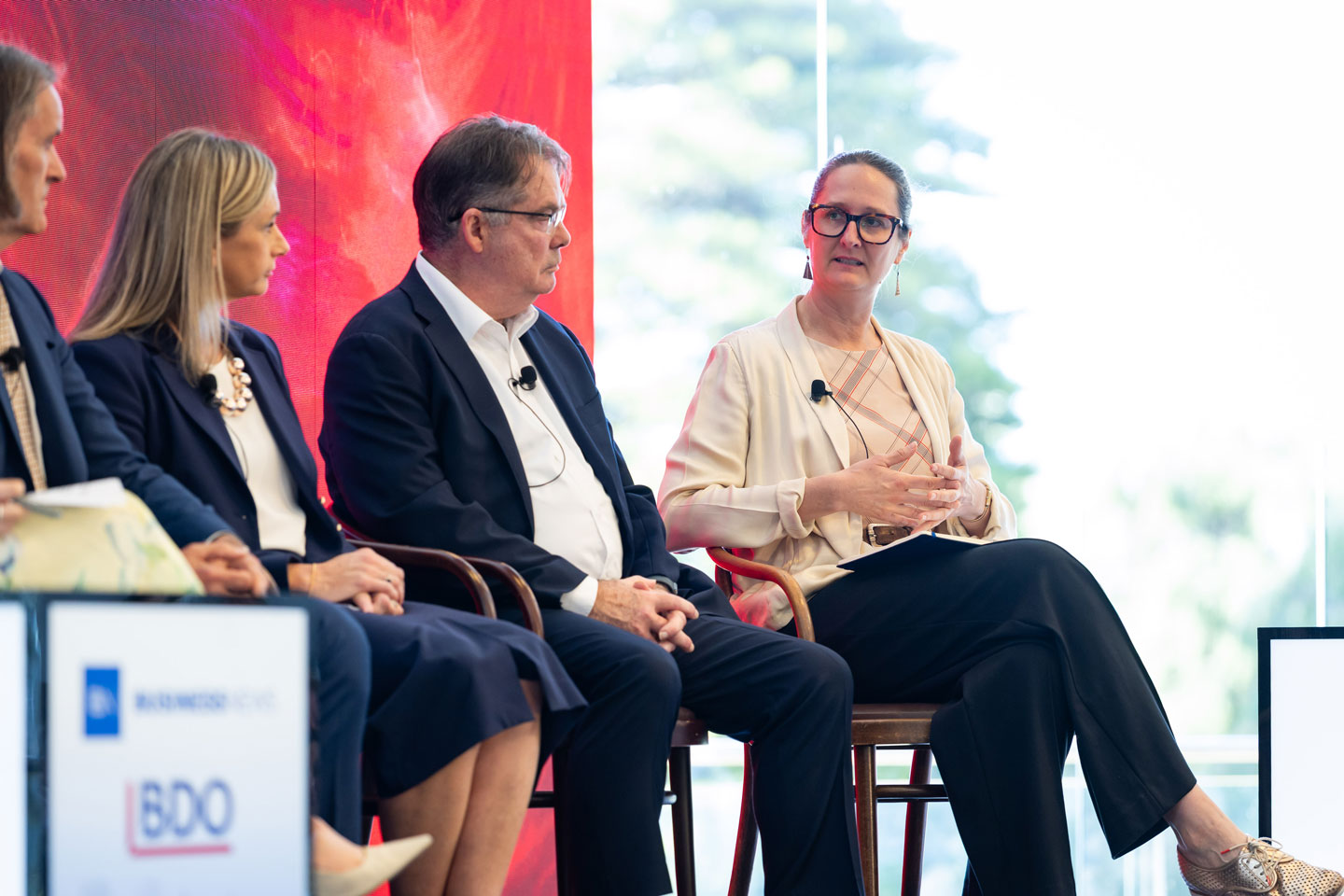
That challenge was at the centre of discussion at BDO Outlook 2026 – Future Fit, presented in collaboration with Business News.
Australian Submarine Agency WA State Manager Dr Kate O’Shaughnessy pointed to AUKUS as an example of the scale of investment – and economic change – coming to the state.
AUKUS is often described as the biggest industrial endeavour Australia has undertaken, with $8 billion of infrastructure investment earmarked for HMAS Stirling and $12 billion for Henderson.
Dr O’Shaughnessy said the investment at HMAS Stirling would enable nuclear-powered submarines to rotate through the naval base, while Henderson would support shipbuilding and nuclear-powered submarine sustainment in the longer term.
Those commitments represent only part of the broader investment. “$12 billion is just the start,” she said. “The overall project and investment in AUKUS is $300 billion plus.
“At its heart, this is also an endeavour that will transform our industrial base.”
More than 100 Australian companies were already progressing through their qualifications to enter AUKUS, US and UK defence industry supply chains, she said.
“If I was in any kind of business actually and thinking about where do I want to position myself, I would be thinking about the southern suburbs of Perth,” Dr O’Shaughnessy said.
The concentration of investment around Henderson and the Western Trade Coast also highlights the importance of the infrastructure and planning required to support major projects.
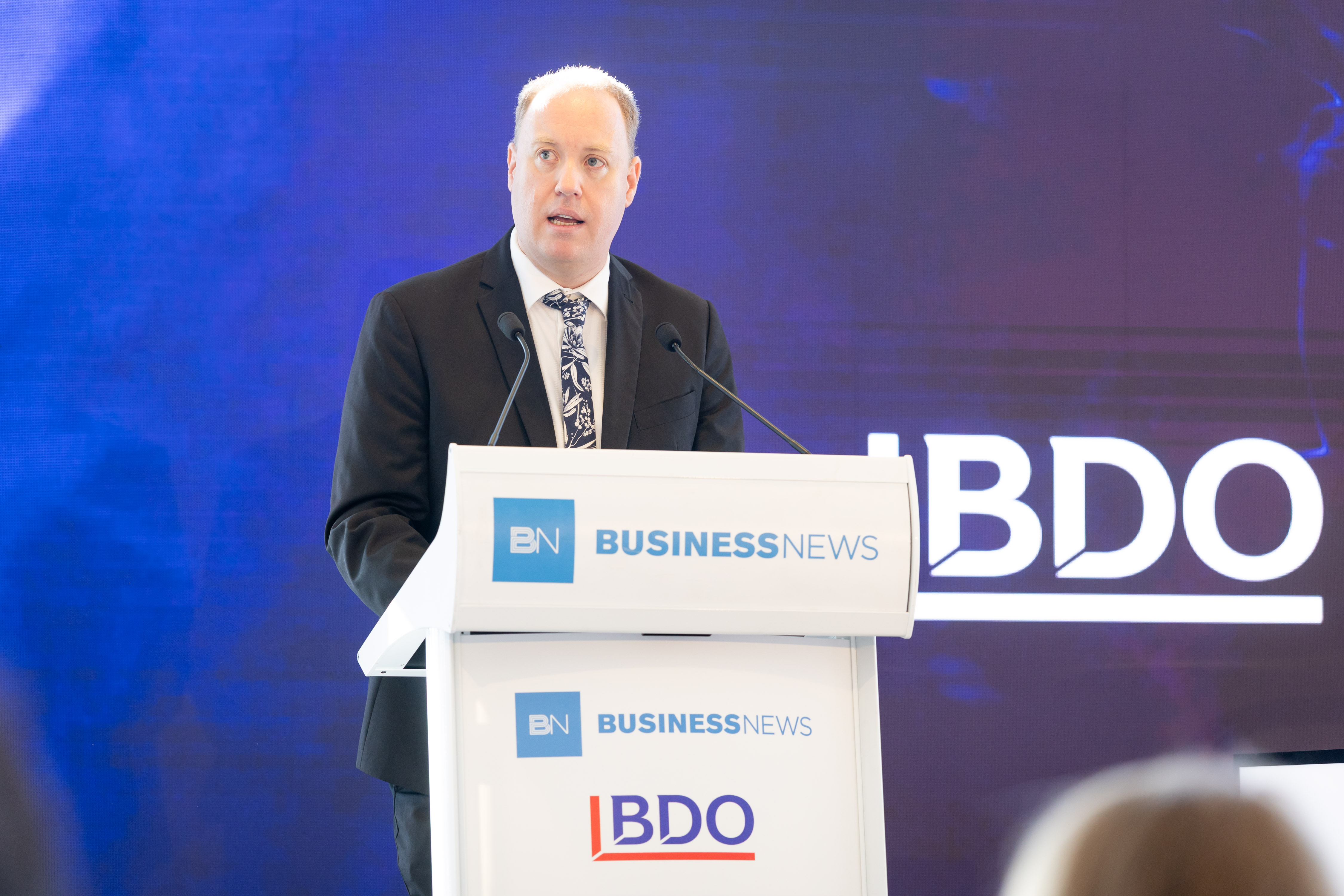
State Development and Economic Diversification Minister David Michael
In his keynote address, State Development and Economic Diversification Minister David Michael said the Henderson Defence Precinct represented an economic development opportunity extending beyond defence.
“Importantly, the Henderson Defence Precinct is not simply a defence investment,” Mr Michael said. “It is an economic development opportunity that will help diversify Western Australia’s industrial base, strengthen sovereign capability and reinforce the Western Trade Coast position as one of Australia’s most important industrial regions.”
The initial $12 billion Commonwealth commitment to Henderson will support shipbuilding and sustainment, including future general purpose frigates, Army landing craft and Australia’s conventionally armed, nuclear-powered submarines.
Together with investment at HMAS Stirling, the developments are expected to support about 10,000 direct jobs over the next two decades.
However, the Western Trade Coast is also accommodating growth across manufacturing, processing, energy, logistics and other industries, increasing the need to coordinate land, infrastructure and competing development requirements.
The state government is preparing a Western Trade Coast Strategic Development Area plan to coordinate land use, infrastructure and long-term industrial development across the region.
Mr Michael said industry had consistently highlighted the need for greater planning certainty and coordination of common-use infrastructure.
“Businesses consistently tell us that certainty matters,” he said.
“Our focus is ensuring the right planning, infrastructure and coordination frameworks are in place to support investment decisions.”
How capital is allocated to enabling infrastructure is another part of the equation.
BDO Partner, Project and Infrastructure Advisory Jenelle Forrest said government investment could be considered through three broad lenses.
The first covered key national priorities, including defence and major projects such as Westport. The second was economic-enabling infrastructure, including transport, water and energy, while the third covered sector-specific infrastructure, including health, community, arts and sporting facilities.
Ms Forrest said investments could sit across more than one of those areas, but significant investment in enabling infrastructure would be required to deliver broader economic objectives.
The question of where capital is directed is also playing out in the resources sector.
Gold Industry Group chair Wayne Bramwell said the gold industry was simultaneously investing for growth and returning capital to shareholders.
Explorers were advancing targets, new mines were being developed, producers were drilling to extend mine lives and established operators were expanding processing plants.
He said that growth was aimed at achieving scale – as a means to reducing costs and maintaining competitiveness in an increasingly challenging environment.
“For this industry to be future fit, it needs to be able to do all of those things: invest in its growth and return capital to its shareholders,” Mr Bramwell said. “That’s the challenge.”
But Mr Bramwell warned the state could not assume its resources endowment would continue to attract investment. “I’m very nervous about Western Australia’s attractiveness for investment and our competitiveness,” he said.
He pointed to the Fraser Institute’s mining investment benchmark, noting WA had moved from first in 2021 to sixth in 2025.
For Mr Bramwell, maintaining investment required policy settings that encouraged capital and recognised the risk inherent in exploration and mine development.
“No mineral exploration, no new discoveries, no new mines,” he said.
The warning goes to the broader challenge facing the state as major projects compete for global capital.
Investment decisions are influenced not only by the underlying opportunity, but by access to infrastructure, land and skilled workers, as well as planning and policy settings.
The opportunity now emerging across defence, resources and infrastructure is significant.
Major projects can generate activity well beyond the initial investment through construction, manufacturing, professional services, supply chains and surrounding industries.
AUKUS is already creating pathways for Australian companies into international defence supply chains, while continued resources investment is supporting exploration, mine development and expanded production.
But capturing the full economic benefit will depend on more than the amount of capital committed.
The longer-term test will be whether the state can provide the planning certainty, enabling infrastructure and competitive investment environment needed to turn that capital into sustained economic growth.



 15 Oct 2026
 18 Sep 2026
 15 Sep 2026
 09 Sep 2026