The turnaround time for ships using Fremantle harbour has more than doubled in recent years, adding to pressure for major infrastructure upgrades additional to the planned Westport project.
An Australian Competition and Consumer Commission report found the turnaround time for ships using Fremantle was longer than any other major port across the country.
Ships spent on average 60 hours at berth when they visited Fremantle during the year to June 2022, up from about 24 hours in 2016.
The ACCC found that ‘mean ship time at berth’ had increased at all major ports in recent years, but none by as much as Fremantle.
The best performer in 2022 was Adelaide with a mean of 32 hours.
A Fremantle Ports spokesperson attributed the poor outcome to four factors.
These included inadequate berth facilities in the outer harbour at Cockburn Sound, which accounts for two thirds of the shipping trade in and out of the port (by volume).
This includes exports of grain and alumina and imports of refined petroleum and cement clinker.
Other factors were industrial action, bad weather and a backlog of grain ship movements after last year’s big harvest.
“We need to improve the rate at which ships can get on at berth in the outer harbour,” the spokesperson said.
The port authority is pursuing multiple initiatives, including better scheduling and building more capacity, such as more tugs and pilot boats.
“We’re also in conversation with government about committing to new or modified assets at both Kwinana Bulk Jetty and Kwinana Bulk Terminal,” the spokesperson said.
“They would be major capital investments in the state’s bulk-handling capability.”
Fremantle Ports chief executive Michael Parker has already signalled his desire for more investment.
In September, he launched the port authority’s first major capital project in more than a decade: a $55 million import facility for clinker.
“Hopefully this is the first of many investments in the outer harbour,” Mr Parker said at the time.
Upgraded wharves would allow the port authority to update its ship unloaders and therefore improve turnaround times.
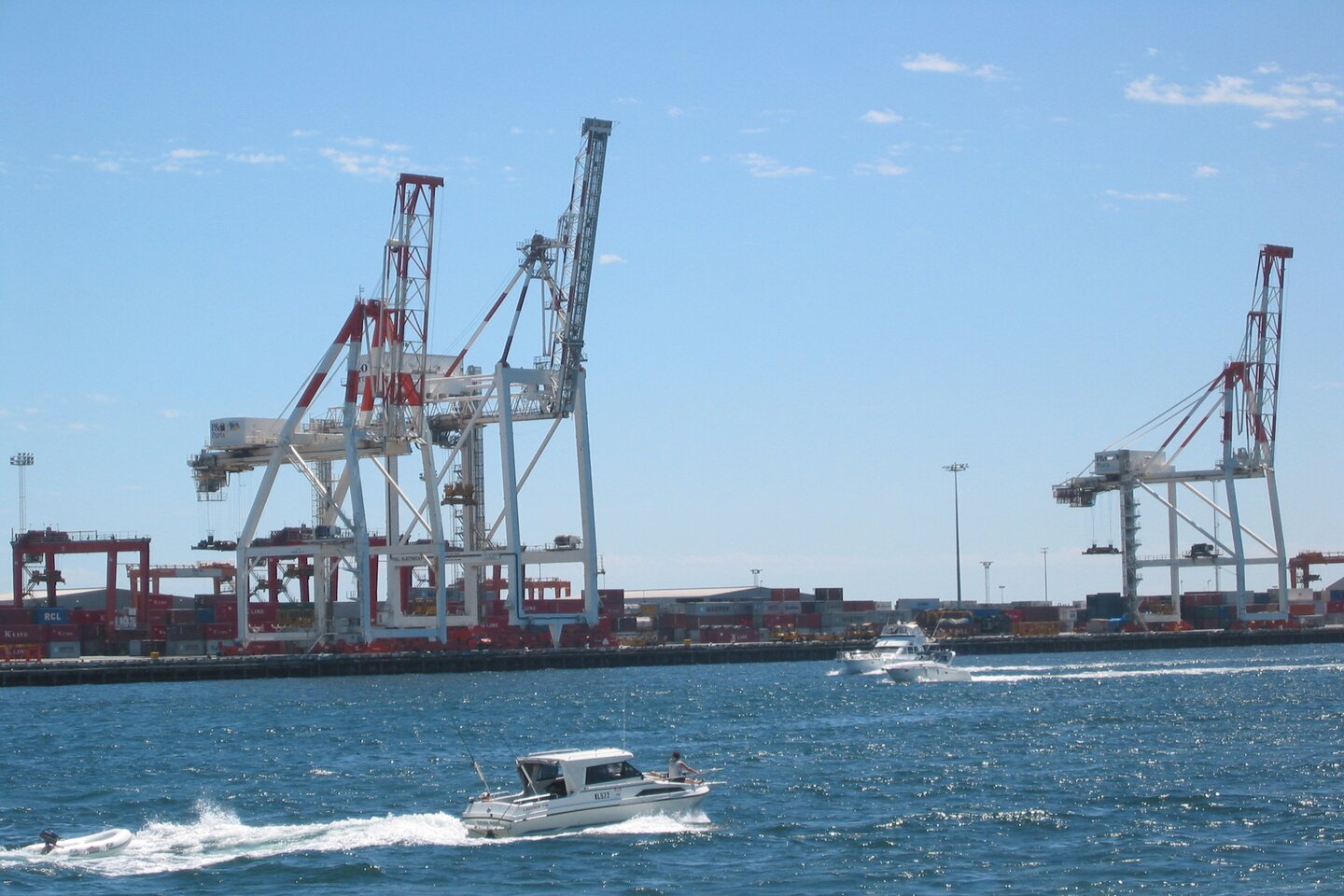
The proposed upgrades are separate from the state government’s proposed Westport development, which would shift the container trade from the inner harbour at Fremantle to a new facility in Cockburn Sound.
While Westport has dominated public debate, it will do nothing to help with the bulk trades that currently use the outer harbour.
Meanwhile, the ACCC report showed that the inner harbour is one of the most efficient in Australia on certain performance metrics.
Truck turnaround times at Fremantle averaged 25 minutes in 2022.
Most other ports were about 35 minutes with Brisbane the worst at 39 minutes.
The report also showed that Fremantle gets more containers onto rail than any other port.
It averaged 21 per cent last year, about double the national average.
This has been a major focus for the state government, with rail infrastructure upgrades and subsidies used to boost the percentage on rail and cut trucks on the roads.
The ACCC report also found the operating profit margin of Australia’s container stevedoring industry has increased by 14 percentage points since the start of the COVID-19 pandemic to the highest level in a decade.
The Container Stevedoring Monitoring Report shows that the industry operating profit margin of Australia’s five stevedores – including Patrick and DP World at Fremantle – was 24 per cent in 2022, after falling as low as 10 per cent in 2020.
The ACCC said it has not yet formed a conclusive view on the drivers behind the recent increases in stevedores’ operating profits.
However, it noted that severely constrained global shipping capacity throughout the pandemic made it harder for importers and exporters to change to a different shipping service, and by implication a different stevedore, which may have weakened price competition between stevedores.
“If stevedores’ higher profits are due to the recent shocks to the global container freight supply chain, we’d expect their profits to decline over time as shipping and terminal congestion eases,” ACCC commissioner Anna Brakey said.
In March last year, Fremantle Ports concluded negotiations with Patrick and DP World for new leases over the two existing container terminals in Fremantle.
The port authority said it became the first container port in Australia to negotiate a means of managing infrastructure charges under these leases, with Fremantle Ports agreeing to provide certainty of property costs across the 10-year lease period.
This was designed to provide improved commercial certainty for shippers and the container industry and help with price certainty for shippers.