WA has been among the most significant beneficiaries of what is being dubbed the “pandemic baby boom”, recording the second strongest population growth in the country.
Household spending helped to prop up economic growth in the early months of this year, although there was a marked slowdown compared with the strong finish of 2021.
Wet weather and difficulty accessing workers curbed exploration spending in Western Australia by 13 per cent in early 2022, albeit from record investment in prior quarters.
Consumer confidence has barely moved in response to the federal election result, which has seen Labor secure sufficient seats to run a majority government.
THE dust is just starting to settle on a federal election won by a Labor Party that stood on a platform of climate change, cost of living, gender equity, and building Australia's skills base.
Economists expect figures will show business investment picked up further in the March quarter, providing a boost to growth in the upcoming national accounts.
The unemployment rate among women in Western Australia is just 3 per cent, the lowest since 2008, with the state posting a sharp improvement in the jobless rate in March.
The Australian Bureau of Statistics has just released its latest survey on the household impacts of COVID-19 in February 2022, and the findings suggest that Australia's labour markets are still a long way from recovery.
The March ANZ job advertisement series is likely to point to a further decline in the jobless rate and quicker than being predicted by the RBA and Treasury.
WA appears set for a political makeover at the next federal election, with tax reform, integrity measures and action on climate change confronting whichever party forms government.
Prime Minister Scott Morrison won't freeze fuel excise, even as global oil prices near $US100 per barrel with Russia and Ukraine on the brink of all-out war.
Annual wages grew 2.3 per cent as of the December quarter, the highest since mid-2019, but still lagged well behind the rate of inflation at 3.5 per cent.
The impact of January's Omicron case surge on the labour force has been laid bare, with hours worked dropping almost 9 per cent, while unemployment remains at a 13-year low.
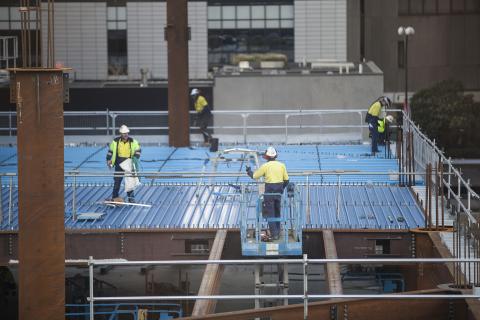
Australia's construction industry suffered a slump over December and January due to the impact of the Omicron variant, continuing the sector's volatile run over the past six months.
Economists are still confident of a further drop in the unemployment rate and a relatively solid rise in employment when the December labour force figures are released on Thursday.
Retail sales soared by 7.3 per cent in November after last year's easing of COVID-19 restrictions, but there are signs the subsequent emergence of the Omicron variant has since curbed spending.