As organisations face increasing complexity, rapid technological change and rising performance expectations, the role of senior leaders is evolving.
It is no longer enough to manage teams effectively or deliver operational outcomes. Leaders are now expected to think strategically, navigate uncertainty and influence decisions that shape the long-term direction of their organisations.
For many experienced managers, that creates a new challenge: moving beyond operational leadership into broader executive influence.
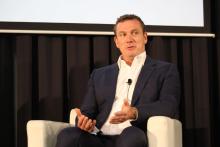
According to AIM WA chief learning and innovation officer Drew Mayhills, organisations are increasingly asking leaders to think beyond their own functional expertise.
“Organisations are asking senior managers to operate at an enterprise level: thinking across functions, navigating ambiguity, and influencing without authority,” he said.
“Most have been developed within functional excellence.
“The Advanced Management Program is designed to bridge that gap, helping leaders shift from operational credibility to strategic leadership, with the confidence to translate ideas across the whole organisation.”
AIM WA’s Advanced Management Program has been designed specifically for this transition. The program is aimed at senior managers and experienced professionals looking to broaden their strategic leadership capability.
Delivered as a six-day immersive residential program, the Advanced Management Program removes participants from day-to-day operational demands so they can focus entirely on leadership at a strategic level.
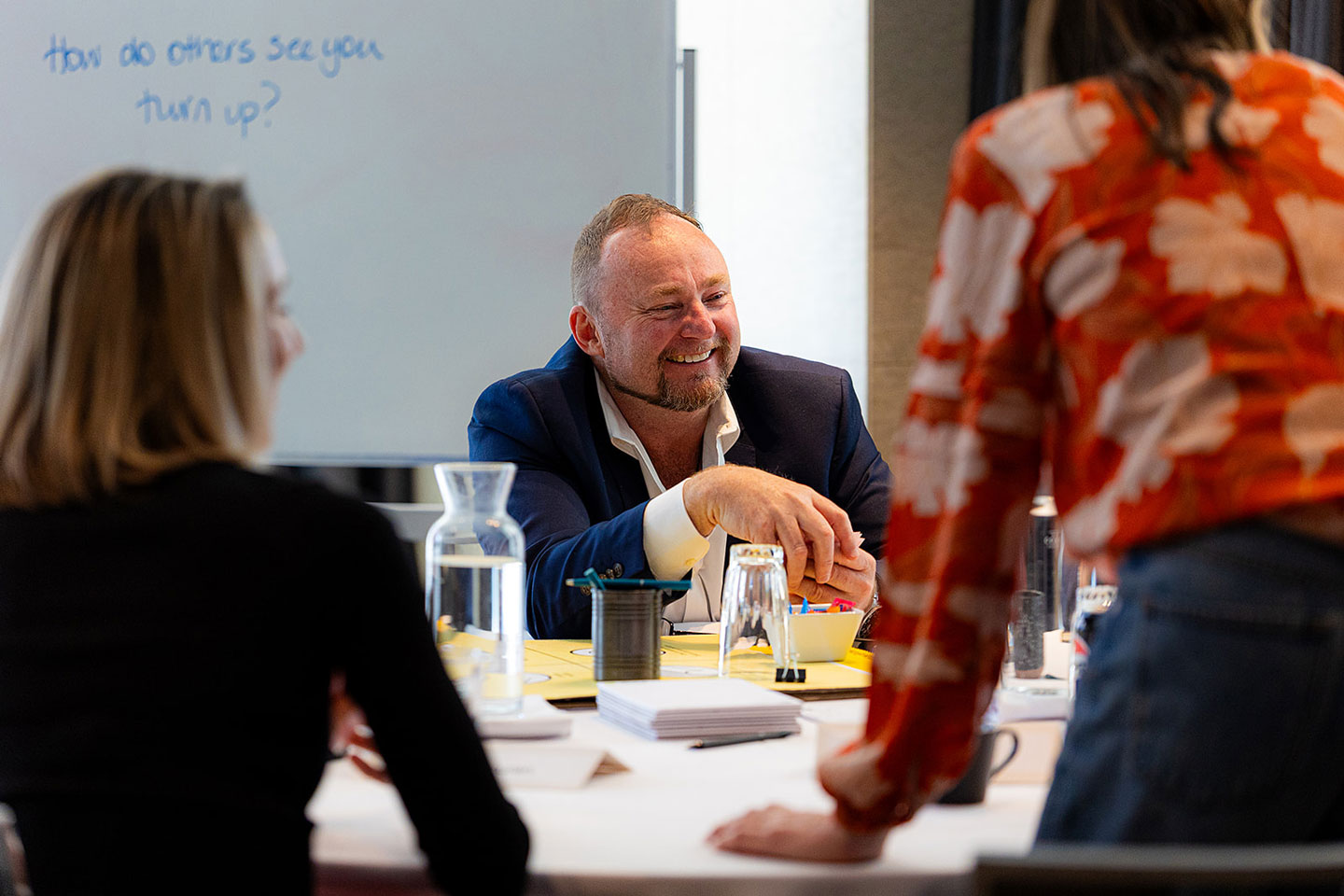
The experience combines case studies, simulations, coaching and peer discussion, with a focus on decision-making under pressure, influencing across organisations and navigating uncertainty.
Mr Mayhills said one of the biggest transitions for experienced leaders was moving from delivering outcomes personally to enabling outcomes across the organisation.
“It means moving from being valued for what you deliver personally or within your functional area, to being valued for what you enable in others across the organisation,” he said.
“Leaders who've spent years being rewarded for having the answers find this transition genuinely difficult because it requires a degree of ‘unlearning’.
“Executive influence often privileges curiosity over certainty, as well as the ability to shape thinking and speak credibly across functions, not just within them.”
A central feature of the Advanced Management Program is decision-making in uncertain and high-pressure environments.
“The real test of leadership isn't calm conditions with clear information. It's when the stakes are high and there's no obvious right answer,” Mr Mayhills said.
“Our Harvard Business School simulations recreate that pressure in a safe, supportive environment.”
Participants also undertake structured leadership assessment and coaching, including 360-degree feedback designed to strengthen self-awareness and identify opportunities for growth.
“The intent is to tease out ways of leading such that participants leave with a more disciplined, reflective approach to complexity and the confidence to act decisively despite uncertainty,” Mr Mayhills said.
A defining feature of the Advanced Management Program is the calibre of its participants and contributors.
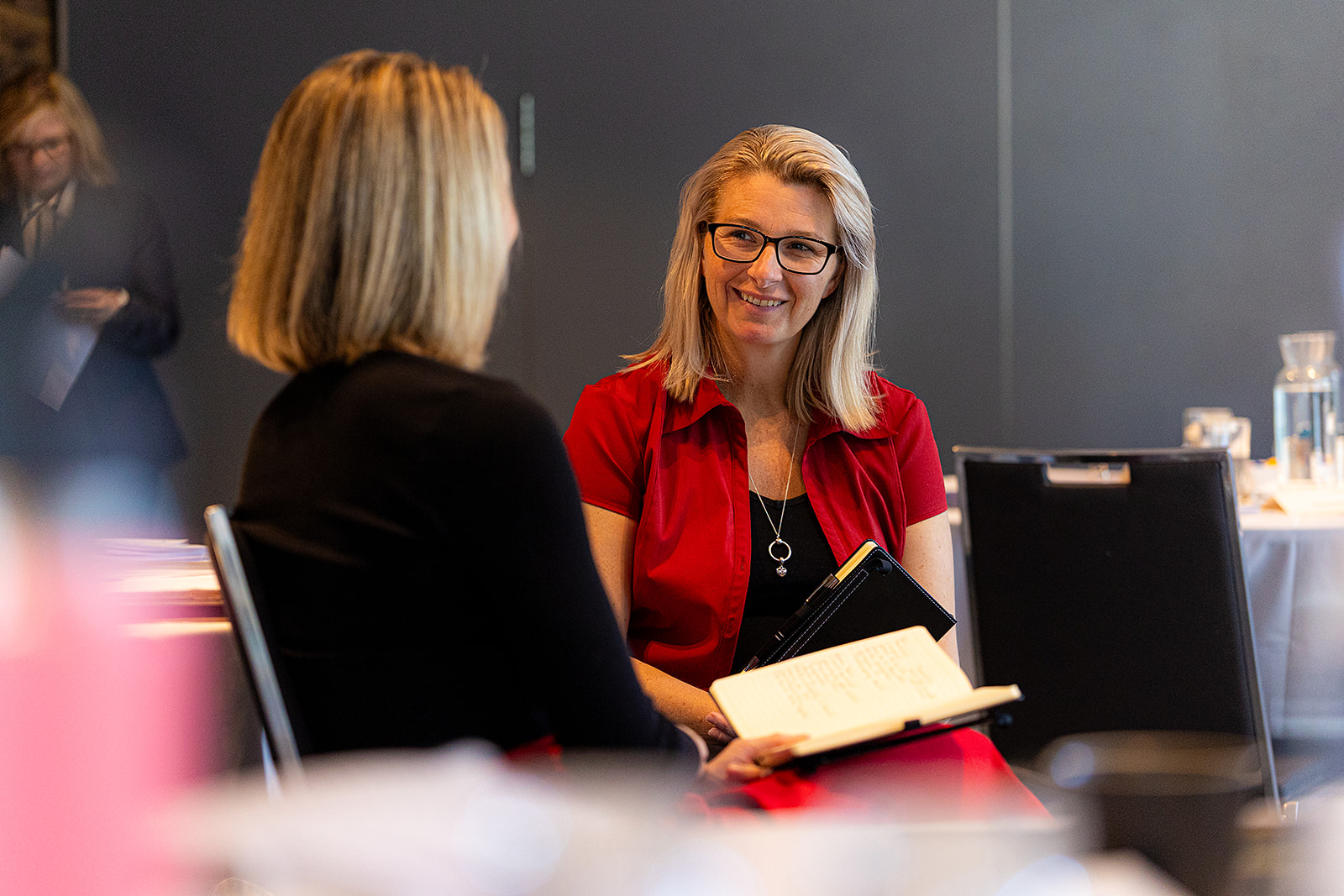
The program brings together senior leaders from industries including mining, government, health, infrastructure and professional services, creating a peer-learning environment built around diverse leadership perspectives.
Participants also hear directly from experienced executives through structured sessions and informal discussions held under Chatham House Rules.
Previous speakers have included West Coast Eagles Football Club chief operating officer Richard Godfrey, former Perth Airport chief executive Kevin Brown, Fremantle Chamber of Commerce chief executive Chrissie Maus, and Barrington Consulting Group director John Barrington AM.
Held at the Aloft Hotel in Rivervale, the six-day residential structure is a deliberate part of the learning design.
“This work can't be done in the occasional half-day sessions,” Mr Mayhills said.
“Removing leaders from daily demands creates the space for reflection that a standard program simply can't replicate.
“The peer dimension is central: learning alongside senior leaders from diverse industries, all wrestling with similar challenges, produces insights and relationships that remain with participants long after.”
Mr Mayhills said participants consistently leave the program with a clearer understanding of both leadership and their own impact.
“Leaders leave the Advanced Management Program with greater self-awareness, sharper strategic thinking, and a clearer sense of the impact they want to have,” he said.
“The shift we consistently see is from ‘how do I get this done?’ to ‘what actually matters in my organisation, why does it matter – and how can I influence that?’”
As expectations of leadership continue to rise, the Advanced Management Program reflects a broader shift in executive development – from incremental skills-building towards deeper transformation in how leaders think, decide and influence.


 By Australian Institute of Management WA