Western Australian executives are operating in an environment increasingly shaped by global forces – from capital flows and talent competition to AI and supply chain disruption.
For Australian Institute of Management WA (AIM WA) head of events and engagement Alex Quinn, the implication is clear: leaders can no longer afford to rely on a purely local lens.
“WA leaders are operating in markets shaped by global forces from talent and technology to competition and capital,” Ms Quinn said. “Thinking globally enables them to anticipate change early and position their organisations to lead, rather than react.”
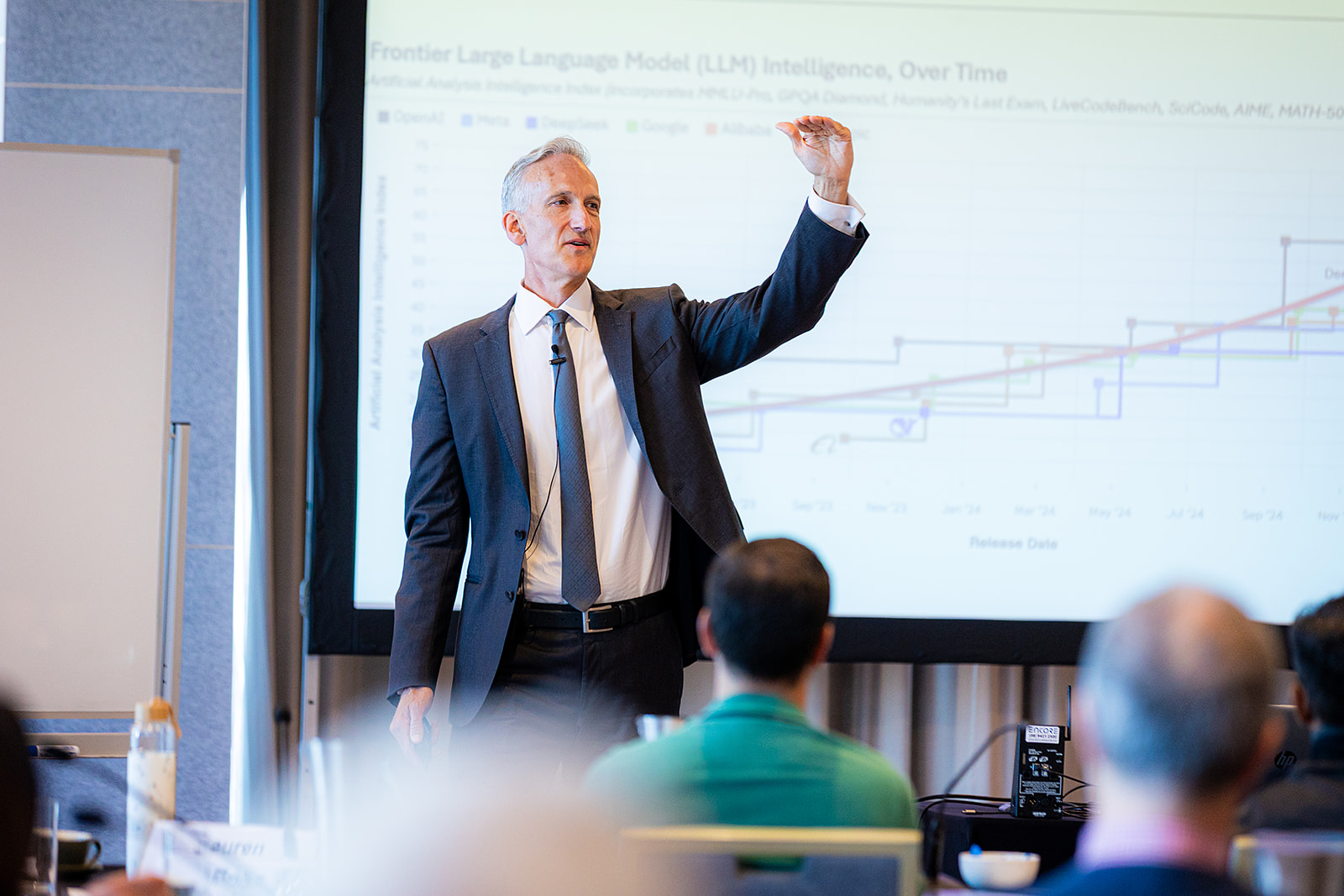
That shift in mindset underpins the 2026 Senior Executive Forum, AIM WA’s flagship leadership program, which brings faculty from Harvard Business School to Perth to work with senior leaders on strategy, decision-making and organisational performance.
Global insight, practical application
The forum is designed to expose WA executives to international thinking while keeping a strong focus on practical outcomes. According to Ms Quinn, one of the most valuable aspects is how it challenges established ways of thinking.
“Exposure to Harvard faculty shifts leaders out of local patterns of thinking and into broader, more strategic perspectives,” she said. “It challenges assumptions and helps them approach complex decisions with greater clarity and confidence.”
Central to the program is the Harvard case study method, which places participants in real-world decision scenarios rather than abstract theory. Executives are required to assess complex situations, weigh competing priorities and determine a course of action.
“The case study method is a powerful learning tool,” Ms Quinn said. “It allows leaders to step into real scenarios and examine decisions and outcomes that have already unfolded. They extract critical insights they can apply in their own context, guided by expert Harvard Business School faculty.”
The approach reflects an emphasis towards experiential, discussion-led formats that build judgement as well as knowledge.
The courage gap
That focus on judgement is particularly relevant in today’s operating environment, where many senior leaders are managing constant disruption while still being expected to deliver results.
“We’re seeing leaders operate in a state of constant disruption – AI, shifting markets and accelerating change – while still being expected to deliver results,” Ms Quinn said. “The real challenge is having the conviction to make high-stakes decisions and commit to a direction, even when the path isn’t clear.”
It is this challenge that has given rise to what Ms Quinn described as a “courage gap” in leadership.
“The courage gap shows up as hesitation, leaders testing and retesting decisions, delaying action or defaulting to safe, incremental moves,” she said.
“It’s driven by the reality that today’s decisions are more complex and visible, but also by a lack of practice in making judgement calls where there is no clear ‘right’ answer, something the Harvard case method is specifically design ed to build.”
While caution is understandable in uncertain conditions, Ms Quinn highlighted it can undermine long-term performance.
“Many leaders struggle because bold strategic decisions rarely come with a clear right answer. They require judgement, not certainty,” she said.
“As the Forum highlights, competitive advantage comes from committing to clear, differentiated choices. Without that, organisations risk losing direction and being overtaken by more decisive competitors.”
Learning through complexity
Building the confidence to make those decisions, Ms Quinn said, comes from experience – particularly exposure to complex, ambiguous scenarios.
“Confidence is built through experience, particularly exposure to real-world scenarios where there’s no single right answer,” she said. “Practising decision-making in complex environments helps leaders trust their judgement.”
The forum’s case studies reflect this reality, drawing on companies such as TikTok and Tesla, as well as emerging AI ventures. These examples provide insight into how global organisations are navigating disruption and strategic inflection points.
“These cases show that disruption is constant and unpredictable, but the real differentiator is how leaders respond,” Ms Quinn said. “Success comes from making timely, well-considered decisions and having the conviction to act while the landscape is still shifting.”
A key capability explored throughout the program is the ability to balance conviction with adaptability – knowing when to stay the course and when to pivot.
“Leaders need to balance conviction with adaptability, knowing when to stay the course and when to pivot,” Ms Quinn said.
For WA organisations, many of which operate in globally exposed sectors such as resources, energy and international trade, this capability is becoming increasingly critical.
The Senior Executive Forum is designed to equip leaders with the tools to navigate that complexity – not just through theory, but through applied learning and peer engagement.
“What we want participants to take away is the confidence and capability to make those calls in their own organisations with clarity and intent,” Ms Quinn said. “The Forum helps attendees acquire judgement, unpack and make sense of complexity and apply this higher order thinking to challenges in their own organisations.”
Beyond the formal program, the forum also offers an opportunity for senior leaders to connect with peers facing similar challenges, creating a space for shared insight and strategic reflection.
For more information on the 2026 Senior Executive Forum, visit Australian Institute of Management WA (AIM WA) at aimwa.com/sef.


 By Australian Institute of Management WA