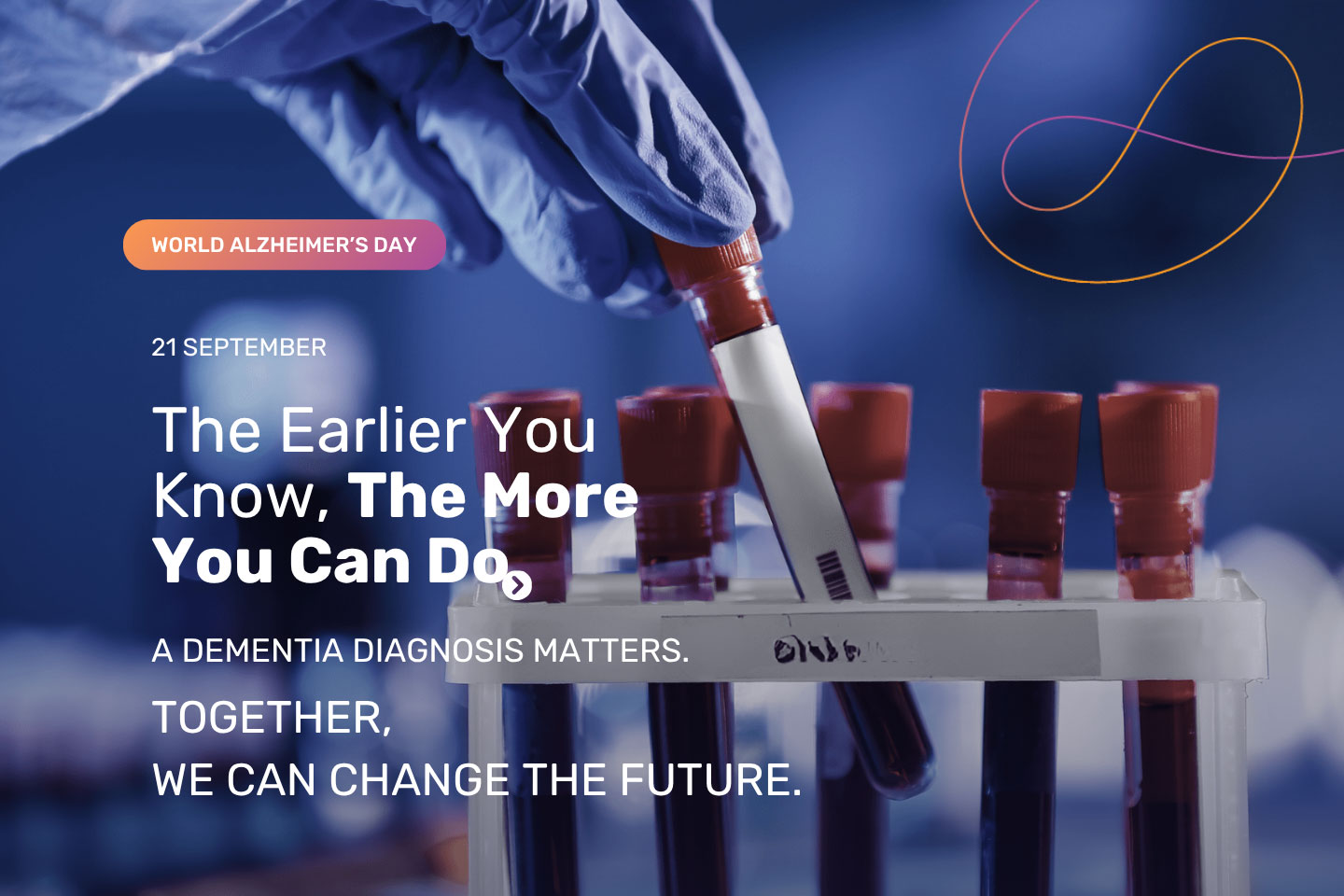
For decades, one of the most difficult realities of Alzheimer’s disease was that while we could diagnose it, our ability to change its progression was limited.
Today, that is beginning to change.
September marks the 15th anniversary of World Alzheimer’s Month, and this year’s theme - The Earlier You Know, The More You Can Do: A Dementia Diagnosis Matters - arrives at an important turning point.
New diagnostic technologies are changing how we identify Alzheimer’s disease, while disease-modifying treatments offer something fundamentally different: the potential to slow disease progression in some people with early Alzheimer’s disease.
It is an extraordinary development. But it raises an important question for Western Australia: are we ready for what comes next?
From a health challenge to an infrastructure challenge
In 2026, an estimated 446,500 Australians are living with dementia. Without significant intervention, that figure is expected to more than double to over one million by 2065.
Those numbers demand attention, but what makes this moment different is the speed at which the science is changing.
As new treatments emerge, timely identification of disease becomes increasingly important. That requires access not only to a doctor, but to appropriate diagnostics, specialist expertise, imaging, biomarker testing, treatment pathways and clinical research.
The challenge is no longer simply whether science can produce better diagnostics and treatments. It is whether our health and social systems can evolve quickly enough to deliver them.
Health systems internationally are confronting the same question as they consider the specialist workforce, diagnostic capacity, imaging and laboratory infrastructure required to translate scientific advances into real-world outcomes.
Australia faces that challenge too.
Dementia is also a business issue
For business leaders, dementia can seem primarily a healthcare or aged-care issue. Its impact on the workforce tells a different story.
In Australia, 58 per cent of primary carers of people with dementia who were employed before taking on their caring role reported reducing their weekly working hours.
Dementia can also affect people during their working lives. Around 29,000 Australians are estimated to be living with younger-onset dementia in 2026, meaning a diagnosis before the age of 65.
These are people who may still be working, running businesses, paying mortgages and raising families.
The costs are therefore carried not only by our health and aged-care systems, but by families, employers and the broader economy.
For business leaders accustomed to thinking about future risk, infrastructure and workforce planning, there is a familiar lesson: waiting until demand arrives is usually the most expensive time to start preparing for it.
Building a different model in WA
At Alzheimer’s Research Australia, this changing landscape is influencing what we believe the next generation of Alzheimer’s infrastructure should look like.
For more than two decades, our Western Australian researchers have contributed to the global effort to better understand Alzheimer’s disease, develop earlier methods of detection and investigate potential treatments through clinical trials.
We are now working towards the next step: a Memory Hub.
The vision is to bring memory assessment, advanced diagnostics, specialist expertise, clinical research and emerging treatment pathways together in a more connected environment.
Translating research to treatment, under one roof.
It is a model designed for where Alzheimer’s medicine is heading, rather than where it has been.
Importantly, the Memory Hub aims to build a stronger bridge between research and the WA community, helping people concerned about cognitive changes navigate what can otherwise be a fragmented pathway and better understand the options available to them.
Because research discoveries cannot remain in laboratories and academic journals. They need pathways into clinical practice and the community.
WA has an opportunity
Western Australia has built an international reputation across medical research, resources, technology and innovation by recognising opportunities and investing in the infrastructure needed to realise them.
Alzheimer’s deserves the same ambition.
World Alzheimer’s Month is therefore about more than awareness. It is an opportunity to consider what WA’s dementia landscape should look like in five, 10 or 20 years - and whether we are building it now.
Alzheimer’s Research Australia is seeking businesses, philanthropists and strategic partners who share that ambition and can help bring the ARA Memory Hub to life.
Because earlier diagnosis can open doors to support, research, intervention and emerging treatments.
Knowing earlier matters. But knowing earlier matters even more when there is somewhere to go next.
To learn more about the ARA Memory Hub, partner with Alzheimer’s Research Australia or support our research, visit alzheimersresearch.org.au.