As energy costs continue to rise and global supply chains remain volatile, securing reliable and cost-effective power has become one of the most critical challenges facing Western Australia’s mining sector.
For Silverstone, a Western Australian company servicing the resources and infrastructure sectors, helping mining operators navigate these pressures is a core focus of its integrated offering.
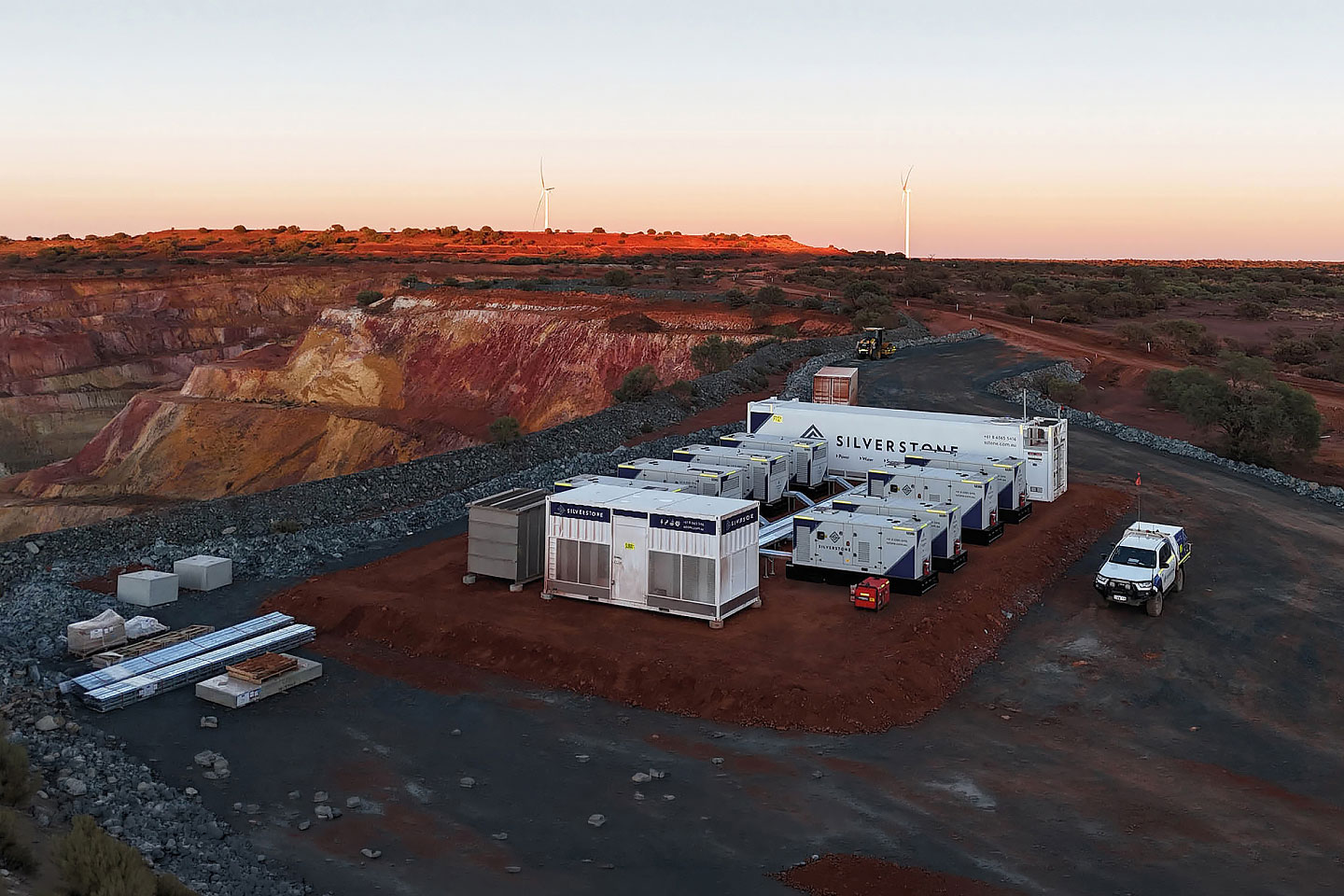
Silverstone operates a vertically integrated model that spans design, supply, installation and ongoing maintenance, with capabilities across power generation, renewable energy solutions, water and dewatering infrastructure, surveying & specialist workforce recruitment services.
At the centre of this offering is its Power division, which forms one of the business’s key operational pillars.
Managing Director Kenny Keogh said the division has been shaped by more than 20 years of industry experience, delivering power station solutions across diesel, gas and hybrid systems specifically designed for remote mining operations
"Our leadership team has been building power stations across WA for the last 20 years – diesel, gas, hybrid, battery and solar – and now we’re integrating a lot more renewables into those systems,” he said.
The division typically delivers power solutions ranging from 5 to 20 megawatts, supporting a broad range of mining operations across Western Australia.
Rising Pressure on Power and Fuel
Mining operators are navigating an increasingly complex energy landscape, shaped by fluctuating fuel prices, constrained supply chains and the growing need for certainty in power delivery.
Mr Keogh said fuel remained one of the sector’s biggest challenges, not only in terms of cost but also accessibility.
“There are sites that don’t have certainty of fuel supply. If they can’t get fuel, they can’t run their mine,” he said.
“In some cases, operations have had to scale back – fewer flights, fewer people on site – because everything is burning diesel.”
He said global instability had further compounded the issue, with fuel prices rising sharply in recent years.
“We’ve seen fuel costs go from about $1 a litre to $3.00. That level of volatility creates a lot of uncertainty for operators.”
Driving the Lowest Cost of Energy
In this environment, the focus has shifted beyond simply supplying power to optimising the way it is generated, managed and delivered.
Mr Keogh said achieving the lowest cost of energy required a highly tailored approach, starting with selecting the right equipment for each site.
“It comes down to equipment selection, reliability, load profiles and the environment the equipment is operating in,” he said.
“We look at the load profile of each site – whether it’s variable or fixed – and then select the most efficient engines and fuel burn rates to suit.”
Environmental conditions also play a key role, particularly in extreme climates.
“The cooler the temperature, the better for the equipment reliability. So we’re constantly selecting and upgrading equipment to suit the conditions, whether that’s high temperatures or remote locations.”
From diesel and gas generation through to transformers and switchrooms, the aim is to reduce inefficiencies across the entire power network.
“We make sure there are minimal losses as power moves from low to high voltage and back again across the network. It’s about optimising the full system.”
Reliability Remains Critical
While cost is a key driver, reliability remains non-negotiable.
Even brief power disruptions can have significant consequences for mining operations, including lost production, safety risks and contractual impacts.
“Any downtime in a power station can cost millions so picking the right power provider is not just about the fixed rate per month,” Mr Keogh said.
“It’s not just the miner – it can impact contractors, schedules for miners and safety on site.”
He said Silverstone prioritises reliability through upfront engineering, fit-for-purpose equipment selection and a strong focus on preventative maintenance.
“We don’t take equipment designed for a metro environment and put it straight onto a mine site. We engineer and modify it to suit the conditions,” he said.
That is supported by ongoing monitoring and reporting.
“We provide weekly and monthly reporting on fuel usage, efficiencies and performance, along with preventative maintenance and testing to identify issues before they become failures. Our Recent acquisition of Ultimate Energy Engineering who are ComAp control experts gives us even more comfort around reliability”
Adapting to Fuel Challenges
As fuel costs continue to rise, operators are increasingly exploring alternative energy solutions, including renewable technologies such as solar and battery storage.
Mr Keogh said Silverstone has been working closely with clients to integrate solar and battery systems into existing power stations, helping to reduce diesel reliance and improve overall efficiency.
“We’re introducing batteries to replace the need for some diesel generators and spreading the load so systems operate more efficiently,” he said.
“Not overusing generators and running them at optimal efficiency makes a big difference to fuel consumption.”
He said renewables also offered a way for operators to manage cost volatility when shareholders ideally want locked in returns..
“With renewables, you can lock in a portion of your energy cost. At the moment, a lot of miners are dealing with variable costs that are changing all the time.”
However, he noted that renewable integration must be commercially viable over longer contracts.
“It has to make economic sense – it can’t just be a box-ticking exercise.”
Positioned for the Future
Looking ahead, Mr Keogh said renewable and hybrid systems are set to play an increasingly dominant role in powering mining operations and Silverstone's strategy.
“Renewables are a no-brainer going forward,” he said.
“With the level of investment and the improvements in battery technology, in the next 10 to 15 years most major infrastructure will be powered by some form of renewables.”
He said the key focus for operators would be finding the right balance between traditional generation and emerging energy technologies.
“It’s about integrating thermal generation with renewables in the right way and constantly reviewing new technologies – whether that’s lithium or other battery solutions.”
Owner-Led Point of Difference
Mr Keogh said Silverstone’s key point of difference lay in its integrated model and owner-led structure.
“We design, supply, install, operate and maintain our systems – it’s fully integrated,” he said.
“But ultimately, it comes down to our people. We’re an owner-led business, and everyone has a vested interest in the outcome. The whole team has been hand picked over the last 15 years and at an age and experience level that is unique.”
He said this structure enables faster decision-making and closer alignment with client needs.
“For miners, choosing a power provider they can trust is critical. They want to deal with people who can make decisions when it matters and not look to get commercial.”