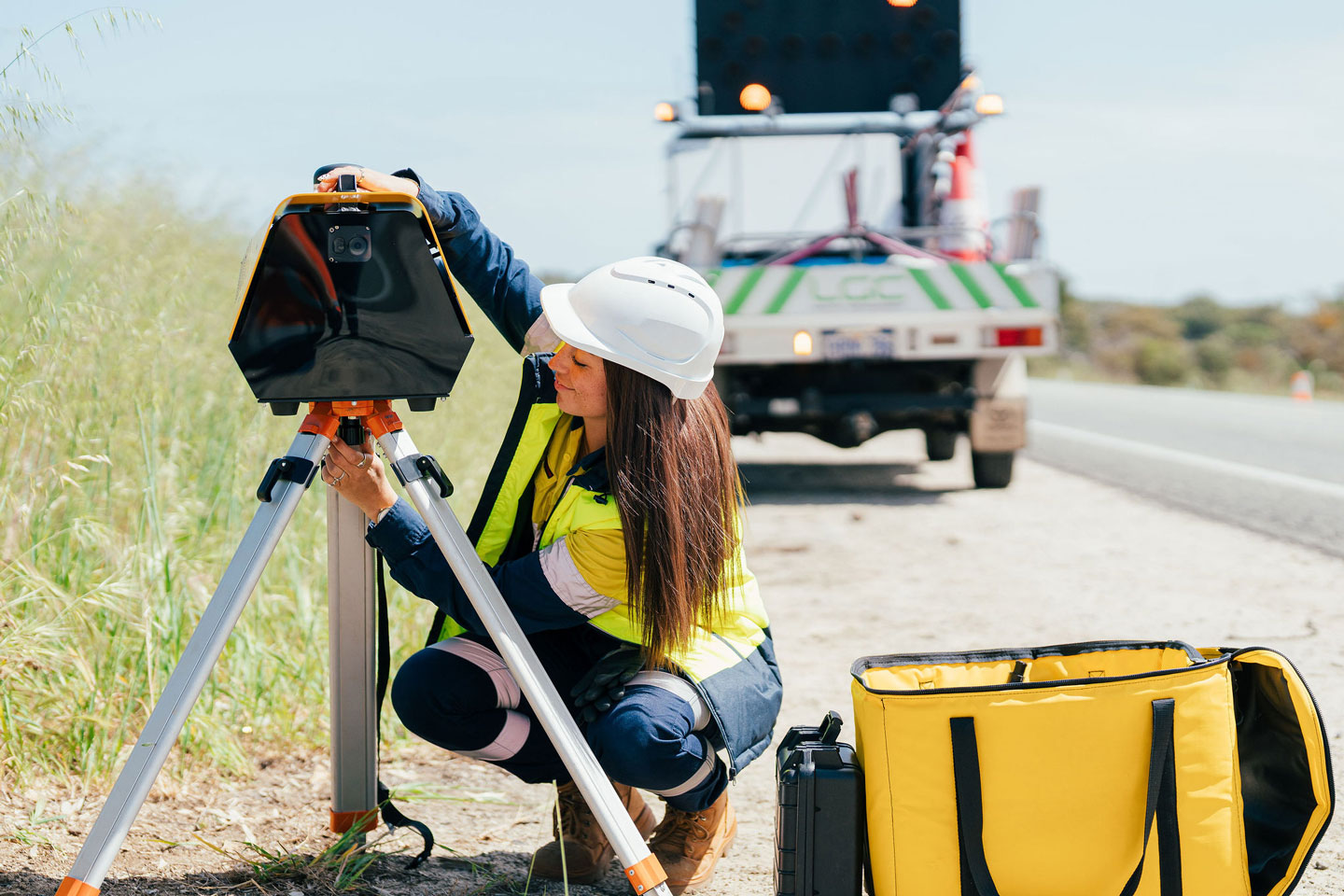
LGC Traffic Management has become the first traffic management company in Western Australia to deploy AI-powered roadside safety technology, rolling out Forsite Connected Safety across its job sites in partnership with Acusensus.
The rollout marks a significant step forward for the WA-based business, reinforcing LGC’s position as an industry leader through the implementation of predictive safety initiatives in a sector that has traditionally relied on reactive controls. The technology is designed to identify and warn workers of approaching vehicle threats before they reach active work zones, reducing risk in some of the state’s most high-risk operating environments.
A WA Operator Shaping Industry Standards
Founded in 2014 by Director Max Line, LGC Traffic Management has experienced rapid growth over the past decade, evolving from a small operator into Western Australia’s largest traffic management provider. The business now employs more than 600 staff and operates a fleet of over 280 vehicles across five depots in Midvale, Mandurah, Bunbury, Albany and Karratha.
LGC delivers traffic control, traffic management planning, emergency response and equipment hire services to more than 200 clients across the government, utilities, civil construction, infrastructure and events industries.
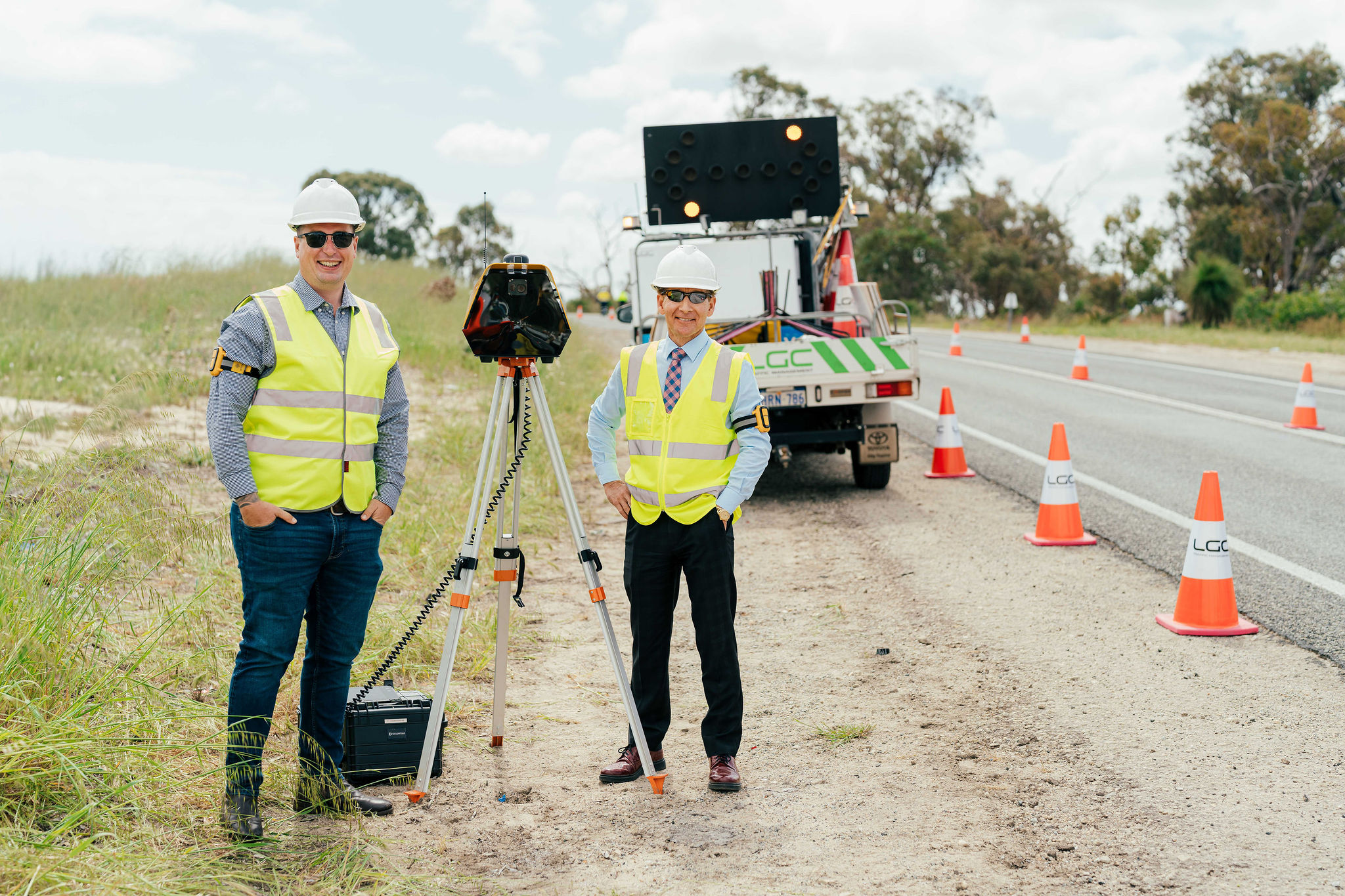 Max Line, Director (Left) and Will Daly, General Manager (Right)
Investing in Predictive Safety
According to Mr Line, the decision to implement Forsite Connected Safety aligns with LGC’s long-term strategy of investing in systems that protect its workforce while strengthening operational performance and governance.
“Traffic management is a high-risk environment, and safety has always been central to how we operate,” Mr Line said. “Forsite Connected Safety allows us to better anticipate risk, support our people on the ground and make informed decisions using real-time data. It’s an investment in both safety and the future of the business.”
Developed by Acusensus, Forsite Connected Safety is a wearable early-warning system that uses machine learning to analyse traffic behaviour and detect potential vehicle-related incidents. The system can monitor traffic movements up to 240 metres away and issue alerts before a vehicle enters a work zone, providing workers with critical additional time to respond.
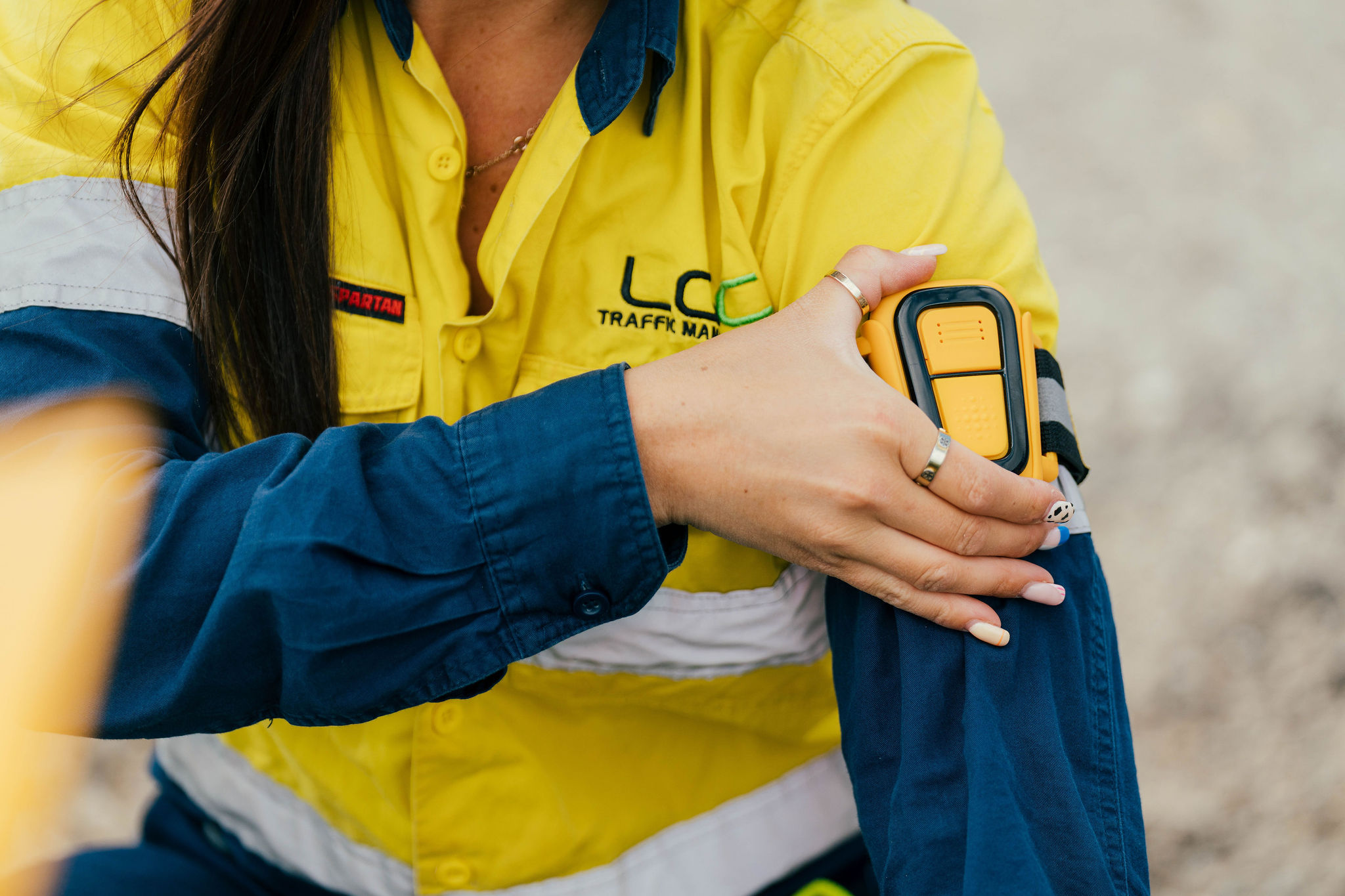
Data-led Visibility Across Job Sites
Data captured by the technology is transmitted to a cloud-based dashboard, giving LGC real-time visibility across active sites. Metrics such as vehicle speed, alert frequency, video footage and high-risk locations can be reviewed by internal teams to identify trends, assess exposure and implement preventative controls.
Mr Line said the technology has already strengthened LGC’s risk management processes by enabling proactive adjustments to site layouts, procedures and resourcing.
“This gives us greater insight into how risks develop on site,” he said. “It allows us to refine our approach before incidents occur, rather than responding after the fact.”
Setting a New Benchmark for Roadside Safety
Shaun Miller, Head of Division – Worker Safety Products at Forsite Connected Safety by Acusensus, said LGC’s early adoption reflects a broader shift within infrastructure and construction towards data-led safety management.
“LGC is demonstrating how predictive technology can reshape roadside safety,” Mr Miller said. “By connecting people, vehicles and data, Forsite enables organisations to move beyond compliance-based safety and toward prevention-led outcomes.”
The rollout of Forsite Connected Safety further differentiates LGC within the traffic management sector, reinforcing its reputation as a safety-led operator and early adopter of emerging technology. As infrastructure investment continues across Western Australia, LGC’s focus on innovation, workforce protection and operational maturity is expected to remain central to its growth strategy.