
Heart Week (May 4 to May 10) is our annual reminder that heart disease prevention isn’t complicated—but it does need attention. This year, we shone a light on one simple idea: know your Heart Age, and if your risk is higher than it should be, act.
New data from the Heart Foundation’s Heart Age Calculator shows around three in every four people who use the tool have a Heart Age higher than their actual age—on average, four years older. It’s a confronting statistic, but it’s also a useful one, because it points to the next step.
If you’re aged 45 and over, or 30 and over for First Nations people, it’s a great time to book a Medicare funded Heart Health Check (715 Health Check) with your GP. These checks, which are free annually under Medicare, check blood pressure, cholesterol, and diabetes risk.
This year, that Heart Week message landed strongly in WA because we delivered it with community champions, clinicians and the WA Government, including WA’s first Minister for Preventive Health, Hon Sabine Winton MLA.
Our focus across the week was simple: help people (and decision‑makers) start the conversation, understand risk, and take one practical step—whether that’s checking blood pressure, using the Heart Age Calculator, or booking a Heart Health Check.
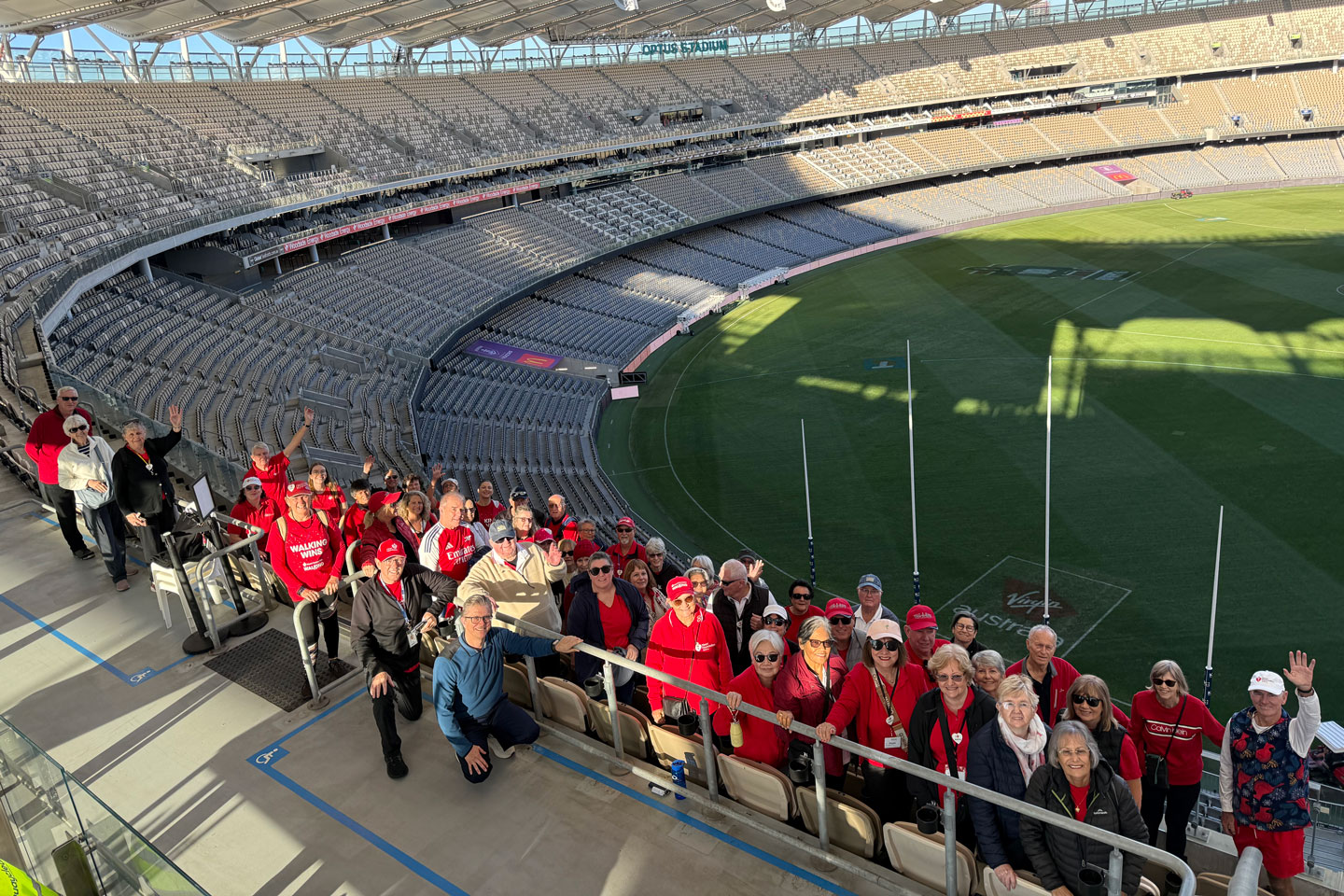
We kicked things off in the community with a Heart Week community walk through Optus Stadium, hosted by venue CEO and WA Advisory Board Chair Mike McKenna, joined by members of local walking groups from Mandurah to Ascot, supporters and Members of Parliament. It was a great reminder that prevention doesn’t have to be dramatic—sometimes it’s just choosing to move more, together.
The collaborative efforts continued throughout the week, with Minister Winton hosting a WA Parliament Heart Week activation. Together with the experts at Perth Cardiovascular Institute, we offered over 40 members a blood pressure check and the opportunity to use the Heart Age Calculator—often a first step toward booking a Heart Health Check. This created a tangible opportunity to raise awareness of cardiovascular disease prevention and equip members with clear, shareable Heart Foundation messages to champion across their electorates during Heart Week and beyond.
What sits behind a higher Heart Age rating? Often it’s one (or more) of the big risk factors: high blood pressure, high cholesterol and diabetes. The Heart Age data also shows just how common these issues are among users—including a high proportion reporting blood pressure above normal levels and more than a third reporting cholesterol above normal. Genetics matters too, with almost 40% reporting a family history of heart disease.
Moving your body regularly, eating well, drinking less alcohol and steering clear of cigarettes (and vapes) are all smart ways to look after your heart. But it’s not always the full story—even people who do “all the right things” can still have a life‑threatening heart event. That’s why it’s worth checking in on your heart the same way you’d service a car before the warning light comes on: a regular check can pick up risk early, when it’s easiest to do something about it.
What I loved about Heart Week in WA was how practical it felt—walking together in the community one day, then taking the conversation into Parliament the next. But the real measure of success is what happens after May: more people checking their Heart Age, more people knowing their blood pressure, and more people booking a Heart Health Check with their GP when it’s needed. Because any time is a good time to start a conversation about heart health, and if we keep those conversations going—across homes, workplaces and electorates—we give more Western Australians the chance to prevent a heart event before it happens.
More information on heart health checks at https://www.heartfoundation.org.au/your-heart/heart-health-checks