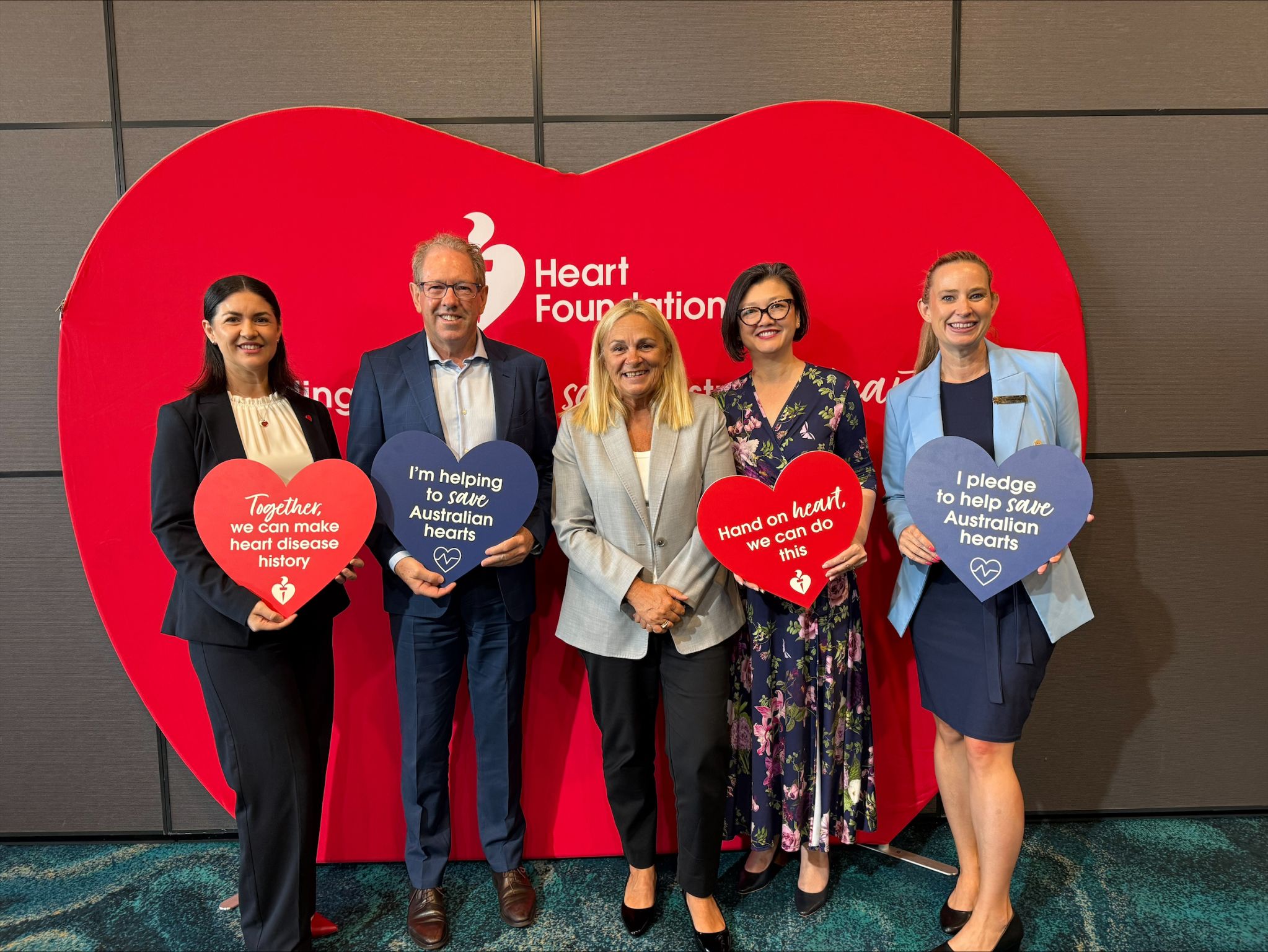
This year’s Heart Foundation WA Women’s Hearts Breakfast embraced the theme of ‘Give to Gain,’ highlighting how generosity—whether through funding, knowledge, advocacy, or time—creates a ripple effect that strengthens women’s health and, in turn, strengthens communities.
Aligned with International Women’s Day, the Optus Stadium event brought together more than 200 local guests—donors, government leaders, clinicians, researchers, and business and industry partners—to champion a simple but powerful idea: when we support women’s heart health, we all benefit.
Women’s heart health is a serious issue that touches not only women themselves, but their families, colleagues, friends and communities. Despite remaining a leading cause of death among Australian women, heart disease is still too often viewed as a predominantly male issue. Too many women only discover their risk after a major heart event, highlighting why early recognition, prevention and education are so critical.
These realities were brought to life at this year’s event through lived experience shared during the program. Women generously reflected on their own heart health journeys, reinforcing that awareness must lead to action—and that listening to women’s experiences is critical to improving outcomes.
Heart health is a cause close to my heart. As the WA General Manager of the Heart Foundation and a cardiovascular biochemist with nearly two decades of research experience, I know only too well the unique heart health challenges faced by women. When women‑specific risk factors and symptoms are misunderstood or overlooked, the impacts extend far beyond the individual—affecting families, clinicians, researchers and the wider community, and placing increased strain on Western Australia’s healthcare system over time.
Heart disease is an ongoing challenge for women across Western Australia. And yet, many still underestimate the unique risks they face throughout life. As women move through different stages—pregnancy, menopause, ageing—their cardiovascular risk shifts too, making awareness and proactive care essential.
While chest pain remains the most common heart attack symptom, women often experience additional signs—jaw, shoulder or back pain, nausea, shortness of breath, dizziness, or overwhelming fatigue. These symptoms are frequently dismissed or misunderstood, contributing to delayed care.
Women are also more likely to experience “silent” heart attacks, where symptoms are so subtle they go unnoticed until significant damage has occurred. Research continues to show that women are less likely to be prescribed heart medications or receive invasive treatments like angioplasty or bypass surgery.
By building awareness and strengthening understanding, we can empower not just women, but everyone around them. Partners, colleagues, friends and family are often present when symptoms first appear. By improving understanding and confidence, we can help women recognise when something isn’t right, feel empowered to seek help early, and advocate for their own heart health.
Sharing this knowledge is an act of giving—one that can save lives. This International Women’s Day I urge women to take control of their heart health by booking a Medicare‑subsidised Heart Health Check—a 20‑minute assessment available to women over 45, or over 30 for First Nations women. The check measures blood pressure, cholesterol, blood sugar, and family history to build a clearer picture of risk.
Looking after our heart health ensures a healthier future, not just for ourselves but for those we love. This is the essence of ‘Give to Gain’: when women invest in their health, families, workplaces, and communities all benefit.
The Heart Foundation continues to fund life‑saving research thanks to the generosity of donors and corporate partners. Every contribution—financial, educational, professional, or personal—helps build a future where women’s heart health is understood, prioritised, and protected.
Giving is not a subtraction. It’s an intentional multiplication. And when women are supported to invest in their heart health, families, workplaces and communities all benefit. When women thrive, we all rise.
More information on heart health checks at https://www.heartfoundation.org.au/your-heart/heart-health-checks