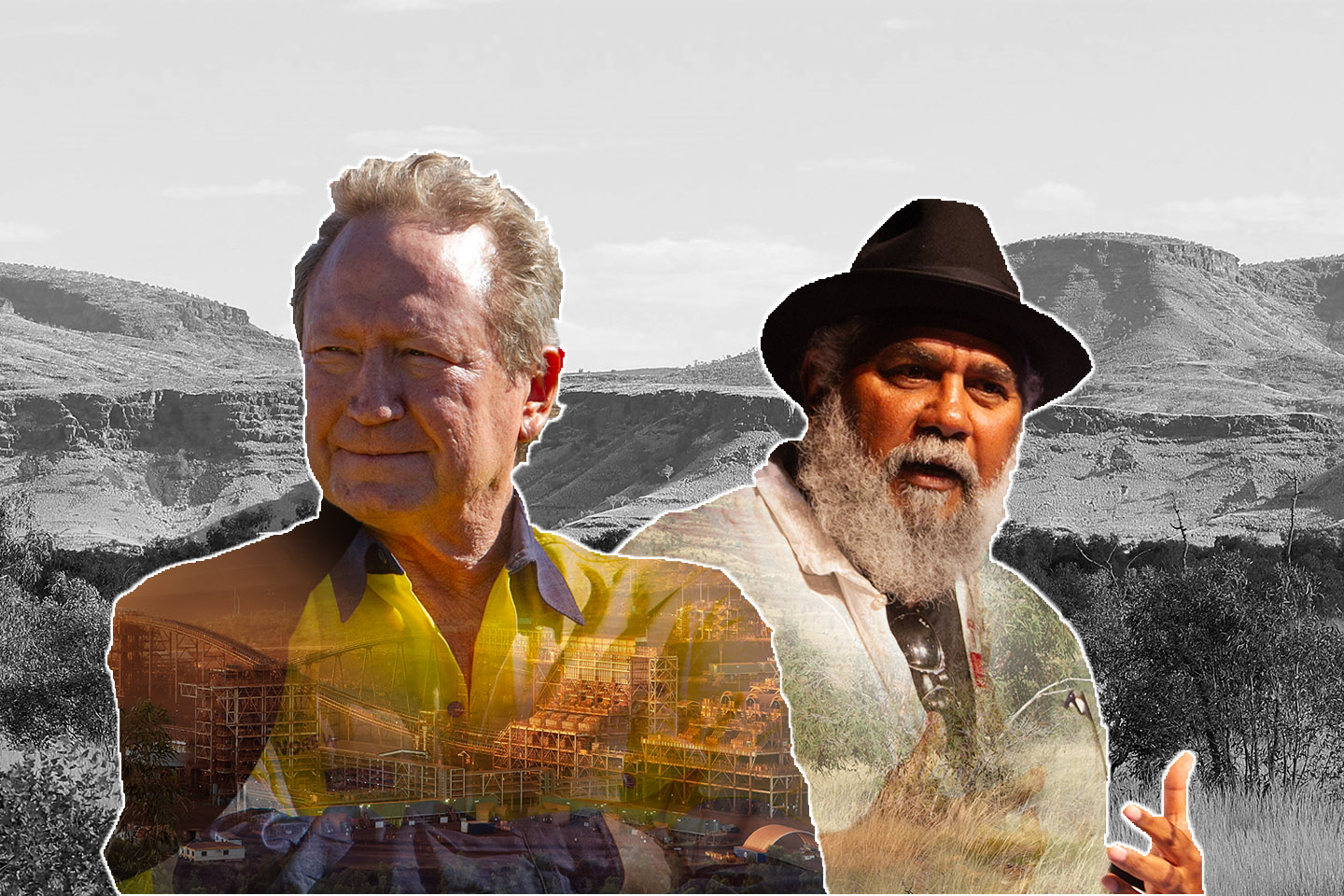
A long-running feud between Fortescue and the Yindjibarndi people will reach its close next week, with the miner or state government potentially on the hook for billions of dollars in compensation for damaging country without consent.
A judgment on costs will be laid down on May 12, some 23 years after the Yindjibarndi people filed their native title claim and four years after the fight for compensation entered the courts on the back of exclusive native title rights being recognised.
The Federal Court has already determined in favour of the Yindjibarndi people that they are owed compensation from the construction and operation of Fortescue’s Solomon mining hub.
Fortescue and the state government had both opposed that claim.
Next week’s judgment to be delivered by Justice Stephen Burley will answer two crucial questions.
Firstly, how much compensation is to be paid.
Fortescue and the state government argue it should be in the range of $5m to $10m.
The Yindjibarndi people argue it should be as much as $1.8 billion.
Yindjibarndi’s position rests on economic and cultural loss, which they argue is significant.
An allowance for social disruption also forms part of Yindjibarndi’s case – their argument has long been that Fortescue’s actions caused a rift in the community.
Fortescue in the early days of the spat backed a splinter group named the Wirlu-Murra Yindjibarndi Aboriginal Corporation after YAC rejected a $4m compensation offer to give the Solomon mine its blessing.
Other miners pay a royalty per tonne of iron ore to native title bodies of about 0.5 per cent.
Fortescue’s position on this has long been linked to Andrew Forrest’s ‘hand up, not hand out’ mantra which has leant on employment opportunities instead of payments.
Research by Business News in 2023 found four wealthy WA families received double the amount of royalties paid to all Aboriginal groups in WA from mining.
Division in Roebourne where many of the Yindjibarndi people live between WMYAC and YAC was evident for much of the 2010s.
Fortescue has argued the Solomon Hub caused no direct psychological harm to the Yindjibarndi people, and that the native title body was not owed royalties.
In submissions to the court the miner has estimated economic loss to the Yindjibarndi people at a little under $100,000.
Its lawyers have submitted that compensation for community infighting should not be awarded.
The state government meanwhile has described the land in question as ‘low value’, ‘remote’, and ‘not the North Shore of Sydney’, and has made the case that minerals in the ground are not included in native title rights.
The second question to be answered will be who should pay; Fortescue or the state government.
Fortescue for causing the damage, the state government for allowing it, or a mix of both.
Fortescue has argued the state government should pay. Yindjibarndi’s lawyers say the state could be liable for allowing the mine to progress.
Last financial year Fortescue posted a $4.7 billion profit.
The state government has budgeted for a $2.5bn surplus this financial year.
Billions of dollars in royalties from iron ore flow to the WA government every year.
The decision will ultimately lay the groundwork for future compensation cases between traditional owners, government, and industry.
YAC has also foreshadowed the potential the case holds in reshaping royalties paid to native title holders from mining operations in Australia.
Appeals are possible following next week’s verdict.