Australia’s opportunity to become a major supplier of lower-emissions iron and metals is becoming increasingly clear. The question is whether those industries can compete commercially.
Western Australia has many of the foundations needed to play a leading role in the global transition. The state has world-class iron ore resources, industrial expertise, export infrastructure, renewable energy potential and decades of experience delivering large-scale projects.
But resources alone will not secure investment. The next generation of industries will depend on whether Australia can provide the energy, infrastructure, policy certainty and commercial settings needed to compete for globally mobile capital.
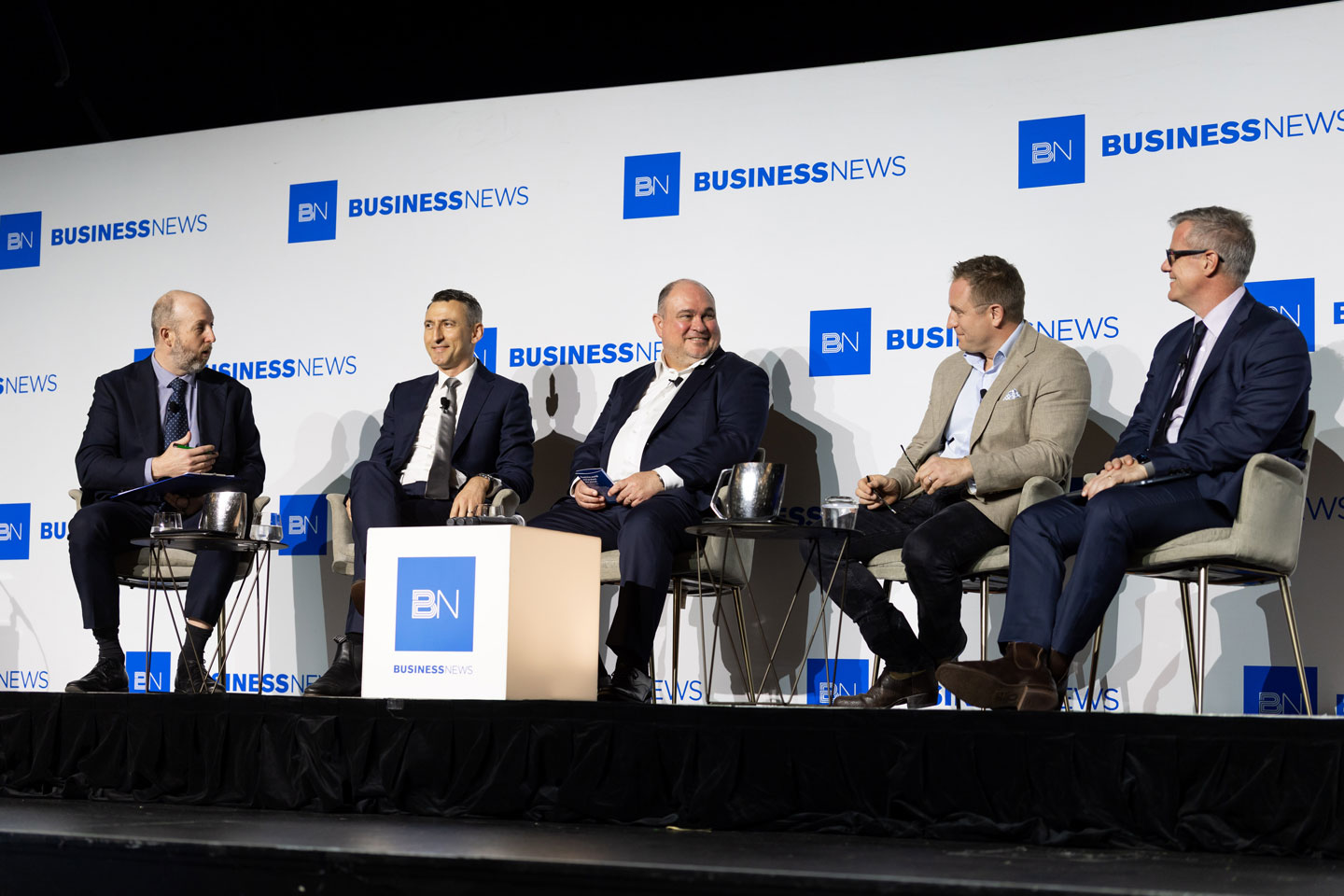
Those questions were central to the discussions at Business News’ From Ore to Opportunity: The Path to a Green Industry breakfast, presented in partnership with the Chamber of Minerals and Energy WA at Crown Metropol Perth on July 17.
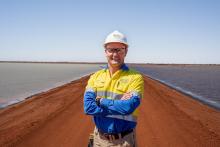
Yara Pilbara chief operating officer Laurent Trost captured the commercial challenge facing the industry in one sentence.
“The green transition cannot be done with red numbers,” Mr Trost said.
The comment reflects one of the defining tensions of industrial decarbonisation: companies must reduce emissions while continuing to operate competitively in global markets.
For businesses investing billions of dollars in assets expected to operate for decades, the transition must also make commercial sense.
Yara’s Pilbara ammonia operation illustrates the scale of the challenge facing energy-intensive industries.
The company is pursuing multiple pathways to reduce emissions, including renewable hydrogen through projects such as Yuri, alongside carbon capture and storage to reduce emissions from its existing production process.
Its 10-megawatt electrolyser, powered by a 20-megawatt solar farm, is expected to be commissioned later this year. However, Mr Trost said it would supply only a small proportion of the hydrogen required to operate the facility.
“The demand for electricity will be massive,” he said.
A fully decarbonised operation would require around two gigawatts of continuous electricity, illustrating the scale of new energy infrastructure needed to transform existing industrial operations.
Mr Trost said there would be no single solution.
“We have to find available electricity – and affordable electricity – to make this happen,” he said.
For Western Australia’s energy-intensive industries, access to reliable, competitively priced energy will be a key factor in determining which projects proceed.
Energy availability is only part of the investment equation.
Companies assessing major industrial projects must also consider approvals processes, regulatory settings, incentives and whether Australia can compete with other jurisdictions seeking the same investment.
The United States’ Inflation Reduction Act has highlighted the global competition for loweremissions manufacturing, with governments increasingly using policy settings to attract investment.
Mr Trost said uncertainty remained a barrier for companies considering projects of this scale.
“There are still lots of uncertainties before we can commit to investments of this scale,” he said.
Chamber of Minerals and Energy WA chief executive Aaron Morey said policy settings would need to strike a balance between supporting affordability today while maintaining incentives for future supply and investment.
He pointed to Western Australia’s domestic gas reservation policy as an example of a framework that had helped support industrial competitiveness and advised the Commonwealth against reinventing the wheel as it looks to implement its own national reservation scheme
“We think the neatest, cleanest solution is simply to adopt the features of the Western Australian model,” Mr Morey said.
While commercial settings will influence investment decisions, industry leaders said emerging technologies would also require support to move beyond demonstration and into large scale deployment.
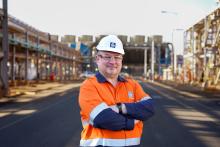
BlueScope general manager NeoSmelt and head of future technologies Chris Page said the NeoSmelt project was designed to develop a pathway towards lower-emissions ironmaking.
The project brings together partners across the supply chain, including miners, steelmakers and energy companies, to develop new approaches to reducing emissions.
“We’ve got partners across the value chain – steelmakers, miners and energy companies – trying to solve that problem together,” Mr Page said.
But moving from technology development to commercial deployment requires significant investment.
“We’re looking for several hundred million dollars… that provides the catalyst for us to take on such an ambitious project,” he said.
Industry leaders said government support would play an important role in helping promising technologies bridge the gap between early-stage development and commercial operation.
For WA, the challenge is creating the conditions that allow projects to proceed.
Whether the state secures the next generation of lower-emissions industries will depend on its ability to deliver competitiveenergy, efficient approvals, stable policy settings and technologies that can succeed at commercial scale.
The opportunity is significant, but the transition will ultimately be judged not only by its environmental outcomes, but by whether the economics stack up.