The cost-of-living crisis has reshaped life for Western Australians in ways that are both visible on the streets and quietly devastating behind closed doors. At Foodbank WA, the numbers reveal a truth that is hard to ignore: recently we have been supporting over 1,000 households per day, several times a week. Each request for help represents a family navigating impossible choices, whether to keep the lights on or buy groceries, whether to pay rent or set aside enough for a Christmas meal.
This year, many families will approach the festive season not with excitement, but with apprehension. The table they once dressed with abundance may now sit bare. Yet even in a year marked by strain, generosity has a way of finding its voice. In countless small and steady gestures, Western Australians have shown that hardship does not eclipse compassion.
Corporate contributions to Foodbank’s Christmas Appeal rarely make headlines, but their effect is profound. A single donation helps put a proper meal on a family’s table. Quietly, efficiently, it restores a sense of dignity to a day that carries enormous emotional weight. Workplace Giving and Corporate Gifting broaden this impact, creating a rhythm of support that continues long after Christmas has passed. A modest payroll donation, repeated throughout the year, becomes the thread of stability a struggling household can rely on. Sponsoring a Christmas hamper through the Give a Feed initiative ensures a family of four can sit down to a meal that looks and feels like Christmas, an experience that matters far more than its monetary value.
Foodbank WA CEO Kate O’Hara says the scale of community need this Christmas is unlike anything the organisation has seen before. “We’re meeting families who never imagined they would need our help,” she says. “When someone donates, volunteers, or gives through their workplace, it sends a powerful message: you’re not alone, and your community hasn’t turned away.” Her words reflect a truth that sits beneath every act of giving , the reassurance that someone, somewhere, is paying attention.
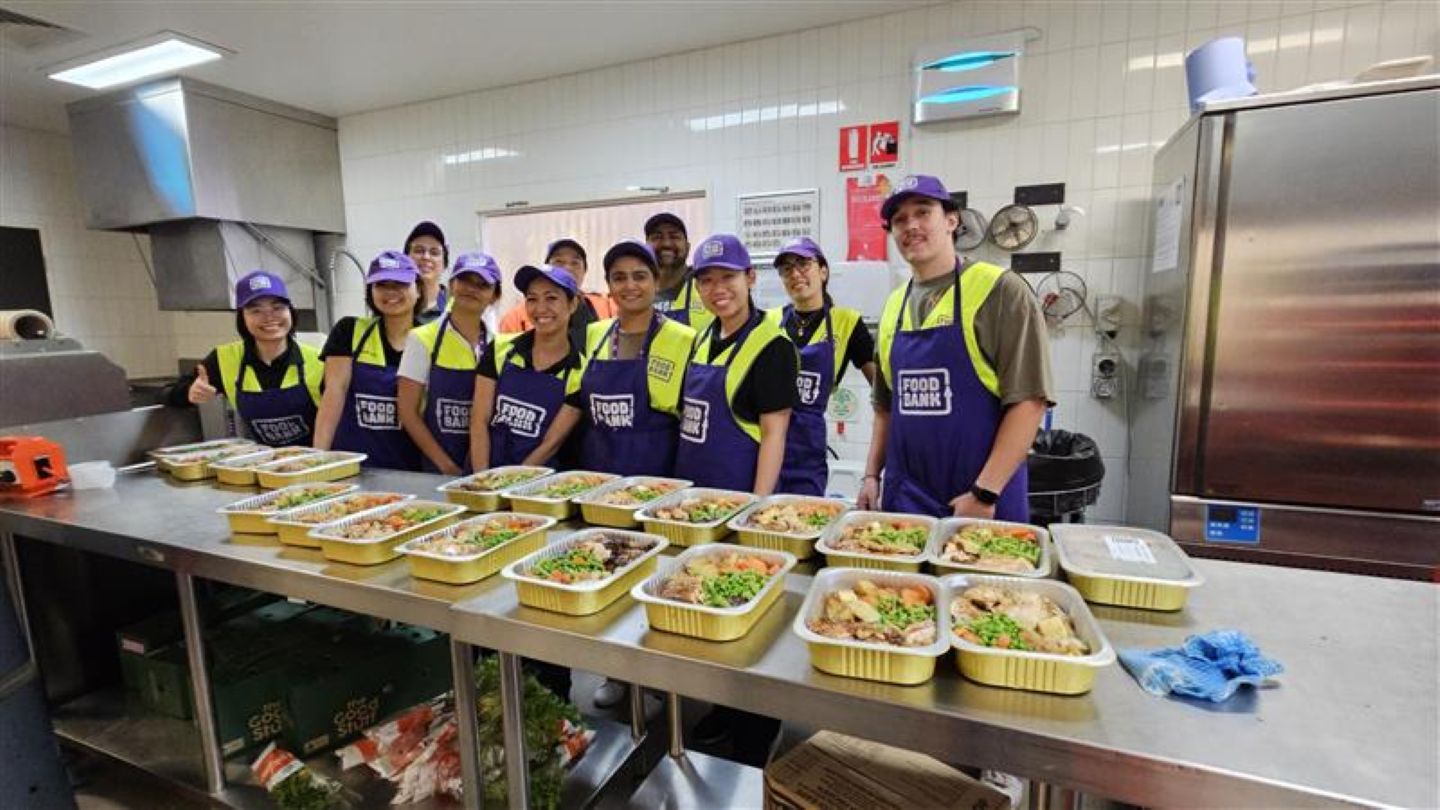
There is also the gift of time, an increasingly precious currency. When teams gather in Foodbank’s Community Kitchen or pack hampers side by side, they become part of a human chain that stretches far beyond the warehouse floor. The meals they prepare travel to homes they will never visit, to people they may never know, but whose holiday is made a little lighter because someone chose to show up. The sense of clarity and purpose felt in those moments is not incidental; it is precisely what makes volunteering so powerful.
Across the state, community campaigns such as the Hawaiian Giving Box, the Giving Machines at Joondalup, and dozens of grassroots food drives have become small but vital fixtures of the season. They make giving accessible, visible, and communal which is a reminder that charity is not abstract policy, but something lived out through simple acts repeated by ordinary people.
As Christmas approaches, the need is great, but so is our collective capacity to meet it. Every hamper packed, every payroll donation submitted without fanfare, every can of food placed into a Giving Box is a quiet refusal to allow hardship to define a family’s December. When Western Australians choose to give whether time, money, or something as unassuming as a pantry staple they do more than provide relief. They uphold the belief that community is a responsibility we carry together.
In a year when so many are standing on fragile ground, that responsibility may be the truest expression of the Christmas spirit.