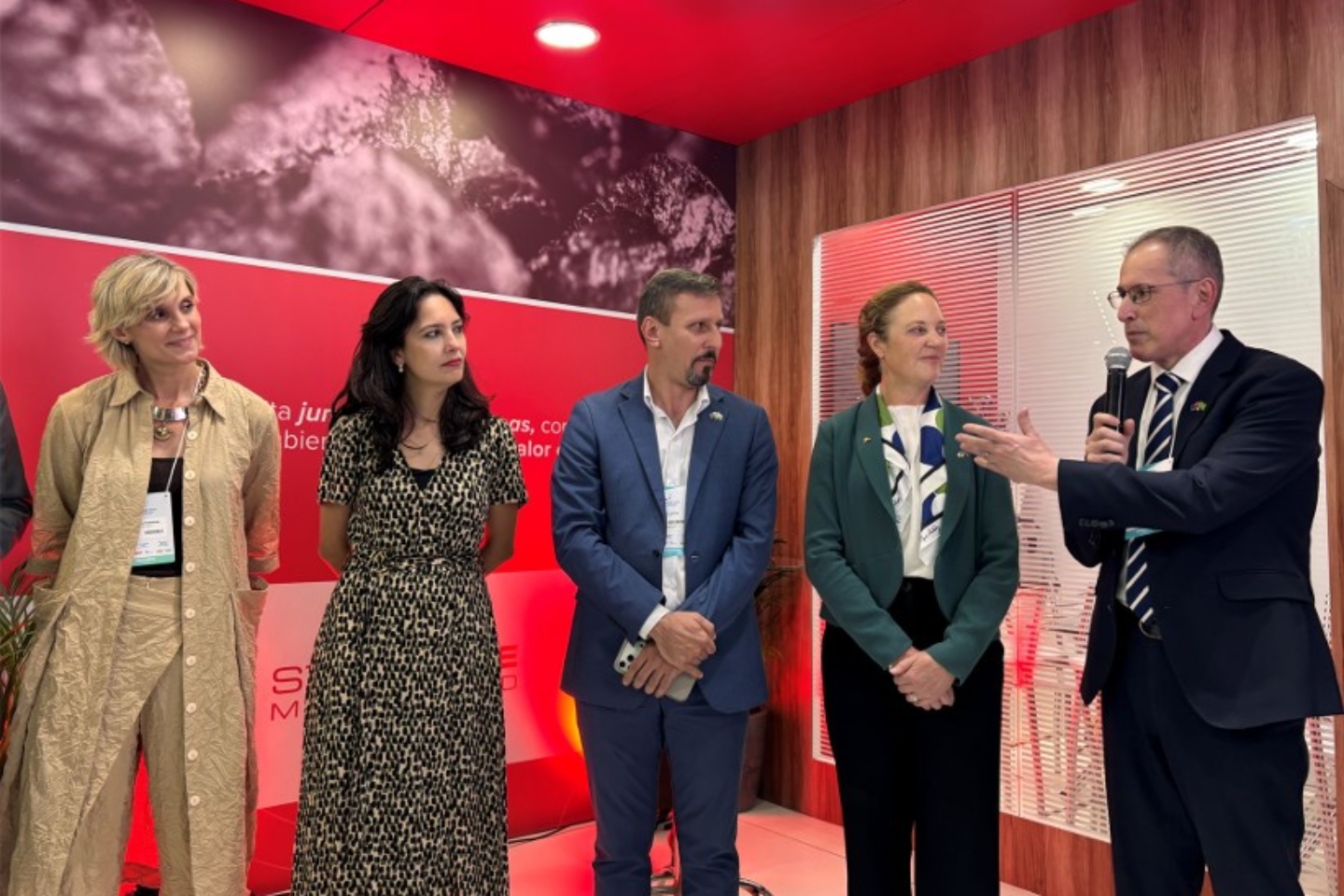
St George Mining has struck a landmark deal with the State of Minas Gerais and a major Brazilian industrial player, the Lima & Pergher Group, to pioneer a new rare earths processing centre in the South American nation.
The collaboration, formalised through a “Protocol of Intent”, plugs St George directly into Brazil’s national strategy to build a fully domestic “mine-to-magnet” supply chain, reducing reliance on foreign processing. As the global rush to secure non-Chinese rare earth supply heats up, Brazil is emerging as a key player in that push.
The initiative will investigate the potential for a processing centre in Minas Gerais, designed as a midstream facility to refine feedstocks such as rare earth concentrates, mixed rare earth carbonates, and oxalates into high-value materials for magnet manufacturing.
This new hub is slated to be built at an existing industrial complex in Uberlândia, Minas Gerais, operated by Lima & Pergher’s chemical and industrial division, known as “START”. The site already boasts critical infrastructure, including established industrial zoning, roads, low-cost electricity and a skilled local workforce.
Under the agreement, the parties have proposed to pool their expertise. St George will provide its technical knowledge in rare earths and feedstock from its massive Araxá rare earths and niobium project, while START will contribute its four decades of chemical processing experience and may also provide land, low-cost power and technical expertise, while managing construction and operations.
Crucially, the State of Minas Gerais, through its economic development arm Invest Minas, will throw its weight behind the project. It will provide support for licensing and approvals, facilitate relationships with local suppliers and assist with applications for state tax incentives, significantly de-risking the venture.
The move is a logical step for St George, which is sitting on what it describes as the largest high-grade carbonatite-hosted rare earths resource in South America at its nearby Araxá project.
Just this month, the company announced a significant upgrade to its mineral resource estimate at Araxá, which now stands at a colossal 111.2 million tonnes grading 3.57 per cent total rare earth oxides (TREO) and 0.57 per cent niobium pentoxide.
That global figure encloses a high-confidence combined measured and indicated resource of 75.2 million tonnes at 3.64 per cent TREO and 0.58 per cent niobium. This portion alone contains an estimated 2.7 million tonnes of TREO, including a significant 520,000 tonnes of high-value neodymium and praseodymium (NdPr) oxides, which are vital for the manufacture of powerful permanent magnets.
The deposit is shallow, with much of it beginning at surface and extending to around 120 metres in depth. The material is also largely free-digging, making it amenable to simple open-pit mining. What’s more, the mineralisation remains open in all directions, with the company having already hit a new high-grade zone only one kilometre outside the existing resource envelope. A recent drill hole from the new zone returned a 48-metre intercept grading 5.71 per cent TREO from just 2m below surface.
The proposed processing centre could also provide a ready-made customer for its output in the form of the MagBras project, a public-private initiative building Brazil’s first permanent magnet factory. St George was the first rare earths company to deliver product to MagBras for metallurgical testwork.
St George Mining executive chairman John Prineas said: “Minas Gerais has several emerging rare earths producers – including our best-in-class Araxá Project – with the potential for the State to be the world’s leading rare earths producer. The establishment of rare earths processing in Minas Gerais can further propel the State to be a global force in rare earths production.”
With the backing of both government and industry, St George seems to be doing more than just defining a world-class rare earths deposit. As one of the architects of a key element of Brazil’s downstream critical metals processing ventures, the company is positioning itself not just as a future miner, but as a foundational player in an entirely new, Western-aligned rare earths supply chain.
Is your ASX-listed company doing something interesting? Contact: matt.birney@businessnews.com.au


 By Doug Bright