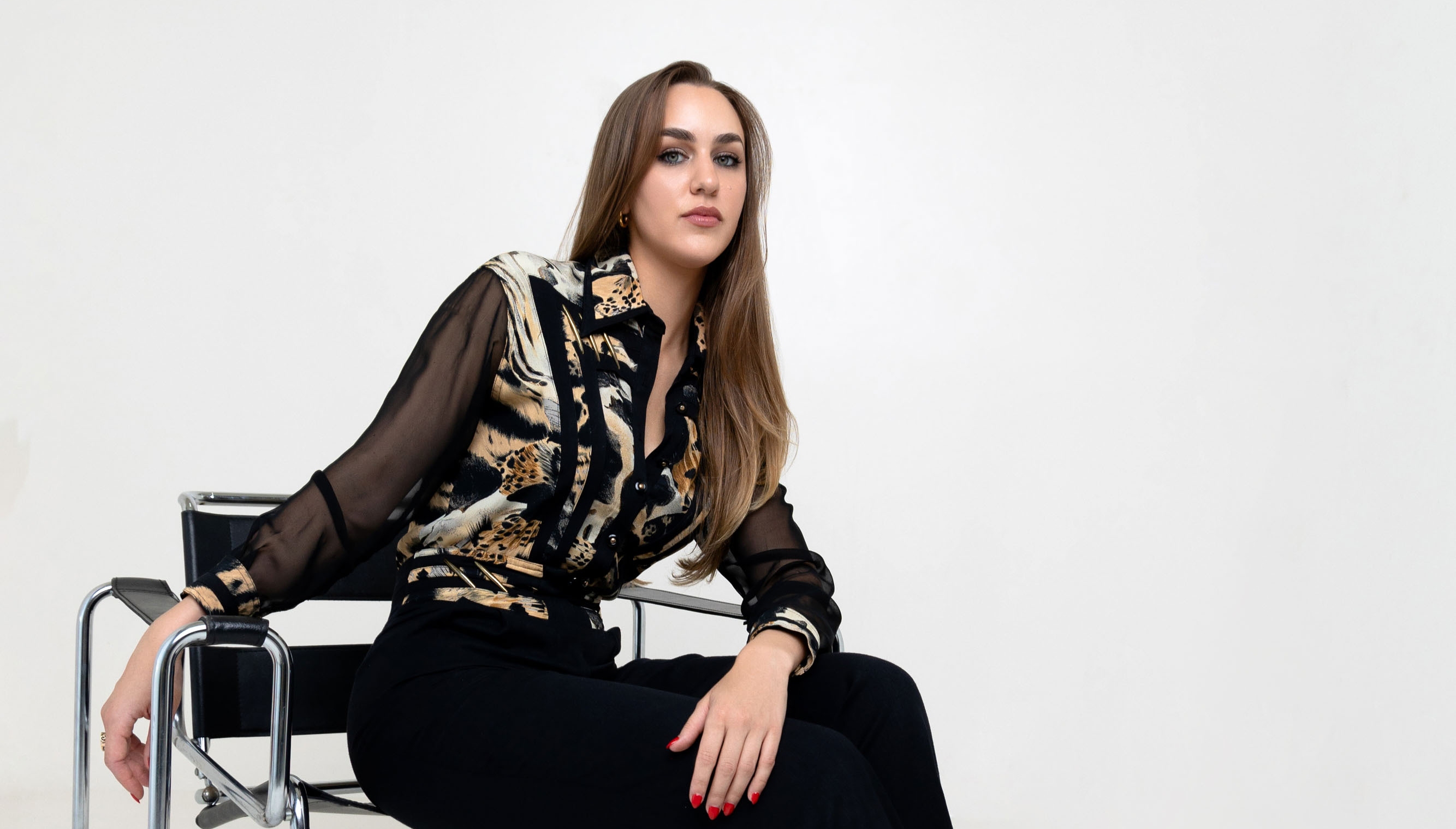
Iris Smit launched The Quick Flick from her Perth apartment in 2017, she wasn’t chasing fame or funding rounds, just a better eyeliner.
The Curtin University architecture graduate was working on her thesis when she found time to develop a winged liner stamp to help ensure better symmetry when users were applying their makeup.
The product went viral months after it was launched, the website crashed and Ms Smit’s side hustle turned into a cosmetic business that’s now available in supermarkets and pharmacies across Australia.
“I had no idea it would blow up the way it did,” Ms Smit told Business News.
In a city better known for its mining ventures than its mascara, Ms Smit’s brand stood out.
But The Quick Flick founder said her biggest challenge was helping the brand find its niche as copycat culture swept through the beauty industry.
“I’ve been on the receiving end of having my products and marketing copied,” Ms Smit said.
“It’s my goal to set a standard in the industry where you can create products that are affordable and innovative, instead of just ripping someone else off.”
Product duping, which involves recreating high-end fashion and beauty products at a lower price point, has become prevalent during the past two decades.
And while luxury knock-offs were once dismissed as cheap or tacky, beauty data analyst Lily Twelftree said more brands were not just accepting duping culture but actively building empires on it.
“Luxury brands can spend years developing a product, but someone like MCo Beauty can replicate it in weeks,” she said.
“By positioning themselves in budget retailers like Woolworths and Chemist Warehouse, they avoid confusion and stay on the right side of trademark law.”
Australia has quickly become a test market for how far cosmetic dupes can go before they cross a legal or ethical line.
Indeed, what started as a fringe practice of ‘inspired by’ products has rapidly evolved into a mainstream business model, fuelled by TikTok virality and post-pandemic frugality.
The hashtag #dupes, for instance, has more than 3 billion views on the platform, with #beautydupes approaching a billion.
A 2023 YPulse survey found six in 10 gen Z and millennial consumers would choose a beauty dupe even if they could afford the original, further emboldening retailers to blur the lines.
Chemist Warehouse and Woolworths are dedicating more shelf space to ‘luxe for less’ cosmetic alternatives that mimic the packaging, formulas and even marketing language of high-end goods.
That same strategy has helped MCo Beauty grow from a $10 million company in 2020 to more than $300 million in 2025; a result, Ms Twelftree said, that rewarded speed and imitation over originality.
“Their success proved that accessibility sells,” she said. “The problem is it changes what innovation looks like.”
And for founders like Ms Smit, whose designs are routinely lifted by competitors, the trend threatens to drain the industry of originality.
“If we spent time going after every copycat we’d have no time left to innovate,” Ms Smit said.
To that end, The Quick Flick founder said IP protections could only go so far.
“A lot of dupe brands actually hire lawyers specifically to work out how to get away with copying,” she said.
“It’s a losing battle for most smaller brands.”
Faced with the duping dilemma, Ms Smit said the answer was simple: if you can’t beat them, join them.
“Instead of fighting the dupes, we decided to dupe ourselves,” she said.
“I wanted to prove you can make affordable beauty without ripping off someone else’s work.”
The result was Quick Faced, a spin-off brand that Ms Smit launched in partnership with Big W this year.
Priced under $30, the cosmetic line reimagines The Quick Flick’s bestsellers for the mass-market shopper.
“People forget how much cost sits in packaging,” Ms Smit said.
“Even adding the ombre colourway or foiling on a bottle can double the price.”
In designing Quick Faced, the beauty entrepreneur simplified the visuals, cut back on high-cost ingredients and maintained the performance where it mattered.
“The goal was access, not compromise,” Ms Smit said.
Sun safe
If the dupe debate revealed beauty’s ethics problem, Australia’s recent sunscreen controversy exposed its scientific one.
The Therapeutic Goods Administration (TGA) is currently investigating more than 20 sunscreens for inflated SPF claims, after independent tests by consumer group Choice found many products performed well below their advertised protection.
For an industry built on trust, the revelations have shaken consumer confidence, and complicated life for brands selling legitimate formulations.
Australia regulates sunscreen as a therapeutic good rather than a cosmetic, making compliance one of the toughest in the world.
That means every SPF claim must be verified through human testing using solar simulators; manufacturers face significant penalties for non-compliance.
Yet, as the TGA noted, variability in lab testing remains a global problem, with some overseas results differing dramatically from Australian standards.
Ms Smit recognised that risk early. When The Quick Flick expanded into sun care during the pandemic, she invested heavily in transparent testing and consumer education.
“We built our SPF line around education,” she said.
“From the start, I wanted to show people exactly what coverage looked like with products like our UV camera tool.”
The brand’s SPF 50+ mist, which doubles as a makeup-setting spray, was designed to make sunscreen feel like skincare.
“Our goal was to remove the barriers that stop people from wearing SPF daily,” Ms Smit said.
“It had to fit into a routine people already loved.”
Going global
Perth’s relative isolation has forced founders to think differently about growing their brand.
“Building a team in Perth was hard,” Ms Smit said.
“But it pushed me to think internationally from the start, and that ended up being the best thing.”
Her brand was tested again when one of The Quick Flick’s tanning mousses went viral on TikTok earlier this year.
“Our first video hit 13 million views overnight; it completely put our US store on the map,” Ms Smit said.
The surge created logistical chaos, leading to empty warehouses and six-week backorders.
“We called the manufacturer and said, ‘Please help us. We need stock fast’,” she said.
The viral moment accelerated The Quick Flick’s international expansion, fast-tracking distribution in the US, the UK and Canada: a trajectory that began, paradoxically, from Perth’s isolation.
“Being based in Western Australia forced me to think globally from the start,” Ms Smit said.
“We moved our warehousing east, built a remote team, and made sure the business could run from anywhere.”
Ms Smit’s 30-person hybrid team now spans multiple time zones.
“It’s the new way of doing business. We use agencies, freelancers, contractors,” she said.
“You don’t always need a full-time team to build something world-class.”
Ms Smit’s next chapter appears as ambitious as her first. Between The Quick Flick and Quick Faced, she’s launched 40 new products this year, from a liquid-to-powder SPF to a range of travel-friendly mists.
Some contain new sunscreen active ingredients expected to be approved by the US Food and Drug Administration in 2025: the first update in two decades.
Still, Ms Smit said her focus remained on making smart, simple products for time-poor beauty consumers.
“Every product we make is about solving a real problem,” she said.
“That’s what keeps us relevant.”