The Reserve Bank has lifted the cash rate by 25-basis-points after inflation readings ticked up over the holiday period.
The central bank hiked the cash rate to 3.85 per cent on Tuesday following unwelcome rises in both monthly and quarterly inflation data.
Australia's latest CPI, released January 28, saw headline inflation rise to an annual rate of 3.8 per cent in the monthly data set, while trimmed mean inflation rose to 3.3 per cent.
The quarterly result, still the RBA's preferred measure, saw trimmed mean inflation rise from 3 per cent in the September quarter to 3.4 per cent for the December quarter.
That figure was 0.2 per cent higher than the RBA had forecast for the December quarter, prompting today's rate hike.
The labour market also remains tight, with unemployment edging down 0.1 per cent in December to 4.2pc.
Prior to the decision, the ASX 30 Day interbank cash rate future indicated a 72 per cent chance of a rate increase.
In its monetary policy statement, the Reserve Bank said while inflation had fallen since its peak in 2022, it had picked up at the end of last year.
"The Board has been closely monitoring the economy and judges that some of the increase in inflation reflects greater capacity pressures," the statement said.
"As a result, the Board considers that inflation is likely to remain above target for some time."
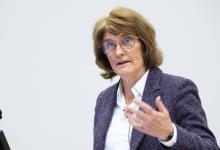
Speaking at a press conference following the decision, RBA Governor Michele Bullock said the pick up in inflation was due to several factors.
"The key point to make is that it's not just one thing (driving inflation up), the pickup is due to a combination of factors across a broad range of components and sectors," she said.
"Our updated view, driven by the latest data, is that demand was stronger than expected over the second half of 2025 and we think some of that has carried over into 2026.
"That strength has also meant conditions in the labour market have held up well and unemployment has remained lower than thought. Secondly, the economy is closer to its supply capacity than we previously thought.
"Years of weak to no productivity growth is a big part of that story."
What the banks were expecting
Citi was the first bank to predict a rate hike, pointing to two this year; one today and one in March.
CommBank and NAB both initially predicted rates would remain unchanged for the first half of the year, but then both revised their forecasts following the release of inflation data in January.

ANZ and Westpac also revised forecasts following the release of December CPI data, and predicted today's rate hike.
NAB is the only big four bank already predicting another hike in rates, in May.
Despite all major banks predicting a rate increase, Bloomberg reported Goldman Sachs, Deutsche Bank and AMP were among holdouts suggesting no change to the cash rate.
That was largely to shield the private sector, which AMP deputy chief economist Diana Mousina said had only started to recover in the past two months.
She also said that while quarterly underlying inflation was high, there were signs of cooling price growth in problem areas like rents and building.
Commonwealth Bank head of Australian economics Belinda Allen told AAP she didn't see further changes to the rate this year.
"We think the RBA will be one and done for interest rate hikes in 2026," she told AAP.
"Inflation is too high, the economy is growing a little bit above its potential, but it won't take much to bring the economy and inflation back into balance.
"The risk, of course, is that more will need to be done. A lot of that will be driven by how the labour market performs and how upcoming inflation prints go."
How countries compare
While international hikes have often been driven by pandemic and geopolitical supply shocks, Australia's situation has been heavily influenced by a rapid housing market and a strong labour market.
Many countries, including New Zealand and Canada finished their hike cycles earlier or at different intensities.
Australia has been criticised for having a high-pain, high-impact cycle, leading to significantly higher mortgage rates in a shorter time compared to European nations.
A key distinction is that, in Australia, some 85 per cent of debt is variable.
This means the RBA hikes directly and instantly impact mortgage holders, whereas other nations rely more on fixed-rate mortgages, shielding consumers temporarily.
No other major central bank has reversed the cutting cycle which was evident across most nations in 2025; and lifting rates just six months after the last cut suggests the central bank may view its prior decision to cut rates as having happened too soon.
It's not the shortest turn around though, with rates rising four months after a cut in 2002—that rise coming after six consecutive cuts.
What it means for mortgagees
Following today's rate hike, an owner occupier with a $1 million mortgage and 25 years remaining would see minimum monthly repayments rise by $150.

According to Canstar though, a majority of mortgagees would be unimpacted by the changes.
That's because, according to data from NAB, 80 per cent of its variable borrowers kept their monthly repayments the same after each of the three rate hikes in 2025.
Commonwealth Bank data also showed a majority of borrowers kept their repayments the same after each rate hike, Canstar's data insights director Sally Tindall said.
"With inflation running hotter than expected, the RBA has little choice but to make a U-turn back to rate hikes," she said.
"We’re now four long years into the battle with inflation and today’s results confirm we’re once again headed in the wrong direction.
"The RBA no longer has the luxury of continuing its ‘wait-and-see’ strategy if it’s serious about getting the inflation job done".
What the leaders say
Prior to the decision being announced, shadow treasurer Ted O'Brien said, if rates were to rise, Treasurer Jim Chalmers would have "nobody to blame but himself".
"Try as he might, no amount of spin will get him out of this one," he said.
"The fact is that rates should be vastly below where they are today—and they would be had Chalmers exercised some spending discipline since coming to office.
"To the contrary, the Treasurer's own budget papers show that since coming to office he has added $50 billion of new discretionary spending to the current financial year alone."
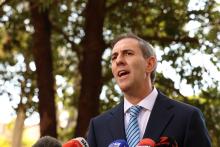
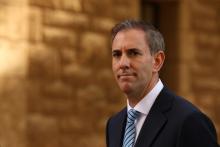
Speaking on ABC radio late last week, Dr Chalmers said other factors beyond government spending had led to increasing prices.
"That uptick in that data was primary holiday spending, but it was also the withdrawal of the energy rebates," he said.
"There were some persistent pressures there in housing and there were some weather related factors as well. But overall, we know that inflation is higher than we would like."
The 'international holiday travel and accommodation' category in the December CPI figures rose 24.4 per cent for the month.
In its monetary policy statement released with the decision, the RBA said public spending was not entirely to blame.
"Growth in private demand has strengthened substantially more than expected, driven by both household spending and investment," the statement said.
"While part of the pick-up in inflation is assessed to reflect temporary factors, it is evident that private demand is growing more quickly than expected, capacity pressures are greater than previously assessed and labour market conditions are a little tight."
What industry says
The country's peak accounting body CPA Australia said while the decision was not unexpected, the decision would hit borrowers who believed the worst of the rate cycle was behind them.
"Borrowers who had been encouraged by recent rate cuts will be deeply disappointed, particularly households coming off long-term fixed rates who are now facing much higher repayments," CPA business and investment lead Gavan Ord said.

CPA business and investment lead Gavan Ord. Photo: CPA.
"Small businesses remain under pressure from high borrowing costs, rising inflation and low consumer confidence. For many, there are no easy options left."
Mr Ord said support for small businesses should focus on long-term reform rather than short-term relief.
"What small businesses need most is decisive government action to reduce red tape and improve the overall business environment," he said.
"Removing the unnecessary regulatory burden helps businesses focus on growing, employing people and serving customers."
In the housing space, industry group Master Builders Australia said the move was expected to suppress construction activity.
"The vast majority of money for commercial building projects comes from private sector investment. Higher inflation and interest rates makes business investment more expensive and less attractive by reducing returns and increasing the cost of inputs," MBA chief executive Denita Wawn said.
"The pain caused by today's decision will also fall on small construction businesses and mums and dads embarking on new builds as inflation and rate rises make businesses more cautious and reduces margins in household budgets."
Ms Wawn said today's move made the case for policy and fiscal reform in this year’s federal budget "even more urgent".
“Areas including building productivity, reducing red tape, and fixing labour shortages require urgent budgetary attention and policy reform to put downward pressure on housing inflation and help the RBA meet its target," she said.
“This can only be done with a strong and growing economy with the building and construction industry at its core. Building and construction activity has a sizeable impact on the performance of Australia’s economy with every additional $1 million of residential building work generating an extra $2.5 million in activity across the whole economy.
“Master Builders continues to call for red tape to be cut by at least 25 per cent and a continued commitment to modernise the National Construction Code to get more buildings off the ground, people into homes and improve economic conditions across the country."
The next RBA rates decision is due on March 17.