Australia's cash rate is now sitting at its pandemic-era peak, as the RBA continues to battle escalating inflation compounded by conflict in the Middle East.
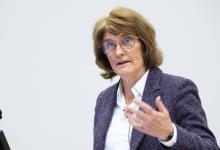
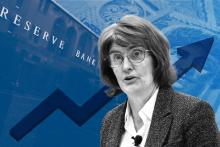
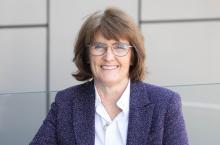
Reserve Bank of Australia governor Michele Bullock revealed today the board had voted to raise the cash rate for the third time this year, up by 25 basis points to 4.35 per cent.
Eight of nine members voted for the increase, with one voting to keep the rate at 4.1 per cent.
The board's monetary policy statement said fuel prices had added to inflation woes already.
"There are early signs that many firms experiencing cost pressures are looking to increase prices of their goods and services. Short-term measures of inflation expectations have also risen," the statement said.
"The baseline forecast, which assumes that the conflict is resolved soon and fuel prices decline, sees underlying inflation peaking higher than was expected in February.
"A longer or more severe conflict could put further upward pressure on global energy prices; this would push up near-term inflation and could also increase inflation further out as these costs are passed through and if price rises get built into longer term inflation expectations."
Ms Bullock, speaking several hours after the decision was handed down, said while it was a "very, very tough time", the central bank needed to act to stem inflation.
Asked whether it was being compounded by government spending, Ms Bullock said all sectors of the economy would need to rein in spending.
"We have a situation in Australia prior to the war where we had demand above supply. The ability of the economy to supply the goods and services, by government and by private sector, was outstripping the ability of the economy to supply it," she said.
"That's why inflation was rising. So by definition, if we are increasing interest rates, what we are trying to do is slow growth in demand.
"To the extent that the government is demanding goods and services of the economy in the variety of ways that they do, whether direct expenditure or giving money to households, that adds to demand.
"In order to close that gap we have to have demand growing by less than 2 per cent. Both public and private sector have to contribute to that. All I’m saying is that the intent to which government make up the shortfalls for households by giving them more money, it makes it harder to dampen demand."
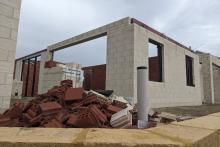
Governor Bullock then weighed in on the impact to Australia's already struggling housing market.
"Monetary policy works partly through the housing market. In a situation where we already have a lack of supply in housing, this is making it worse," she said.
"It’s not us that’s driving this. There’s an essential problem with supply and the inflation of building costs is quite frankly going to make the situation worse.
"What we, I guess, can do, is think more medium term. Think about trying to bring inflation down so that we don’t have persistent high cost growth in the construction industry. That gives certainty to builders and buyers. But that’s not something we can offer in the next 12 months."
Markets had priced in a 74 per cent chance of a 25 basis point increase prior to the meeting.
It comes after Australian Bureau of Statistics data, released last week, revealed annual inflation had hit its highest point in almost three years.
Australian Bureau of Statistics data revealed Australia's CPI rose 4.6 per cent in the 12 months to March, up from 3.7 per cent in the 12 months to February.
That was driven largely an uptick in transport costs of 9.2 per cent; primarily due conflict in the Middle East causing a 32.8 per cent increase to automotive fuel prices in a month.
But conflict in the Middle East wasn't the only factor driving inflation above the RBA's target 2-3 per cent trimmed mean.
Domestic conditions are also too tight, even before the outbreak of the war.
Trimmed mean inflation data, which excludes volatile items like fuel, was unchanged at 3.3 per cent for the 12 months to March 2026.
Roy Morgan chief executive Michele Levin said that inflation expectations had rocketed up in recent months.
“However, since peaking in late March, the cut in the fuel excise has led to a plummeting fuel price – now down over 60 cents a litre since late March," she said.
The cut to the fuel excise slices 26 cents off a litre of petrol or diesel. It will be in effect until June 30, with no decision yet made on whether it would be extended.
“Even before the recent rapid increase in the average retail petrol price, official estimates of inflation in Australia were rapidly increasing, from a low of 1.9 per cent in June 2025, up to 2.8 per cent in July 2025, and now 3.7 per cent in February 2026," she said.
“The sharp rise in inflationary pressures in the broader economy during the last few months of 2025 – increasing by 1.8 per cent points since June – led to the Reserve Bank’s decision to leave interest rates unchanged in late 2025 and increase interest rates by 0.25pc to 3.85pc in early February, and by another 0.25pc to 4.1pc in mid-March."
The cumulative impact of the three rate rises since the start of the year would see the minimum repayment for an owner with a $1 million mortgage rise by some $450 per month.

And while most haven't yet looked beyond today's RBA meeting, Westpac is currently pricing in two more rate rises, in June and August, to bring the rate to 4.85 per cent.
What the banks are doing
Macquarie Bank was the first to move to pass on the 25 basis point hike to customers in full; the big four banks followed.
"Macquarie will increase variable home loan reference rates and the ongoing variable interest rates paid on its transaction and savings accounts by 0.25 per cent per annum effective from May 22, 2026," the nation's fifth largest bank said.
Commonwealth Bank said its change would take effect from May 15.
"Our focus is on supporting customers to stay on top of their finances, with practical tools, clear guidance and access to help when it's needed," CBA executive retail banking Angus Sullivan said.
Industries react
Housing Industry Association chief economist Tim Reardon warned the move would further restrict supply of new homes.
"Monetary policy has an important role in managing inflation, and the RBA's actions reflect the persistence of price pressures across the country," he said.
"However, higher interest rates increase the cost of financing new homes and make it more difficult to bring new housing projects to market.
"As a result, this decision is likely to reduce the number of new homes commencing construction at precisely the time Australia needs more housing supply."
He said with the Federal Budget being released next week, the Albanese government must do more to encourage housing investment; not discourage it.
“If governments are serious about improving housing affordability, they must focus on increasing the supply of new homes,” he said.
Mr Reardon said proposals to increase taxes on property investors, whether in the established or new housing market, would move policy in the wrong direction.
“At a time when higher interest rates are already restricting housing supply, increasing taxes on investors would further discourage the investment needed to finance new housing projects,” he said.
“Policies that reduce investment in housing will inevitably reduce supply and push housing costs higher.
“The logic that increasing taxes on investment in the established market will see more investment in new home building is flawed.”
BDO chief economist Anders Magnusson said while a 25 basis point hike would be felt by most, the impacts of uncontrolled inflation would hurt more.
"With price pressures building at home and abroad, the RBA had little choice but to act," he said.
"Last week’s CPI figures gave the RBA some comfort, but not enough to hold the cash rate today. Trimmed mean inflation did not look as bad as many expected, but this suggests that the sharp rise in energy prices has not yet flowed fully into broader prices.
"Underlying inflation is still above target, and that tells us the pre-war inflation problem has not gone away."
Mr Magnusson said he believed it was the right call.
"The RBA cannot reopen the Strait of Hormuz or bring down global oil prices. What it can do is limit the risk that higher input costs become broad and persistent inflation by reducing demand across the economy," he said.
"Maintaining credibility of the inflation target is also critical to keeping expectations anchored. That is why today’s increase was the right decision. It is pre-emptive, but it is also necessary, because the pain of acting now is much less than the pain of losing control of inflation later."
His opinion was widely backed, with KPMG chief economist Brendan Rynne saying the move was "not a surprise".
Deloitte Access Economics partner Stephen Smith called it "inevitable".
"Australians have now faced three consecutive rate hikes, unwinding the easing delivered in 2025 and returning the cash rate to post-pandemic highs. There is now a credible risk that rates could rise to levels not seen for around 15 years," he said.
"Accordingly, next week’s Federal Budget will be critical. The Government will need to demonstrate a genuine commitment to fiscal discipline and structural reform, rather than relying on broad-based, short-term cost-of-living measures that may provide temporary relief while adding to medium-term inflation persistence.
"Without reforms that lift productivity and expand supply-side capacity, an economy that was already operating near capacity before the Middle East conflict is likely to remain constrained. In that environment, inflationary pressures will be more difficult to contain, and the risk of further monetary tightening will remain elevated."
Treasurer Jim Chalmers said in a statement several "responsible cost of living relief" measures would be included in the budget.
"...including temporary cuts to the fuel excise and heavy road user charge, cheaper medicines and more bulk billed doctor visits, two ore rounds of tax cuts and a $1000 instant tax deduction," he said.