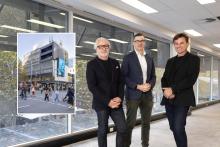
A financial turnaround and boardroom change have added renewed impetus at Perth Symphony Orchestra as it works to deliver long-term sustainability.
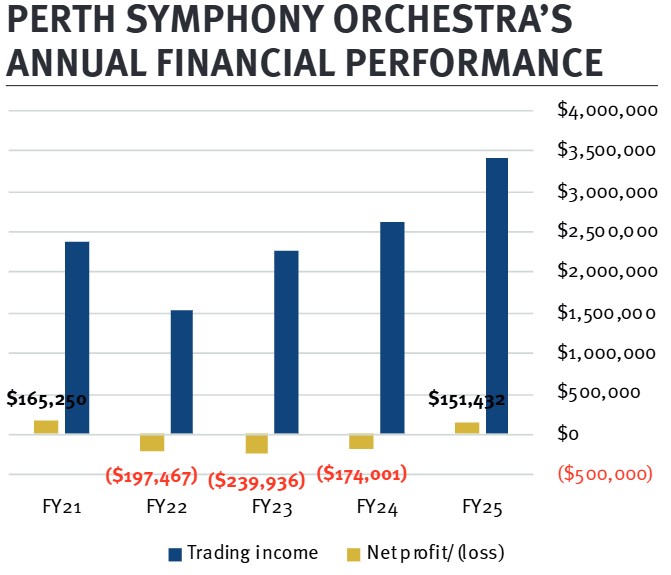
The organisation recorded a surplus of $151,432 in 2025, its first positive result since 2021.
Income rose by 23 per cent from the year before to $3.4 million, as the Claremont-based organisation reached 120,000 people through performances and community engagement programs across Western Australia.
The result comes as long-serving chair and resources veteran Phil Thick steps down after more than seven years.
Business News can reveal Paula Rogers, the former chief executive of the Committee for Perth and incidentally the partner of Mr Thick, has stepped into the role at PSO, which was founded in 2011 by musician Bourby Webster.
PSO chief executive Catherine Henwood said the financial turnaround was significant not simply because of the surplus itself, but because of what it represented.
“It’s actually the first surplus we’ve achieved in about four years, so it’s quite a big moment for the company,” Ms Henwood told Business News.
“Post Covid, as well as [with] that transition from founder-led through to a more corporate structure, it’s taken the company a while to solidify and strengthen the foundational processes, systems and people that have enabled growth.”
Diversification
The orchestra receives $154,125 in annual state government funding to cover operations, so diversifying revenue streams has been essential for growth.
More than 40 per cent of PSO’s income in 2025 came from ticket sales and performance fees.
Philanthropic organisations, including PSO principal partner Minderoo Foundation and the Wright Burt Foundation, accounted for 17 per cent of income.
This share was matched in federal and state government grants.
The remainder comprised donations (10 per cent) and corporate partnerships (12 per cent).
The strategy reflects a deliberate effort to reduce reliance on any single income source.
“We’ve basically gone from a company that was quite heavily reliant on external events coming our way ... and we really have now diversified that,” Ms Henwood said.
Signature productions such as the orchestra’s Reimagined series, Electric Symphony at QV1 and the WA Stories series have helped lift the PSO’s public profile while creating new sponsorship opportunities.
Meanwhile, regional initiatives such as community music and wellbeing residency Green Shoots Moora have demonstrated social and economic impact beyond metropolitan Perth.
“We’ve created signature programs that have revenue associated with them,” Ms Henwood said.
“That work is so successful in so many ways, because not only is it being funded, it’s delivering major impact into areas that wouldn’t get other music.”
The Moora project engaged more than 2,300 students, teachers and community members, generated an estimated $233,900 economic impact for the town, and helped establish 10 new community ensembles.
Ms Henwood said the organisation’s financial performance demonstrated that creative ambition and commercial discipline could coexist.
“What I think is really important about the diversity is that it is built now on a repeatable model,” she said.
“It is something we now know can be done and can be done again in the future, and so very much we’ve set ourselves up for that kind of long-term sustainability.”
The figures underline the scale of the organisation’s growth.
Despite receiving just 4 per cent of its income in the form of operational funding from the state government, the orchestra says it generates $20 in music-making and creative activity for every dollar of operational support.
Passion for Perth
That focus on impact rather than scale alone appealed to Ms Rogers, who was a long-time supporter of the orchestra before stepping into the role of chair.
“I’ve attended almost every concert,” she said.
But it is the organisation’s ability to connect with audiences in unexpected ways Ms Rogers believes sets it apart.
“I just love seeing how Perth Symphony approaches things in a fresh kind of way,” she said.
Ms Rogers said arts and culture played a critical role in shaping Perth’s identity and liveability.
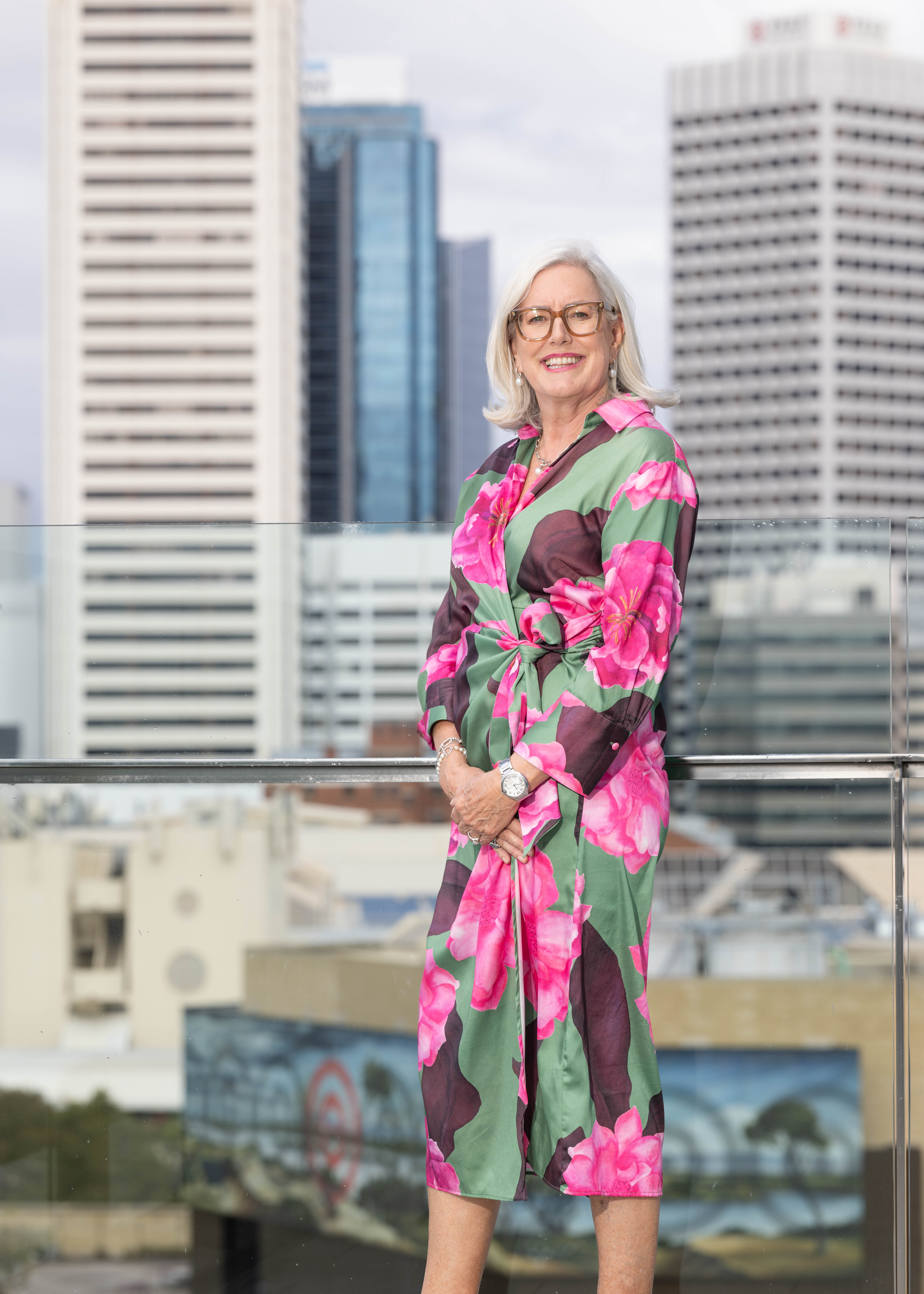
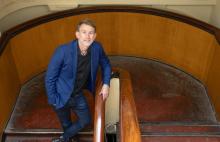
Paula Rogers is also independent chair of the Queen Elizabeth II Precinct Leadership Qroup Photo: Michael O'Brien
“I’ve seen Perth grow and be more ambitious as a place,” she said.
“I really think arts and culture, that’s what makes a place special.”
She points to projects such as Electric Symphony, which enjoyed strong patronage.
“That was just amazing. Two-thousand-five-hundred people making the west end of Perth alive,” Ms Rogers said.
“I think it’s organisations like Perth Symphony that actually activate and accentuate our ‘Perthness’ and our ‘Western Australianness’.”
The appointment marks a milestone for the organisation, with Ms Rogers the PSO’s first female chair.
Ms Henwood described the appointment as both personally meaningful and strategically important.
“To have somebody of Paula’s calibre, her experience and networks, and genuine enthusiasm for what Perth Symphony does and how we do it, is super exciting,” she said.
“There are actually very few female chairs of arts companies, or even companies at all, [so it’s] a real thrill for me.”
Ms Henwood believes Ms Rogers’ extensive connections across business, philanthropy and community sectors will help the organisation capitalise on future opportunities.
“We are definitely in a major growth phase at the moment,” Ms Henwood said.
“Now it’s about more outward-facing [factors] and how the company can build upon those foundations to drive further creativity and innovation in the space.”
That growth will likely continue to be driven by partnerships, which is an area both women identify as central to the orchestra’s success.
One of the projects included under PSO’s collaborative model, led by creative director Fiona Campbell, is WA Stories – a partnership with WA Museum Boola Bardip celebrating the lives of significant individuals in the state – which has returned for a third season.