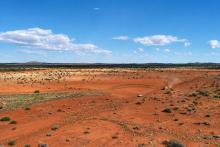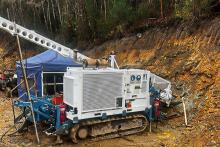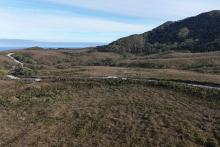
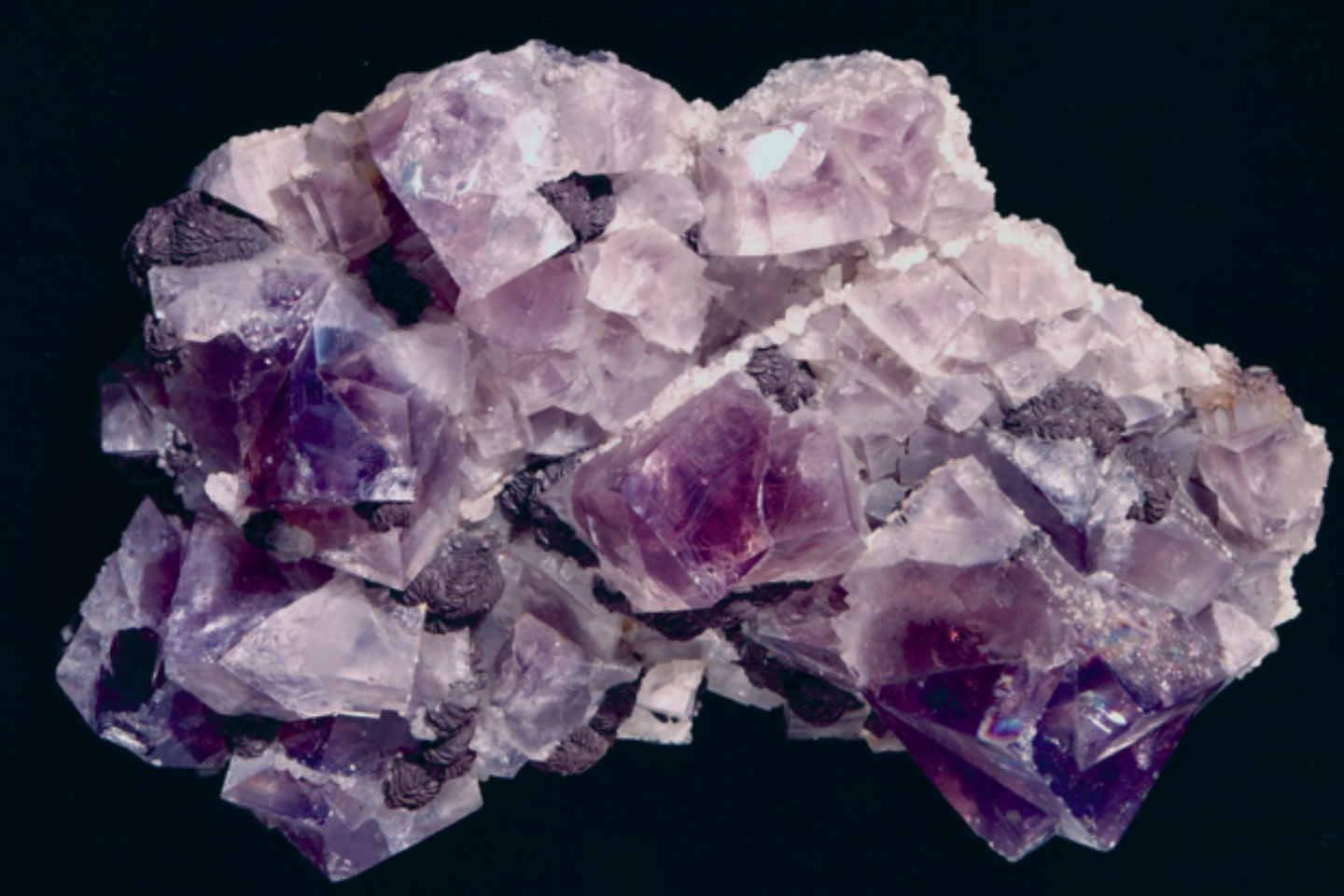
Octava Minerals is heading to Argentina in search of a purple prize, signing up an option over the West Sierra Grande fluorspar project in Rio Negro Province. The 400 square kilometre package takes in four historical mines in a district the company describes as Argentina’s largest and highest-grade fluorspar province.
Fluorspar is the common name for the mineral fluorite, or calcium fluoride, which has recently moved from an industrial workhorse to a strategic asset. The United States, Australia, the European Union, Canada and Japan all classify it as a critical mineral.
Acid-grade fluorite, at 97 per cent calcium fluoride or better, is used to make hydrofluoric acid, which is irreplaceable in etching silicon wafers for advanced semiconductors. It is also a key ingredient in lithium hexafluorophosphate, the most common lithium-ion battery electrolyte. Lower-grade metallurgical fluorspar helps make steel, ferroalloys and aluminium.
The supply story adds some spice, with China producing roughly 60 per cent of the world’s 8 million tonnes in 2025. However, the Asian giant has become a net importer as safety standards and depleting resources started to bite at home, buying two million tonnes annually, or about a quarter of global output. Octava says acid-grade prices have doubled since 2017 and now sit at almost US$700 (A$1000) a tonne.
Octava’s Sierra Grande has pedigree. Mining for fluorspar began in the area around 1964, peaked in the late 1970’s, but has since withered after prices fell in the late 1980s. All up, historical reports credit the Rio Negro Province with roughly 400,000 tonnes of fluorite. The region has historically produced both acid-grade and metallurgical-grade fluorspar using simple processing methods to produce concentrates.
Perhaps, just as significantly as the project and its commodity, little modern exploration has occurred since mining ceased over 30 years ago.
The tenements sit just 17 kilometres west of the town of Sierra Grande, on the paved National Route 3, with the export port of Punta Colorada only 47 kilometres to the east.
The fluorspar occurs in vertical to near-vertical, mostly east-west veins in Jurassic volcanic rocks, a legacy of the break-up of the Gondwana supercontinent. The veins are thick, but the old workings are very shallow, with a high chance of veins continuing down at depths not yet explored.
The Navidad 65 vein is exposed for 275 metres and up to 2.5 metres wide; however, it was only mined to 36 metres, while the Viareggio mineralisation runs for roughly 250 metres and was excavated to barely 10 metres. The Victor and Escondida lodes are reported to stretch up to 350 metres and reach 6.5 metres thick. Octava says earlier miners took the easy pickings, leaving depth untested, and points to the Delta mine, outside the project to the east, where mineralisation extends well below 300 metres.
Octava Minerals managing director and chief executive Bevan Wakelam said: “We are very pleased to have secured this significant landholding in a historical high-grade fluorspar producing region that includes historical fluorspar mines. This project, along with the Byro Critical Minerals Project, aligns well with Octava’s strategy of defining resources of critical minerals used in advanced technologies.”
The deal is a try-before-you-buy offer. Octava will pay US$100,000 in cash and US$200,000 in shares for a 12-month option over Aybull S.A., the Argentine company holding the tenements.
Exercising it delivers 70 per cent for US$100,000 (A$143,000) in cash plus US$250,000 (A$360,000) in cash or shares. The last 30 per cent requires a JORC-compliant indicated resource of at least 500,000 tonnes for a minimum of 30 per cent calcium fluoride, followed by US$300,000 in cash and US$550,000 (A$785,000 in cash or shares. Due diligence must finish within 60 business days. A US$100,000 (A$143,000) facilitation fee to Sapphire Beginnings Capital is payable as US$70,000 (A$100,000) in shares and US$30,000 (A$42,000) in cash.
Octava has fresh cash behind it, with binding commitments for a $1.8 million placement to sophisticated investors. The money will fund exploration and due diligence at West Sierra Grande, with field verification targeted for the fourth quarter of 2026, as well as drilling at the Byro rare earth elements project.
For Octava, a stock priced in cents, this is a cheap entry to a big-ticket play. If due diligence checks out and field sampling backs the old grades, drilling could follow, and an indicated JORC resource of at least 500,000 tonnes would unlock full ownership and give the company a second critical minerals string alongside Byro.
With China a net importer and acid-grade prices climbing, a modern resource 47 kilometres from a port may get noticed. Although It’s still early days, with conditions to satisfy, the setup appears intriguing.
Is your ASX-listed company doing something interesting? Contact: matt.birney@businessnews.com.au
Share Price
Revenue
| 400 | - | Octava Minerals | $1,459.00 |