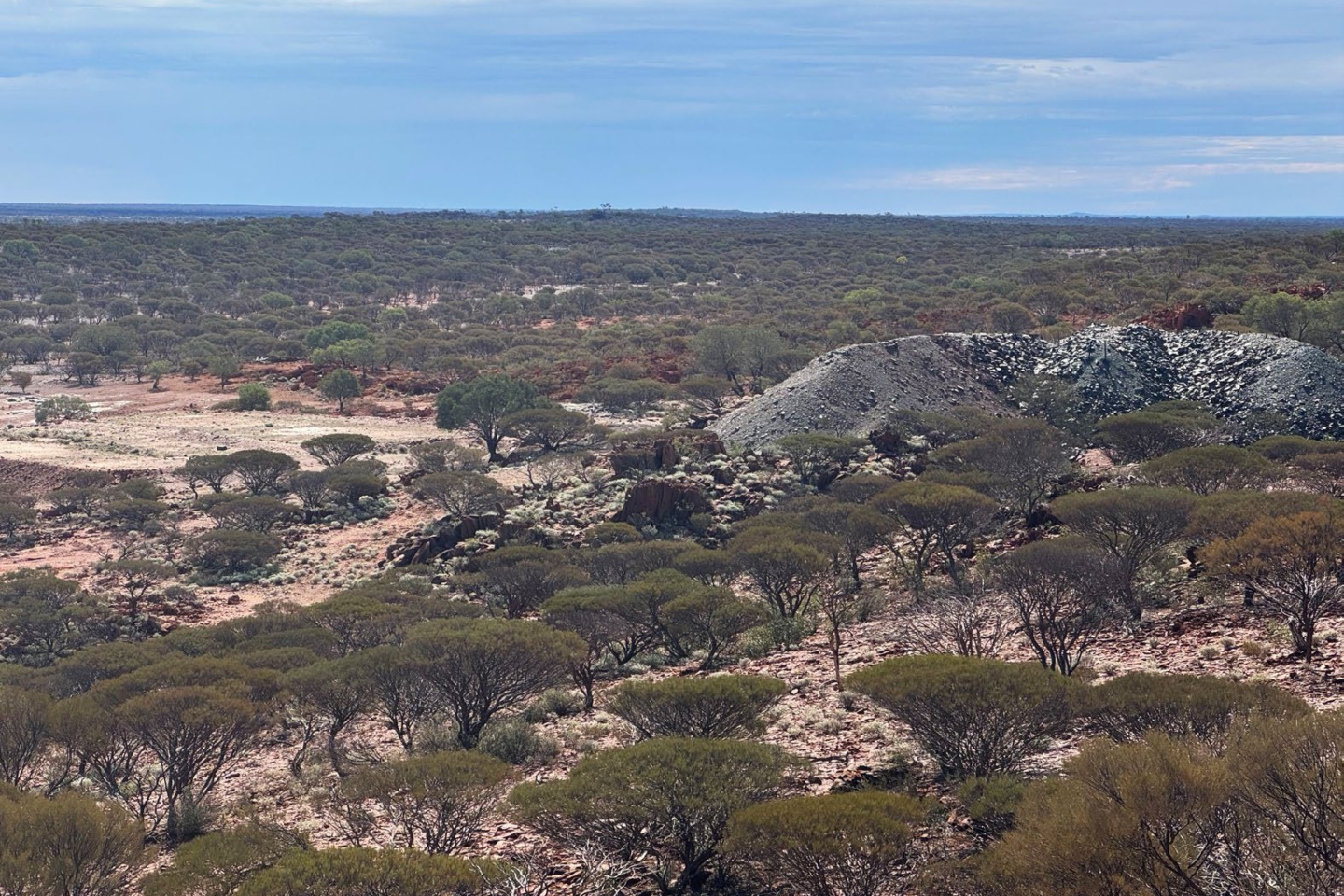
Neometals Ltd has boosted its Barrambie gold project, 70 kilometres northwest of Sandstone in Western Australia’s Mid West, delivering an updated mineral resource estimate for its Ironclad deposit that nudges the project another step closer to near-term production.
The refreshed tally stands at 285,000 tonnes grading 1.6 grams per tonne (g/t) for 15,000 ounces of gold, adding 2000 ounces to the maiden estimate announced in June last year. Within that inventory lies a higher-grade core comprising 180,000 tonnes at 2.1g/t for 12,000 ounces of gold.
Both resources sit within the company’s A$6500-per-ounce optimised pit shell and were measured using a 0.5g/t gold cut-off grade.
However, the biggest boost to the project’s economics has not come from the additional 35,000 tonnes and 2000 ounces, but rather from the significant increase in confidence in the resource.
Neometals says that, following last year’s infill drilling and the inclusion of additional historic data, 86 per cent of the ounces now reside in the higher-confidence indicated resource category, with mineralisation extending from surface.
That sort of upgrade is exactly what companies want to see when chasing extensions, tightening mine plans, crunching the economics and clearing the approvals runway towards potential production. The updated resource estimate will likely bolster completion of Neometals’ planned scoping study.
The Ironclad drill database comprises 291 reverse circulation (RC), rotary air-blast (RAB) and diamond holes. Apart from the RAB holes, all drilling data were used in the resource upgrade, including 51 angled RC holes and seven infill diamond holes drilled by Neometals over the past year.
Neometals Ltd managing director Chris Reed says: “The Indicated and Inferred MRE is a critical step in this journey. Crucially, more than 86% of ounces are now in the Indicated category, giving us a strong platform for potential Ore Reserve conversion once all of the key technical and economic factors have been worked through.”
The Ironclad deposit comprises structurally-controlled gold mineralisation from surface to a maximum drilled depth of 140 metres, with higher-grade gold more closely associated with shear zones in gabbroic rock types.
To tackle the tricky resource estimation that can arise in shear-hosted deposits where grades can vary sharply over short distances, Neometals says it has applied a specialised geostatistical method designed to better separate higher- and lower-grade zones within the system.
On the resource development front, Neometals is aiming to complete a scoping-level assessment this month in parallel with native title discussions and other key geotechnical studies, including geology, metallurgy and hydrology.
The company has also lodged a permit application to clear native vegetation and has begun sampling for a second round of metallurgical test work.
And it’s not just gold that will be keeping the drillers busy. About 20 kilometres south-southeast of Ironclad, the company recently flagged eye-catching copper results at its historic Rinaldi workings, where old records point to production of 1407 tonnes at an average grade of 9.8 per cent copper.
Recent surface sampling at Rinaldi returned grab and rock-chip assays up to 24.4 per cent copper in one sample, with another sample delivering standout polymetallic results, including 22.5 per cent copper, 2.10g/t gold and 51.3g/t silver.
Initial RC drilling has been planned for Rinaldi to test around mapped copper-rich veining exposed by the old timers, with results of the program expected to inform future copper exploration.
Additionally, planning and budgeting are being finalised for follow-up work at other priority gold targets, including initial drilling at the company’s Kismet, Woodies and Silver Lining prospects.
With Ironclad’s latest ounces now firming up its indicated resource category, a scoping study looming and several nearby prospects waiting for the bite of the drill bit, Neometals suddenly has plenty of gold plates spinning at Barrambie.
And if the company’s copper drill results at Rinaldi can match its punchy polymetallic surface numbers, a handy copper-gold-silver coloured string could soon be added to the company’s Barrambie bow.
In short, Neometals appears to be steadily transforming its Barrambie story from early-stage scouting along a largely forgotten greenstone trend into something that is beginning to look a lot more like a genuine mining proposition.
Is your ASX-listed company doing something interesting? Contact: matt.birney@businessnews.com.au


 By Doug Bright