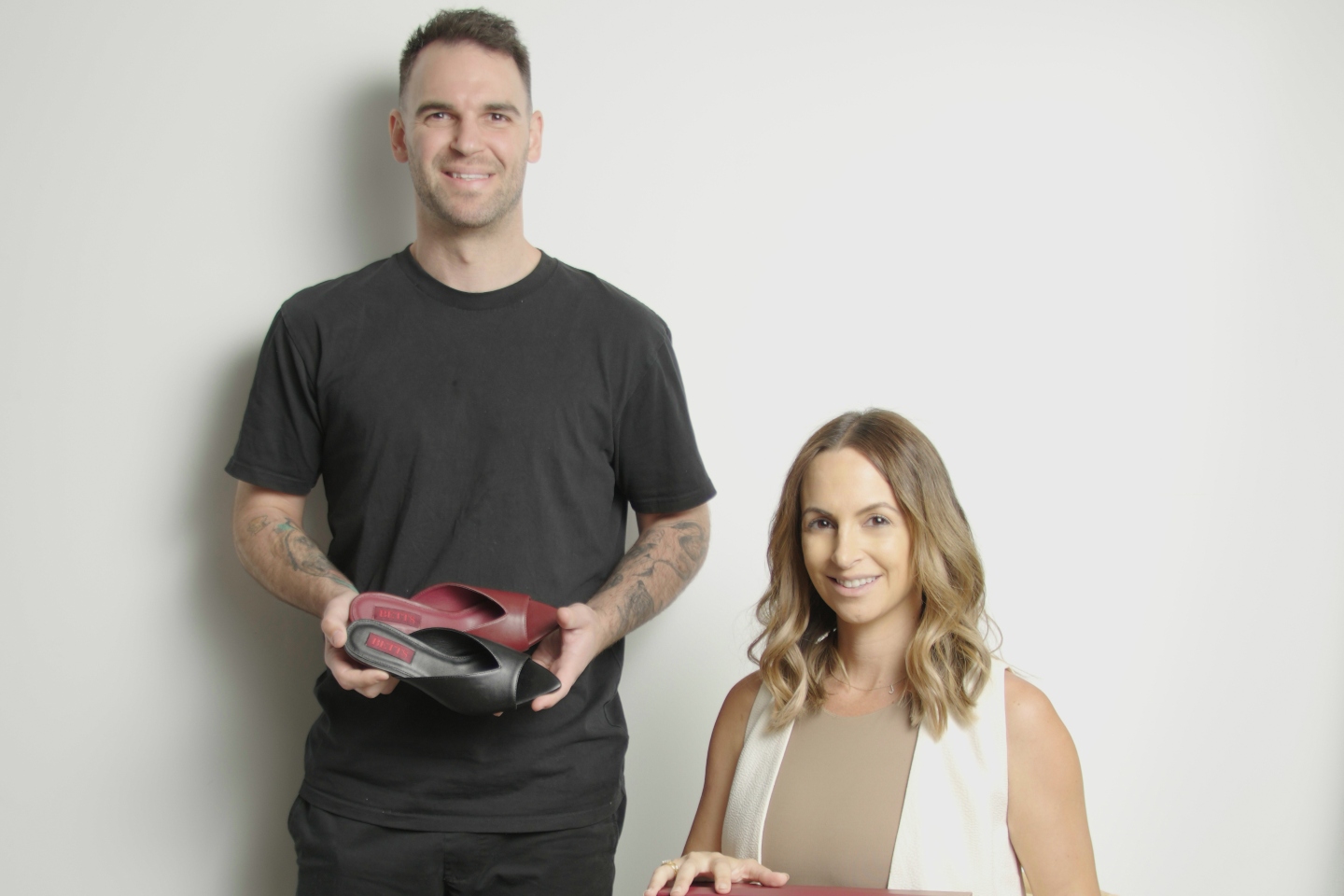
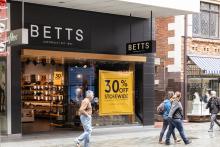
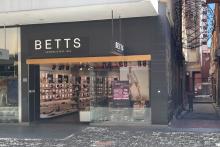
Michael Breckler was born into the Betts dynasty, which traces its origins to 1892.
His career with Perth-based Betts started in sales at one of the business’s retail outlets when he was just 13.
For the next 22 years, Mr Breckler worked across all parts of the family-run and majority-owned business, before becoming chief executive in late 2024.
Now managing director, Mr Breckler is delivering one of the biggest strategic shifts in the 133-year history of the fifth-generation family business.
Betts has decided to stop selling men’s and children’s shoes to focus on women’s wear amid a significant rebrand, modernised e-commerce mandate and refined retail presence.
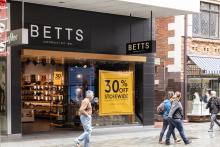
The business has traditionally stuck to a retail-first strategy, which at its peak meant operating 220 bricksand-mortar stores across Australia.
With the rise of e-commerce, growing competition, changing consumer behaviours and the costs associated with its store exposure, Mr Breckler wanted to refine the retailer’s direction.
Two years of consecutive losses, largely driven by a group of retail stores bleeding money or breaking even, also necessitated an overhaul.
Prior to taking the helm, Mr Breckler needed to convince the board a refocus on e-commerce was the way to drive the business forward.
He pumped resources into the e-commerce and marketing side of the business, spending two years doubling the size of the division before presenting his case.
In October 2024, Mr Breckler assumed the role of chief executive and was named managing director of Betts Group earlier this month.
It comes as Michael Breckler’s father, Danny Breckler, steps down as managing director but remains executive chair of the business in which he’s a substantial shareholder.
“The biggest approach I’ve had in the past 12 months has been that, while we’re a 133-year-old business, I’ve tackled everything like we’re a startup,” Michael Breckler said.
“I’m very open to change, moving quickly, making decisions quickly.
“If the reason we do something is because that’s the way we’ve always done it ... I’ve thrown that out. That’s not good enough.
“It’s about how we can do things better ... across every part of the business. That’s what’s really led to some big strategic shifts and real transformation in the past 12 months.”
Betts posted sales revenue of $52.9 million in FY25, up from the $51.6 million in revenue it generated in FY24.
It registered a loss of $2.2 million in FY25, an improvement on the $3.9 million loss during the previous period.
The Breckler family further strengthened its position in the business after taking up more than $960,000 worth of new shares that collectively represent about 90 per cent of Betts’ issued stock.
Mr Breckler’s sister, Robyn Moreno, is chief product officer leading product design, with several other family members also involved in the day-to-day running of the business.
Realignment
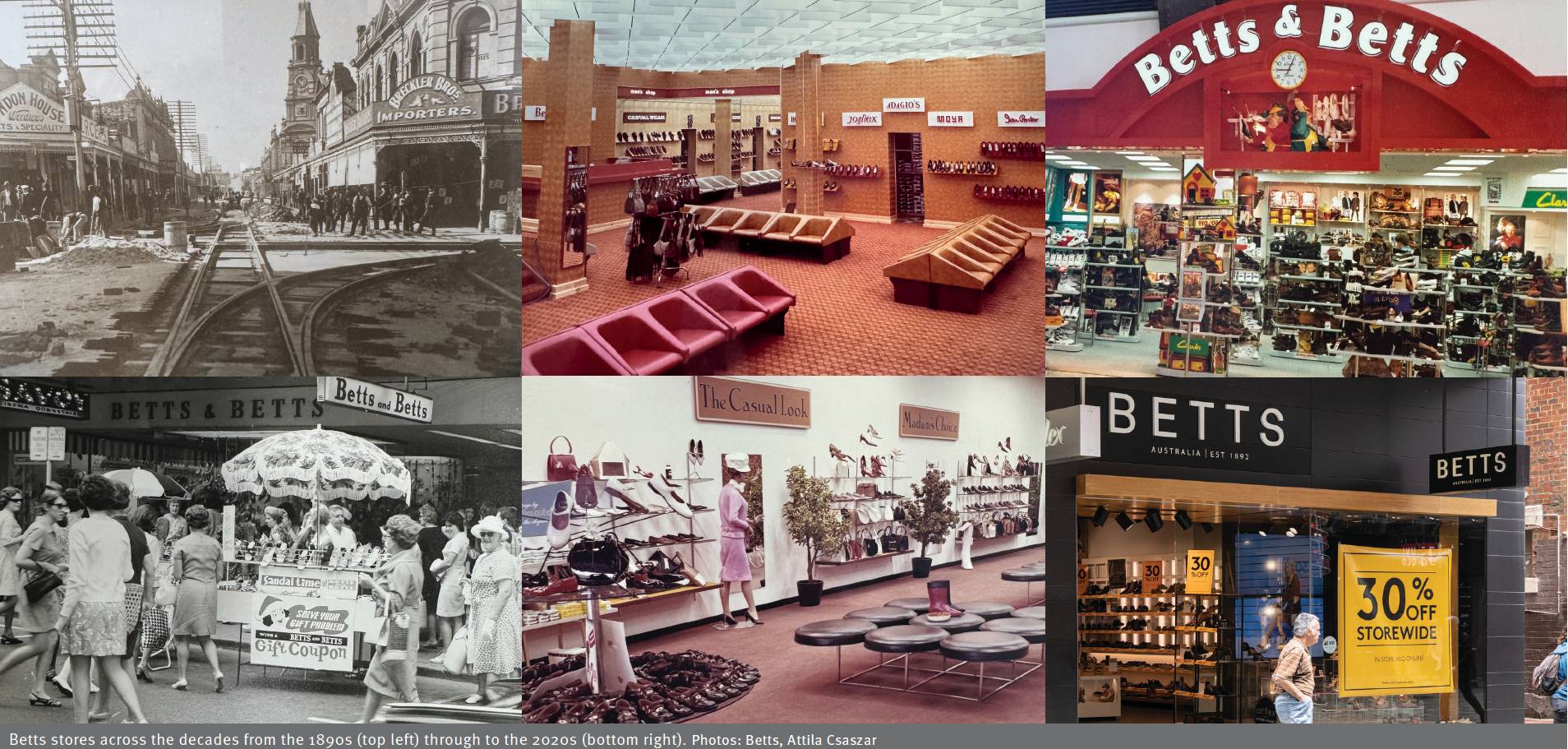
The Betts brand has taken on multiple identities during its history.
The first iteration of the family business was established by Russian immigrant Yoel Breckler as a boot repair store, named Breckler Brothers, near the Fremantle Town Hall.
His legacy and business were carried on by his wife, Fanny, and two sons.
Fanny Breckler opened the first Betts & Betts retail store in Hay Street in the 1920s ahead of an aggressive retail expansion.
The products, branding and name changed with the decades as it introduced and discontinued in-house brands, which more recently have included Zu, Airflex and Zero.
Betts has long been considered a family destination shoe shop, despite its key clientele now being young, fashion-forward women.
Mr Breckler – the great, great grandson of Fanny – said a misalignment had developed between how the brand was perceived and the product it was selling.
“Most Australians over 30 years old would have grown up with fond memories of Betts & Betts, getting their school shoes or their school ball shoes, and going to shop with mum and dad and the whole family,” he said.
“For most of our history, we were a family shoe store.
“What we’ve learned over the past five years is that, in an attempt to try and be all things to all people, you’ve watered down what you mean to anyone.”
Mr Breckler said a decision was taken early this year to double down on women’s fashion, which was the best-performing part of the business with its core customer base of women aged 20 to 39.
He said Betts had found itself chasing a market that no longer existed, as sales of men’s and school shoes declined while revenue from women’s shoes grew.
This falling demand for men’s, children’s school shoes and sub-brands meant stocks of those products had been scaled back for several years amid increased competition (particularly from branded sneakers) and a consumer shift towards once-a-year spending.
“For a long time we were probably the number one shoe player in Australia. At one stage we had about 45 Betts Kids shoe stores around the country,” Mr Breckler said.
“There wasn’t a hell of a lot of competition during our heyday, and we got to this stage in around 2015 when we had around 220 retail stores around the country, under Betts, AirFlex, Betts Kids, Zu Shoes.
“There were lots of retail stores and we were very overexposed with rent and fixed costs, especially after the GFC when it was a tough time for retail.
“At that point we went, ‘All right, let’s get rid of all the shops. Let’s bring it all back under one roof so you go into one shopping centre we have one store’.”
Meet the market
Mr Breckler said Betts made some of the best women’s fashion shoes in terms of quality, comfort and price point compared to the competitors on the market.
However, he acknowledged that wasn’t necessarily how the brand was perceived
To close that gap, Mr Breckler brought in Jess Hatzis, co-founder Willow & Blake, one of the leading brand and design agencies in Australia.
Ms Hatzis was initially engaged as a consultant to help devise and deliver a major rebrand across all channels to realign Betts’ brand with its product.
Five months in, she took on the in-house role as chief marketing officer and also bought into the privately owned business as a shareholder.
Betts has now rolled out a new marketing and public relations strategy, including a refreshed website and social media, rebranded logo and packaging.
In doing so, the business doubled its marketing spend to about $2.9 million in FY25.
Right-sizing
Returning the business to profitability, a feat Mr Breckler is expecting this financial year, required the closure of several underperforming stores.
Reducing the store network formed part of the strategy to right-size the business, reduce fixed costs and amend legacy lease deals.
Betts had 65 stores when Mr Breckler started as chief executive in late 2024.
At last count, it was operating 43 stores, with further locations to close.
“With the FY24 loss of $3.9 million, we had about maybe 65 to 70 stores during that year, half of which would have broken even or lost,” Mr Breckler said.
“That’s where my strategy came in, to get rid of these as quickly as possible, because that’s what’s bleeding money.
“[Meanwhile the] website is growing incredibly and very profitable and the top 20 stores are performing really strongly and [are] very profitable.”
But the strategy doesn’t signal the end of Betts’ retail presence.
From 2026, Mr Breckler plans to invest in refitting select stores with a modernised, luxurious design, while maintaining the accessible product price-point.
As the strategy continues to develop, Mr Breckler anticipates that retail and e-commerce will each account for half of total revenue.
When he took over the e-commerce arm, it represented 8 per cent. Today, it generates 33 per cent of revenue.
“The online business was doing $5 million a year, and it’s going to close this financial year out pretty close to $15 million,” Mr Breckler said.
“That’s come from understanding online marketing, becoming pretty damn good at it.”