Rival heirs are entitled to Gina Rinehart-led Hancock Prospecting’s iron ore royalties over some mining tenements in the Pilbara, the state’s highest court ruled.
The Supreme Court of Western Australia delivered a mammoth 1,655-page judgment on Wednesday, over a dispute that concerns billions of dollars.
WA Supreme Court Justice Jennifer Smith found Wright Prospecting was entitled to 50 per cent of past and future royalties paid to Hancock entity Hope Downs Iron Ore, from Rio Tinto.
However, Justice Smith dismissed Wright’s claims for a proprietary interest over the Hope Downs reserves.
Wright Prospecting Pty Ltd (WPPL) claimed it was owed royalties from Hancock Prospecting’s iron ore activities in the Pilbara, under an agreement the mining companies’ founders struck in the 1980s.
Peter Wright’s descendants also claimed part ownership of Hope Downs reserves 1-4, previously called East Angelas.
Rio Tinto acquired a half stake in the Hope Downs reserves in 2005, with the sites developed to yield lucrative iron ore projects.
DFD Rhodes also claimed royalties from Hancock, 1.25 per cent from the iron ore projects developed on the Hope Downs reserves.
Descendants of company founder Don Rhodes relied on an agreement with Lang Hancock, signed in 1969.
Mrs Rinehart’s children joined the already complex litigation in 2016, also claiming ownership in the Hancock mining empire that they said were a gift from their grandfather.
A three-month civil trial over the dispute took place in the Supreme Court of WA in 2023, and it took Justice Smith more than two years to deliver a decision.
However, parties are expected to appeal the ruling and extend the long-running feud among the mining heirs.
Justice Smith dismissed DFD Rhodes' claims in contract for royalties but upheld part of its claim in equity to past and future royalties from Hancock Prospecting Pty Ltd (HPPL) and Hope Downs Iron Ore's 50 per cent share of iron ore produced from the Hope Downs reserves.
HPPL's claims for indemnity and contribution from WPPL's in contract and in equity, for royalty payments to DFD Rhodes for royalties, were dismissed.
In her decision, Justice Smith found Hancock Mining and its subsidiaries held the beneficial interest in the East Angelas exploration licences on behalf of HPPL at all material times.
The ruling trumps WPPL's proprietary interest claims over the East Angelas exploration licences, and claims by Mrs Rinehart's children John Hancock and Bianca Rinehart.
THE DECISION EXPLAINED: INSIDE THE 1,655-PAGE JUDGMENT
Reaction
In a statement, HPPL claimed the remaining DFD Rhodes royalty claims only totalled $4 million a year, and $14 million for Wright Prospecting.
Wright Prospecting said it welcomed the decision.
"Wright Prospecting commenced this action to recover our share of royalties from the Hope Downs 1 -3 mines," its statement read.
"That claim has been upheld. WPPL also sought either a proprietary interest or a royalty in the Hope Downs 4-6 mines and has been successful in its royalty claim.
"These proceedings were commenced in 2010 and, after many delays, we are pleased to finally receive a result in our favour.
"The decision is lengthy and complex. We will review it in detail before determining if any further steps need to be taken."
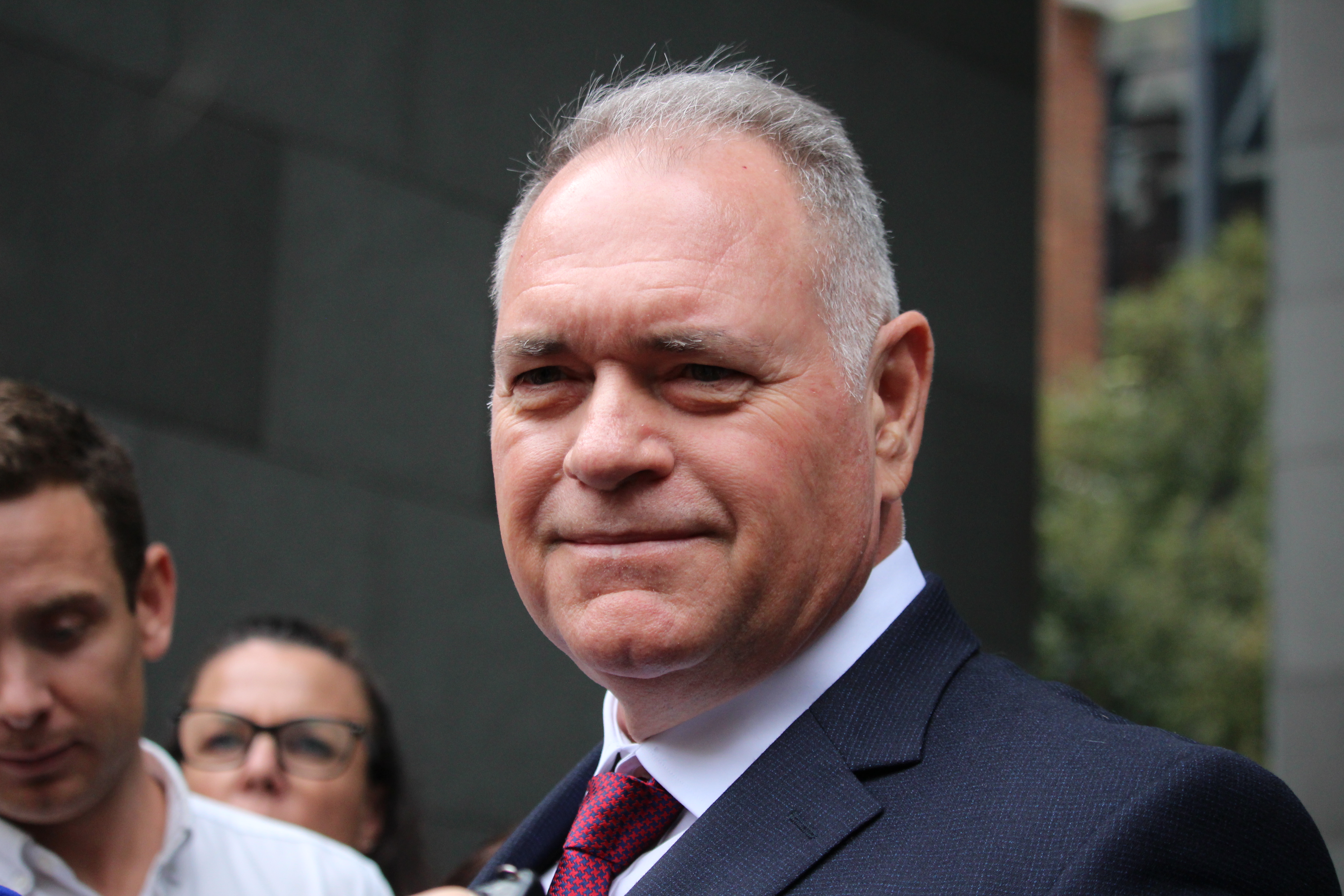
Matthew Keady speaking to reporters outside court. Photo: Ella Loneragan
Hancock Prospecting executive director Jay Newby said the issue of royalties was far less significant compared to the ownership claim.
“The primary issue in these proceedings is ownership of the Hope Downs and East Angelas tenements," he said in a statement.
"HPPL welcomes the WA Supreme Court decision which decisively confirms HPPL’s rightful ownership of these tenements firmly rejecting the baseless ownership claims of John [Hancock], Bianca [Rinehart] and Wright Prospecting Pty Ltd in their entirety."
Mr Newby said WPPL, DFD Rhodes, and Mrs Rinehart's children John Hancock and Bianca Rinehart, made no meaningful contribution to develop Hope Downs and East Angelas.
"Bringing Hope Downs to life required significant investment in exploration, evaluation and development, obtaining thousands of government approvals, securing major project financing and a joint venture partner," he said.
Outside court, DFD Rhodes chief executive Matthew Keady said the decision recognised the contributions the company's founder, Don Rhodes, made to the iron ore industry.
Mr Keady said the quantum of money won for the Rhodes family was "substantial" but expected more arguments over the amount.
Commenting on Hancock Prospecting and Mrs Rinehart, Mr Keady said they were a formidable opponent.