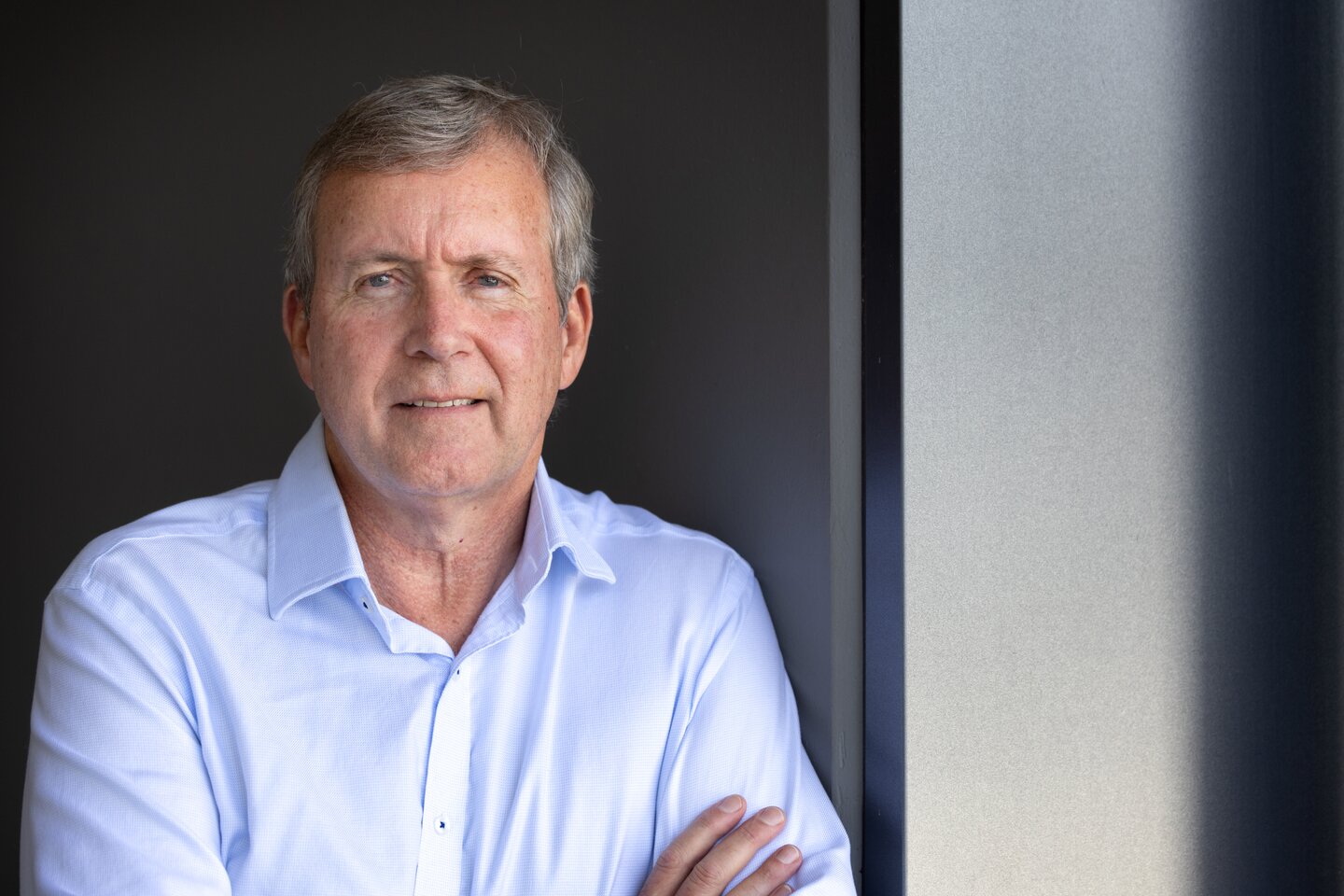
Reece Whitby chuckles at the mention of Alan Carpenter’s WA Labor ‘dream team’.
An eternity ago in political years, it was early 2008 when the Channel 7 state political reporter shocked colleagues and the establishment by announcing a preselection nomination for Labor in the seat of Morley.
Chosen as the then-premier’s main man in Morley, Mr Whitby was one among a preselected cohort including Karen Brown, Peter Tinley and Rita Saffioti to attract the ‘dream team’ moniker from local media.
“Can I say something about the dream team?” Mr Whitby said during an interview with Business News.
“There was a picture of a whole lot of candidates at Kings Park, and the inference was that Alan Carpenter hand-picked the whole lot of us.
“In fact, you know, they were all the candidates being preselected for that 2008 election.”
It was a lesson from the other side of the press pack.
Labor would lose the election, and the seat of Morley narrowly, after former Labor cabinet minister turned independent John D’Orazio preferenced the Liberal Party in a bruising campaign.
“I had my dream job as a political reporter, a senior reporter, and Seven was the pinnacle because it was the ratings leader,” Mr Whitby said.
“But I had this thought, ‘if I don’t do this I’m going to be there until the end of my career’.
“I made the move, and I lost by 140 votes.”
Politics had landed its first blow on Mr Whitby. It wouldn’t be the last.
After returning to his media roots in a lower-profile role at Seven, he worked his way back in front of the camera but away from the political rounds where he made his name.
Mr Whitby again put his hat in the ring as the Labor candidate in Morley in the 2013 election. It was a move that spelled the end of a successful career at Seven.
“When the next election came around and I lost again, I was pushing the favour a bit to go back [to Seven],” he said.
Declaring a political allegiance while reporting on news is not standard practice. It does, however, provide some insight into the motivations of the man who’s now the state minister for energy, environment and climate action.
Mr Whitby remembers the moment that triggered his political consciousness, leading him first into media and later, politics.
In a Housing Commission home in December 1972, nine-year-old Reece Whitby watched his family’s black and white television intently as it was announced that Gough Whitlam had become Labor’s first prime minister-elect in 23 years.
Won on a campaign slogan of “It’s Time”, the election was a significant moment for Australian politics, marking Labor’s first federal win since 1949.
The significance of breaking a 23-year drought may not have fully resonated with a child, but the response of those on the Balga street where he lived spoke volumes.
“The Whitlam election was a big moment in our street, because none of us were well off,” Mr Whitby said.
The area was home to many recent arrivals to Australia; migrant families who celebrated the Labor win.
“There was a German lady next door, an Anglo-Indian family across the other side, and a Dutch family and an Italian family,” Mr Whitby said.
“I remember the way the adults were responding to this big change.
“I think that had a big impact on me.”
Like many of his generation, Mr Whitby credits his early political education to dinner table conversation with his parents, who were small business owners, and a grandfather with a striking physical similarity to, and distaste for, Liberal stalwart Sir Charles Court.
Mr Whitby said he recognised his ambition to be involved in politics from an early age.
It was a fire that smouldered over the years.
But in 2013, after a second electoral defeat and with the door closed on a TV return, Mr Whitby was at somewhat of a professional crossroads.
“I actually contemplated going into something in a whole new direction, but I wasn’t sure what that was,” he said.
“I thought about going to the corporate sector or business, or something. I really didn’t know.”
An unexpected phone call from then opposition leader Mark McGowan, who had a media adviser’s position open up in his office post-election, put that plan on ice.
“Mark called up and said ‘Look, we’ll give it three months’,” Mr Whitby told Business News.
“’If you’re not happy you can go. If I’m not happy with you, you can go.
“It was a big financial change for me. I was earning less than half of what I was earning at Channel Seven.
“But I thought, ‘Well, I’ll do this for three months or something and work it out’. And I really enjoyed it.”
As part of a close-knit team that included Jo Gaines and Dan Pastorelli (now chief of staff for Premier Roger Cook), Mr Whitby stayed with Mr McGowan’s office until unfinished business presented in 2017.
“I think one of the things we realised in that office was his potential, that the rest of the community didn’t see,” Mr Whitby said of his former boss.
“His personality came out later, during COVID, in those long press conferences that allowed people to get to know him like we knew him.”
Shifting south
That Business News met with Mr Whitby in a Baldivis electoral office, about 60 kilometres from the Morley seat he twice contested, highlights his change of tack in 2017.
The inaugural member for the city’s fastest growing electoral region is a long way from his political roots, but now entrenched seven years into his tenure.
His seat shares borders with the Labor strongholds of Rockingham, where Magenta Marshall replaced Mr McGowan following his 26-year tenure as local member, and Mr Cook’s Kwinana electorate.
It’s here that Mr Whitby has established himself as a cabinet minister of growing seniority in a party undergoing a period of transition.
Mr McGowan is now gone, as is Ben Wyatt, while Bill Johnston, Sue Ellery and John Quigley will depart the parliament after next year’s ballot.
Fellow dream team representative Ms Saffioti is now the treasurer, while Mr Tinley’s most recent role of public note has been to chair the committee conducting an inquiry into the state’s domestic gas policy.
With Mr Johnston’s retirement from cabinet late last year, Mr Whitby assumed the joint ministerial responsibilities of energy, environment and climate action.
Within four days of his appointment to the energy portfolio, he was fronting former colleagues in the press pack to justify a series of sweeping changes to the state’s environmental approvals processes and the Environmental Protection Authority.
Critics have argued the portfolio mix does not make sense, given the perceived conflict between the interests of energy producers – including those seeking approval for natural gas projects – and the environment.
Mr Whitby said he understood why people got agitated on the subject.
“People are passionate, and they’ve got a right to be,” he said.
“If you are about the environment then you really want to see change, and I think there’s a level of frustration there. But I don’t think it’s necessarily bound in accuracy.”
Instead, Mr Whitby said there were significant synergies between environment and energy, given he considers Western Australia among the states with “the highest hurdle to jump” in terms of emissions.
“We have a lot of energy-intensive industries, which are large emitters,” he said.
“A third of the Safeguard Mechanism [the nation’s policy for reducing industrial emissions] facilities in Australia are in WA.
“It’s a tough road for us, but with that challenge comes enormous opportunities: we have the sun, we have world-class wind resources. There are few other places on the planet better placed to embrace renewables than WA.
“I actually think it makes sense to put [energy, environment and climate action] together because so many of the solutions and the issues we have to address are through decarbonisation through electrification.”
The move towards decarbonisation also includes the fierce public debate around natural gas, and the government’s pitch of its importance to regional decarbonisation.
Mr Whitby said natural gas would be required both domestically and internationally during the energy transition, as a flexible firming power source locally and as a decarbonisation source abroad.
“If we were to take a very selfish view and worry about our emissions as a jurisdiction in WA, we would do a couple of things,” he said.
“We’d actually not reduce global emissions as much as we currently can, because we’d played no part in displacing coal in overseas markets.
“There’d be a net gain for the planet in terms of emissions. And it would also be a very silly thing to do for the state because it would cut our throat economically and result in job losses and lost economic opportunities.
“I don’t think that looking after the environment and the economy are mutually exclusive.”
Mr Whitby said Synergy’s investments in battery infrastructure in Kwinana and Collie, and a private battery being built by French company Neoen, were projects of huge importance in supporting power demand in the South West Interconnected System over the coming five years.
Lights, camera
There are shades of Mr Whitby’s experience in 2008 on the other side of the political spectrum ahead of the 2025 state election.
It’s well known that Seven Network personality turned City of Perth lord mayor, Basil Zempilas’s intention to run as the Liberal candidate for Churchlands has raised eyebrows at Dumas House.
What’s less known is the proximity with which Mr Whitby and Mr Zempilas once worked, having shared a partition wall in the network’s Osborne Park headquarters.
“I had Basil on one side, and [Channel Seven reporter] Geof Parry on the other side,” Mr Whitby said.
“It was very entertaining and very loud.”
He said while Mr Zempilas was a great media performer who excelled in front of a camera, politics involved more than polished camera presence.
“One thing I’ve found is that the parliament, and being in politics, requires other skills as well,” Mr Whitby said.
“It’s not all about simply being a performer in front of the camera; it’s actually understanding the way bureaucracies and government work, and it’s having that involvement with the community.
“There’ll be lots of people putting their hands up and … good luck to them. It’s a democracy and everyone should have a go.”
From the Labor perspective, Mr Whitby said the government’s stability in office had created a party room with depth that was the envy of its rivals.
“You’ve got a great, big backbench, with people who are really skilled,” he said.
“And you’ve got people who have been there for a term or two with good experience.
“I think we’re spoilt for choice in terms of future leaders emerging.
“You need to keep updating and renewing. I think we’re doing a good job of that.”