Diversity means no-one’s bitter in the boardroom





The times they may be a-changin’, but in many respects it remains a man’s world, at least in the boardrooms of Western Australia’s major businesses.
A deep dive into the leaders chairing the state’s ASX-listed companies reveals that traditionally masculine names like Peter, John and David appear most often at the top of the corporate directory.
So often do these three names feature across the upper layers of corporate life – Peter 35 times, John 29 and David 28 – they outnumber the total number of women leading public company boards.
Wider board compositions tell a similar story. Women are represented in roughly one in 10 board seats across the state, while more than half of Western Australia’s public company boards have no female representation at all.
The numbers reflect the ubiquity of WA’s materials sector, home to just under 500 public companies, nearly 90 per cent of which have a market cap under $250 million.
Former Australian Institute of Company Directors chair Elizabeth Proust recognises the challenges smaller companies face when it comes to constructing gender-diverse boards, especially when liquidity is tight.
“Boards beyond the ASX 200 tend to have a lower rate of turnover,” Ms Proust told Business News.
“Cost is more likely to be a limiting factor, both in terms of remunerating independent directors and employing professional search firms to provide a balanced list of candidates for a board position.”
Conversely, the top end of town tells a more gender-diverse story: out of WA’s 50 largest resources stocks, only 11 have no female board representation.
Deterra Royalties, Iluka Resources, Perenti, Pilbara Minerals, South32 and Westgold Resources all employ female chairs, while Lynas Rare Earths and Woodside Energy have appointed female chief executives.
There is also momentum on a national scale. As of early March, according to the AICD, the boards of companies listed in the ASX 20 and the ASX 50 comprised at least 40 per cent women (on average).
With the ASX’s 200 largest companies just a few appointments away from reaching the same milestone, it seems the bourse’s biggest players are pulling focus in the push for more gender-diverse boards.
A clear mandate is shaping up as companies seek to diversify their boardrooms. Companies increasingly ascribe to the idea of a 40-40-20 gender target, which would involve 40 per cent of board seats being held by men, 40 per cent held by women, and the remaining 20 per cent able to go either way depending on the company’s needs.
Former Chief Executive Women head Marie Festa believes the target sets the vision for companies wanting to level the playing field.
“Like anything, it’s unlikely for change to occur without first making a commitment,” Ms Festa said.
“Companies that set a forty-forty or better target are three times more likely to achieve a gender balance than those without.”
Still, some industry leaders are worried that the target won’t go far enough to bring about effective representation for women in the boardroom.
UWA chancellor, Zip Co chair and former Chief Executive Women president Diane Smith-Gander broadly supports the 40-40-20 target but stresses it shouldn’t be the only initiative employed to boost female representation.
“Targets are only helpful if they’ve got some sort of teeth,” Ms Smith-Gander told Business News.
“My view is that quotas and mandates should be an intervention or a last resort.
“There are other levers like remuneration that give a very solid message to management about how you would like things to be done.”
Meanwhile, other companies remain divided on how best to bridge the gender divide, as evidenced by the ASX Corporate Governance Council having to abandon a proposed fifth edition of its governance rulebook earlier this month.
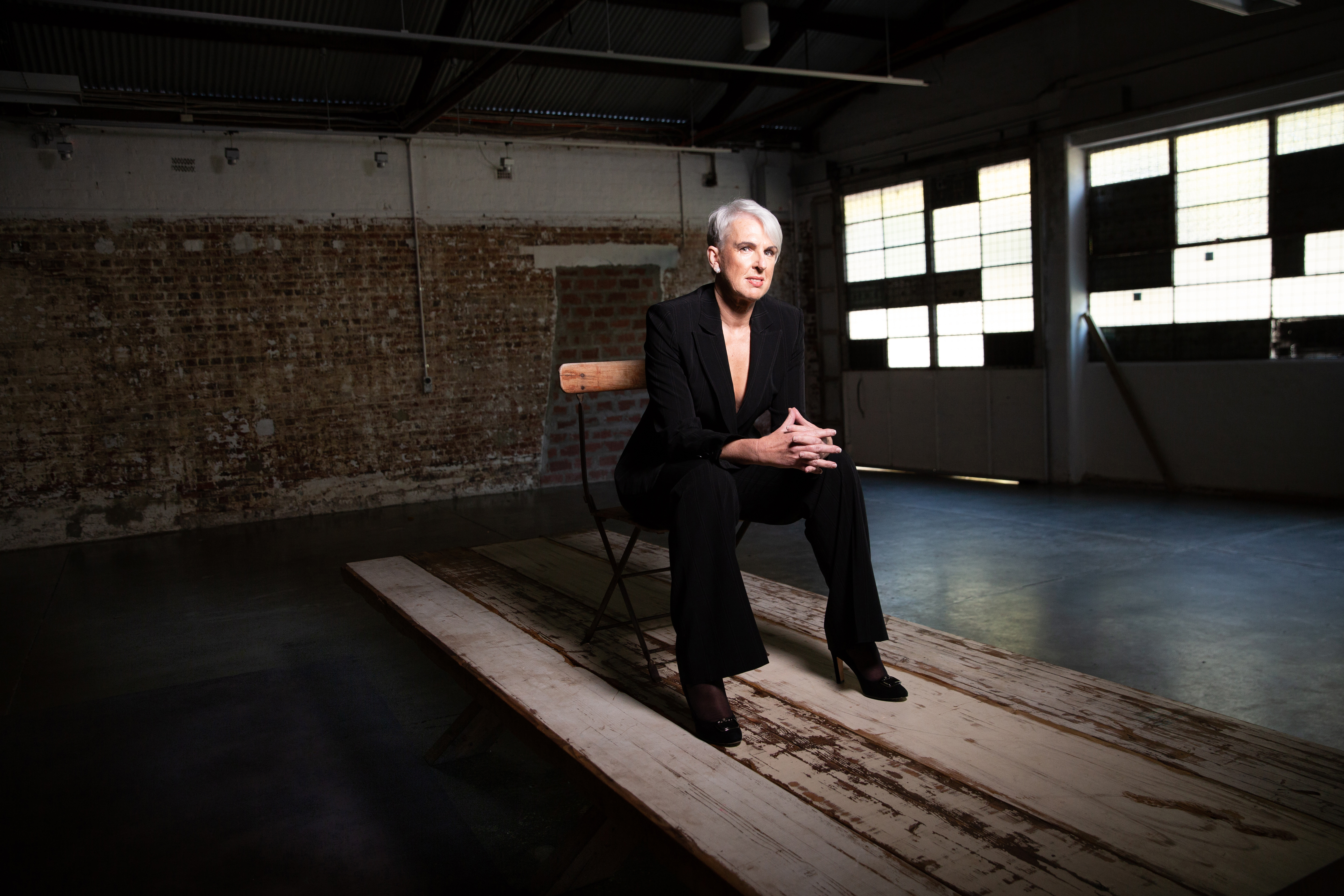
Diane Smith-Gander broadly supports the 40-40-20 target. Photo: Attila Csaszar
Despite input from 19 member organisations and a two-and-a-half-year debate, representatives could not reach an agreement to ratify the new charter, meaning the council will continue to enforce diversity principles and recommendations published in 2019.
ASX Corporate Governance Council chair Elizabeth Johnstone said the discussions failed to delineate a clear framework that would guide the publication.
“We wanted to ensure many voices were heard so we could have an informed discussion and arrive at the best possible outcome for all stakeholders,” she said.
“[However], it is clear ... that achieving broad consensus on a suitable fifth edition would not be possible at this point in time.”
Australia’s Workplace Gender Equality Agency was one of the organisations to submit recommendations to the ASX council, calling on the governance body to update its 30 per cent women on boards target to the more contemporary 40-40-20 benchmark.
The government body, which recently published its annual roundup of Australia’s gender pay gap data, stressed that board diversity wasn’t just a key driver of a company’s performance at the executive level, but that it also had a ripple effect on a workplace’s output.
“Increased numbers of women on boards is associated with both more gender-equal outcomes: smaller gender pay gaps, more women in senior leadership and fewer women managers ending their employment during a period of parental leave,” WGEA said in its submission to the Corporate Governance Council in May 2024.
“Board gender diversity also contributes to overall board effectiveness. It supports innovation and improves the quality of decision-making and governance.”
Current Chief Executive Women lead Lisa Annese agrees that boosting female representation in the workplace will have a major impact beyond the boardroom.
“If we are serious about the country’s economic future, we must prioritise women’s workforce participation,” Ms Annese said.
“With the right policies, we can boost GDP and build a stronger, more competitive economy that benefits all Australians.”
Men and women are also working to boost representation in the C-suite, although many acknowledge there is more work to be done.
On average, a woman is represented in one in every five seats on a public-listed company’s senior leadership team in WA.
Women are also overrepresented in administration-focused positions, such as the role of company secretary. They are more likely to appear in joint leadership functions, and they hold the top executive positions across just 6 per cent of ASX-listed companies in the state.
Property development consultant and former Frasers Property Australia development director Tanya Trevisan said the data showed how gender representation was flatlining across the C-suite.
Speaking at a recent Property Council of Australia lunch, Ms Trevisan pointed out the discrepancy between men and women in leadership positions.
“You only have to look at the stats. As a CEO, you’re more likely to be called Andrew than [be] a woman. You can talk about quotas and lack of merit and tokenism, but it’s just not true,” Ms Trevisan said.
“Because if it was true, we wouldn’t only have seventy-three female board members on the ASX 100 in 2025.
“If you look at the stats …. since 2016 … we go up or down by two per cent, but there’s no trend. We’re just bumbling on the bottom, really.”
The latest data from advocacy group Women on Boards indicates the change of pace is slower thanks to persistent barriers such as unconscious biases, the gender pay gap and a struggle to maintain a work-life balance.
The most common names leading the boards of WA’s ASX-listed companies. Pink bubbles represent women chairing boards in the state.
To that end, Women on Boards believes having more accountability measures at the top (such as gender diversity targets for the board and executive leadership teams) and a pipeline of women-centric sponsorship and mentorship opportunities is essential to righting the ship.
On the other hand, CEOs for Gender Equity – a WA-focused agency looking to move the needle on gender representation in the C-suite – believe change starts with shifting the conversation to equity rather than equality.
Chief executive Ashley McGrath said everyone needed to be part of the dialogue if diversity in the boardroom was to improve.
“Our aim is to inspire and influence change ... we’re not a feminist movement trying to man-bash,” Ms McGrath said.
“We want to understand the gender norms and stereotypes that all genders face.”
Ms McGrath said discussions around gender equality should include more data – such as the number of men taking primary carer’s leave and working part time – so both genders were represented in the debate.
“Overall, the trend is that there is an appetite to change, and that’s really exciting to see,” she said.
Many people assume the mining industry is behind the curve when it comes to gender equality. However, Ms McGrath said the numbers told a different story.
“Mining gets a really bad rap, but they are some of my most engaged and generous members,” she said.
“Between 2010 and 2020, national representation for women in the mining industry increased by two per cent. But between 2020 and 2022, national representation increased by the same statistic.
“The industry’s done what’s previously taken them a decade in just two years.”
Eleven WA-based materials stocks count at least three women among their board members, bringing many of them a step closer to meeting or exceeding the 40-40-20 target.
Of course, it’s not just mining companies boosting gender representation in the boardroom. ASX-listers including Woodside, Monadelphous, Tasmea, Wesfarmers and Argenica Therapeutics also count at least three women as directors, while the pattern is also evident in their senior leadership teams.
Strategies to increase representation aside, there’s a sense of good fortune involved when landing a top job at a public-listed company.
To that end, Ms Smith-Gander believes luck, discipline and rigour remain key for women looking to break into the boardroom or C-suite in 2025.
“It’s very hard to truly be strategic about a board portfolio because you have to have exactly the right skill set at a moment when the board is looking for those attributes,” Ms Smith-Gander said.
“There is a huge amount of serendipity and a lot of patience involved in building the right portfolio.”
And while there’s still a ways to go, Ms Smith-Gander believes the last decade of progress holds up amidst modern challenges to gender diversity.
“I still believe the battle for the boardroom has been won. Nowadays, it’s about cleaning up the battlefield,” she said.