Impact100 Fremantle has worked with the port city community for more than a decade.
Its brief was simple: encourage people to put $1,000 into a common pot and collectively decide where to distribute it.
This year, however, the people behind the collective giving program decided they wanted to build something that lasted.
Impact100 Fremantle has distributed more than $1.2 million to local charities and community projects since 2013, but its volunteer committee has found the model increasingly difficult to sustain.
Its replacement, Good Fund Freo, is designed around a different idea.
Rather than the initiative raising money to give away each year, it will build a permanent pool of philanthropic capital.
Launched in April, the fund is targeting $300,000 by January 2027, with an initial proposition that 1,000 Fremantle residents could contribute $25 a month for a year to reach the goal.
The money will then be split between grants and investment, with part of the capital retained and grown through investment returns.
Good Fund Freo chair Sarah Booth – who is also community lead at developer H-U and director at property management social enterprise Spacemrkt – describes the model as a “horizontal idea of philanthropy”, where lots of people contribute what they can alongside those able to give more.
Missing pieces
The intention is to fund the gaps.
That could mean a small volunteer organisation that needs help to pay a vehicle registration, a grassroots group trying to respond to food insecurity or, eventually, a larger community project such as buying a building.
The intention is deliberately broader than the traditional grantmaking model, which can favour established organisations with the resources and administrative capacity to navigate application processes.
“Where there is a need, the fund can go,” Ms Booth said at the fund’s launch.
The model is also deliberately local.
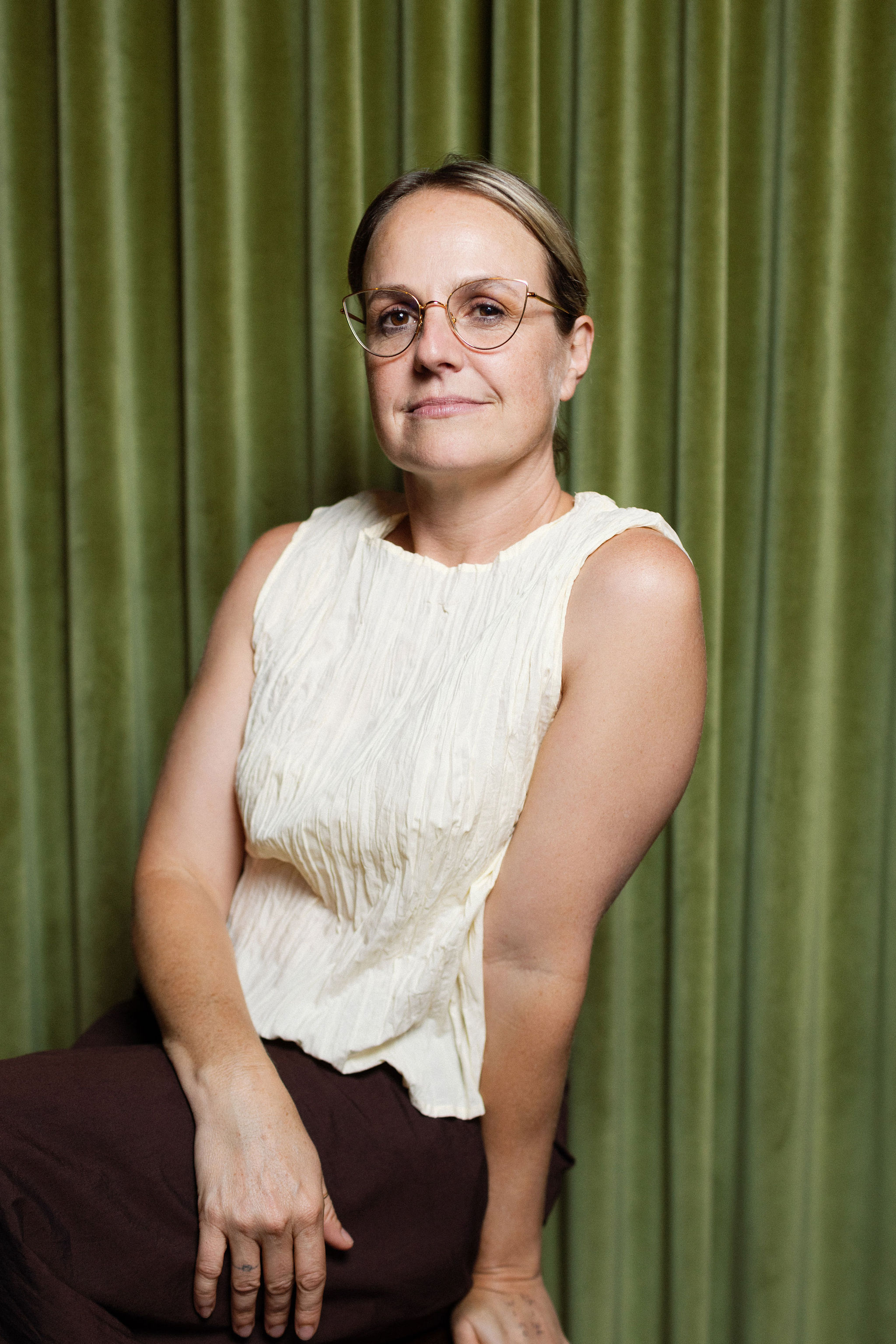
Sarah Booth wants to increase the foundation's impact. Photo: Natasja Kremers
Good Fund Freo is hosted by the Fremantle Foundation, a charity founded in 2010 by Dylan Smith with a donation from former Fremantle Dockers captain Peter Bell.
Grant decisions are made by a rotating panel of Good Fund people with local knowledge and experience across community development, social services, small business, creative industries, volunteering and philanthropy.
The fund’s proposition reflects a wider shift under way across Australia’s charitable sector.
Communities are beginning to take a more active role in determining where philanthropic money goes, while governments are changing the tax and regulatory settings that determine how that money can be raised.
Regulatory changes
Community foundations faced significant change in 2025 when the federal government established a new pathway for community-based charities to obtain deductible gift recipient (DGR) status.
The reform addressed a longstanding problem for community foundations, which had faced barriers in attracting donations from private ancillary funds and possible restrictions on direct support of community groups without DGR status.
The new ‘community charity’ framework was intended to make it easier for philanthropic capital to reach local initiatives and give community foundations a more effective role as intermediaries between donors and the organisations they want to support.
“The implementation of this reform brings more than 20 years of sector-wide advocacy to a successful close, creating a new and better tax and regulatory framework for community foundations, in recognition of the vital role they play building thriving communities across Australia,” Community Foundations Australia chair Ben Rodgers said last year.
Philanthropy Australia chair Maree Sidey was another to support the reforms.
“It’s vital that our policy and regulatory environment empowers people to give,” Ms Sidey said.
“These reforms remove big roadblocks, helping unlock the flow of more resources to important community initiatives.”
The policy change was followed by further expansion this year.
In February, the federal government added 34 organisations to its ministerial declaration for community charities, the biggest expansion of the category since it was established in 2024.
Among them were Western Australian organisations the Albany Community Foundation and the Denmark Community Foundation.
Once endorsed by the Australian Taxation Office, the organisations can access DGR status, allowing donors to claim a tax deduction for eligible gifts.
The list illustrates how the community foundation model is spreading beyond the major metropolitan centres.
This year, declared organisations range from the South West Community Foundation Community Fund to foundations in Albany, Denmark, Alice Springs, the Adelaide Hills, Gippsland, the Northern Rivers and the Mornington Peninsula.
The government has linked the expansion to its ambition to double philanthropic giving by 2030, arguing that community foundations can strengthen social cohesion by allowing communities to determine their own priorities.
“By reducing the paperwork burden and expanding eligibility for tax deductible donations, the Albanese government is ensuring that more money flows to charities that are making a real difference in people’s lives,” Assistant Minister for Charities Andrew Leigh said.
Charities in the top 10 of the Business News list of charitable organisations include those with 500 staff in WA to more than 1,000, with revenue from $80 million to about $160 million.
Royal Flying Doctor Service Western Operations (RFDS WA) remains at the top of the chart ranked by revenue, reporting $159 million in revenue for the year ending in June 2025. It has 489 staff.
The Kids Research Institute Australia, PeopleKind Group, My Place and MSWA round out the top five charitable organisations, according to the list.
It’s often smaller charities that find it harder to raise the funds to sustain themselves and their services.
Switching settings
The tax settings are also beginning to change the economics of philanthropic giving more broadly.
In February, the federal government announced the minimum annual distribution rate for public and private giving funds would rise to 6 per cent of net assets, while allowing distributions to be smoothed over three years.
The changes seek to balance two competing objectives: getting more philanthropic money into charities quickly, while preserving enough capital for funds to continue giving into the future.
That tension sits at the heart of Good Fund Freo’s model.
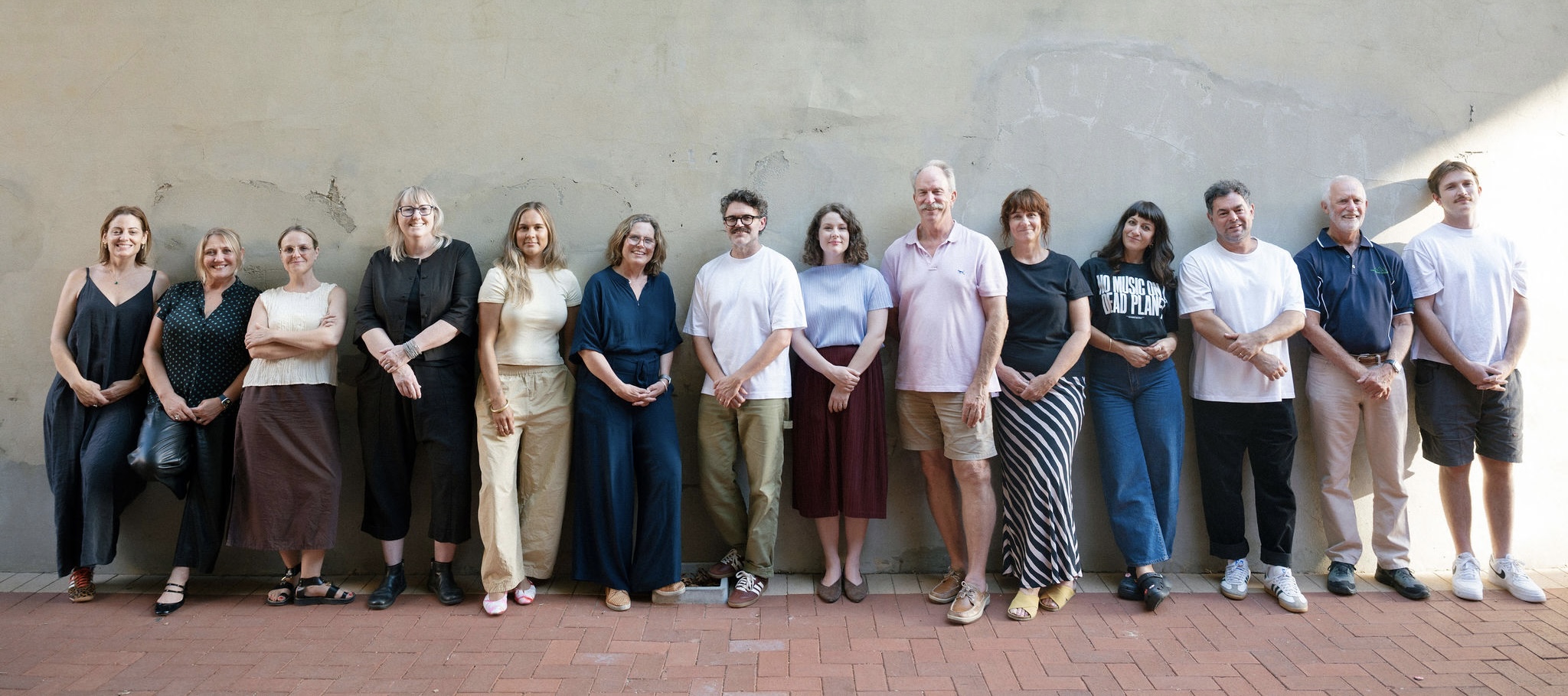
Good Fund Freo’s Kate MacKinnon (left), Monica Kane, Sarah Booth, Melanie Clarke, Ilona McGuire, Leigh Sinclair, Mark Spillane, Isabella Bosworth, Michael Bresnahan, Tracey Baker, Kate Hulett, Phil Thompson, Jake Busch and Leighton Brad eld. Photo: Natasja Kremers
Its proposition is that philanthropy does not necessarily have to mean spending the money immediately.
Instead, a perpetual fund can distribute part of its returns while retaining capital to generate future grants.
The objective is to turn individual donations into an enduring community asset.
That approach is becoming increasingly relevant as charities face pressure not only to deliver services, but to demonstrate that philanthropic funding is sustainable and capable of producing long-term impact.
Revenue bump
Research released in April by the Centre for Social Impact at The University of Western Australia and Philanthropy Australia found the state already has a strong culture of giving, with 95 per cent of individuals surveyed reporting that they donated money and 82 per cent volunteering.
Yet about half had little or no knowledge of structured giving vehicles.
That presents both an opportunity and a challenge for community foundations.
While the appetite to give exists, the question is whether the charitable sector can build the infrastructure to turn that generosity into longer-term, strategic capital.
The research also highlighted why the traditional grant model is under pressure.
Program delivery funding was the most common form of foundation support, with 94 per cent of foundations providing it, while more than half also provided unrestricted funding and 75 per cent provided capacity-building or technical assistance.
Overall, however, funding for programs does not cover the full cost of delivery.
For community organisations, that can leave a persistent gap between what a grant is designed to fund and what it costs to keep an organisation operating.
It is precisely that gap Good Fund Freo is trying to occupy.
Its grants are intended to be simple and accessible, with a responsive stream for smaller community-led initiatives alongside a strategic stream for larger projects addressing longer-term needs.
That flexibility is one of the model’s central selling points. But the rise of community foundations is not happening in isolation.
Red tape cuts
Charities are also navigating a broader simplification of fundraising regulation.
The WA funding reforms introduced this year removed the need for charities registered with the Australian Charities and Not-forprofits Commission to obtain a separate state fundraising licence.
Instead, charities notify Consumer Protection WA of their intention to fundraise under a framework aligned with national fundraising principles.
The reforms reflect how the mechanics of fundraising have changed.
Online campaigns can quickly reach donors across state borders, while social media has made fundraising accessible to organisations that previously would have relied almost entirely on events, direct mail or established donor networks.
The regulatory response is moving in two directions at once: reducing unnecessary duplication while strengthening expectations around governance, transparency and responsible fundraising.
The result is a more sophisticated operating environment.
Charities are being asked to think not just about how much money they can raise, but how it is structured, how long it can last and whether it is flexible enough to respond to emerging needs.
Community foundations are well positioned to sit in that space.


 30 Sep 2026