

Australia–EU trade deal: Too important to become a political casualty



OPINION: When the Australia–EU Free Trade Agreement (FTA) was announced back in March 2026, the European–Australian business sector thought the risk would be in EU ratification. Little did we know.
In simple terms, the agreement has favourable prospects of approval in Europe, despite pressure faced by some member states internally from their agricultural sectors. However, what was expected to be a bipartisan economic agreement in Australia is instead becoming a casualty of domestic politics. The Liberals appear divided with the Opposition Leader publicly calling it a “dud deal”, the Nationals are opposed and the Greens are looking at it favorably but have not yet committed their support.
At a panel discussion I attended recently, two former Australian defence ministers agreed that Australia, and indeed the world, is facing the greatest strategic uncertainty since the Second World War.
We are concerned not only about the growing military capabilities of global powers, but also their willingness to use economic strength to coerce others. At the same time, questions are emerging about the reliability of some of our traditional allies.
Australians want to live in a world where rules matter, where might is not automatically right. Australia’s strategic resilience relies on deterrence through both military and economic capability. We need to diversify our economy, establish stronger partnerships and collaborations with like-minded economies that share our commitment to democracy and the rule of law.
This is the backdrop against which we should be assessing the FTA. It is a game changer for our economy and our trade relationship with one of the world’s largest economies.
Europe seems to get it. The approval pathway in Europe is through the Council of the EU, requiring a “qualified majority” of at least 15 of the 27 member states and at least 65 per cent of the total EU population. This is followed by European Parliament consent (through simple majority) and final Council approval. Importantly, this deal will not require individual national parliamentary ratification, unlike the EU–Canada agreement (CETA), which has faced prolonged national ratification difficulties.
In Australia, the EU-FTA has been a consistent national priority across successive Coalition and Labor governments for more than a decade, beginning with the political commitment in 2015 under Malcolm Turnbull. Formal negotiations commenced in 2018, with 15 negotiation rounds between July 2018 and April 2023, followed by the October 2023 breakdown and the June 2025 revival under the Albanese government and the eventual conclusion in March 2026.
And yet we are hearing suggestions that Australia should now renegotiate the agreement. This agreement has taken eight years of formal negotiations to conclude, across three Australian governments. It cannot simply be reopened unilaterally during the ratification process.
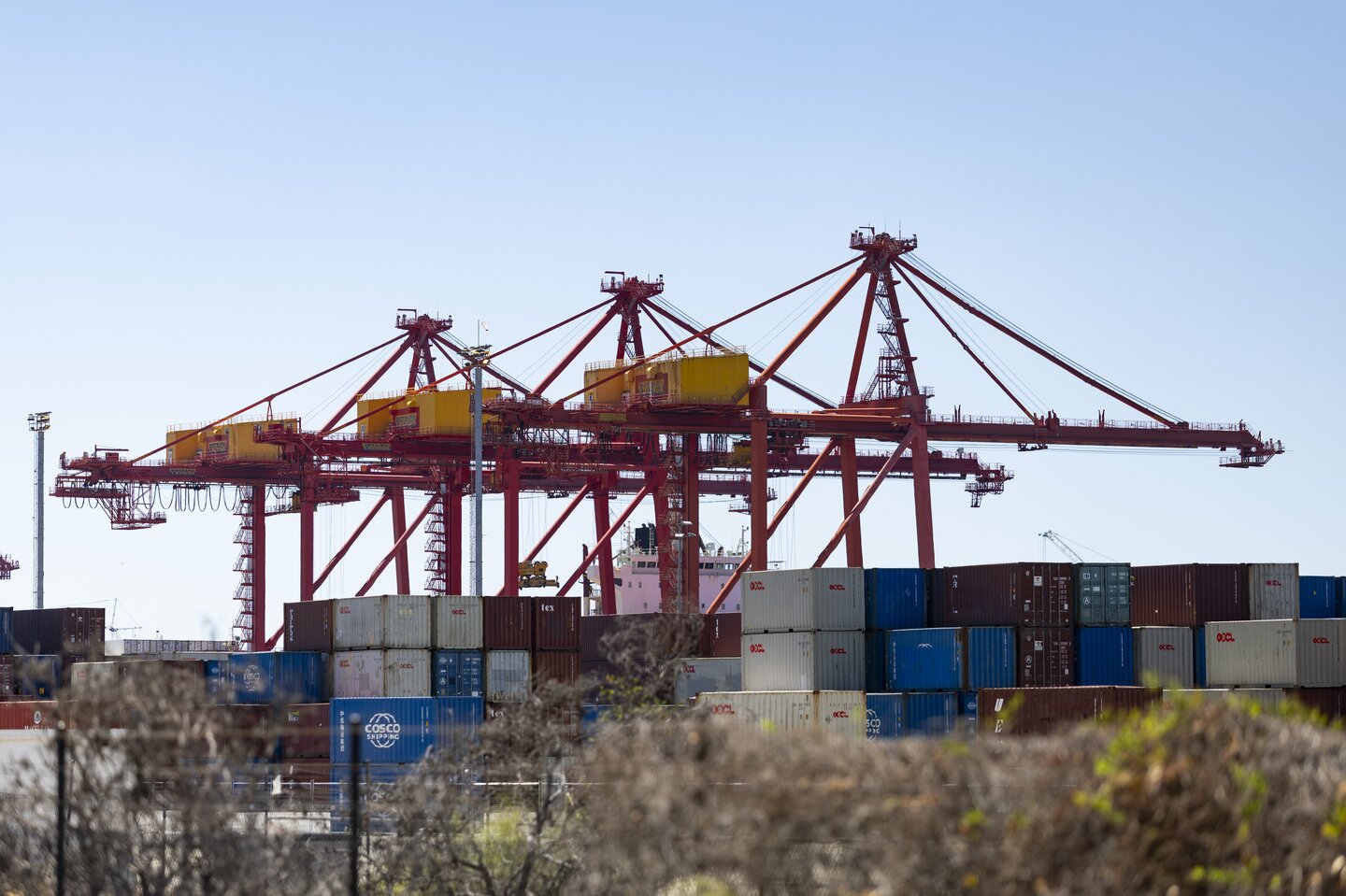
Why is this a good deal economically? The EU is Australia's third-largest two-way trading partner, with $110.7 billion in trade in 2025, and the second largest source of total foreign investment in Australia. Yet our exports to the EU total only $26 billion annually, compared with almost $85 billion in annual imports. This imbalance highlights the potential for Australian businesses to expand their presence in the European market as tariffs and other trade barriers are removed.
The FTA will eliminate tariffs on 97.8 per cent of Australian goods exports to the EU by value from day one, increasing to 98 per cent over seven years. Currently, Australian seafood can face tariffs of up to 26 per cent, vegetables up to 14.4 per cent, while machinery and other manufactured goods face tariffs of up to 14 per cent, often rendering them uncompetitive with products produced elsewhere.
The agreement opens new opportunities for Australian businesses in a market of 450 million consumers and a US$21.1 trillion economy. Beyond eliminating tariffs on almost 98 per cent of our existing exports, it provides greater access for Australian service providers, expands access to almost A$850 billion of EU government procurement, lowers barriers to investment from the EU to Australia and vice versa, allows for easier travel and short-term transfer of staff under certain conditions, and improves pathways for recognition of qualifications of eligible professionals, just to name a few of the benefits.
For comparison, the New Zealand–EU FTA, which entered into force on 1 May 2024, provided duty-free access for 91 per cent of New Zealand's goods exports from day one, to increase to 97 per cent over seven years. According to the New Zealand Government, by December 2025 New Zealand’s exports to the EU hit NZ$8.8 billion, up 29 per cent year on year, and a whopping NZ$3 billion higher than just two years earlier.
It is disappointing to see such a significant opportunity, both economically but also geopolitically being reduced to arguments about climate change and the meat industry as a loser in the deal.
Consider Australia’s meat industry. Australian beef exports to the EU were valued at $197 million in 2025, while sheep meat (including goat) exports totaled $81 million. To put this into perspective Australia exported $18.7 billion worth of beef and $6.5 billion worth of sheep meat in 2025. The EU therefore accounted for just 1 per cent of our total beef and 1.2 per cent of our total sheep meat exports.
The revised quotas will increase guaranteed preferential access for Australian beef almost eightfold and sheep meat more than fivefold. While the quotas fall short of what Australia had originally sought, the agreement nevertheless represents a substantial improvement on existing access. France, Spain and other EU member states face domestic pressure from their agricultural sectors, strongly opposed to even these concessions. In a trade agreement there is give and take. Realistically, the current value in our trade relationship with Europe extends far beyond the meat market, and it should not be defined by it.
On climate change, the agreement reinforces Australia's international commitments, including those under the Paris Agreement. The Paris framework sensibly allows countries to determine their own emissions reduction targets, subject to its rules on progression and ambition. What is the risk to a future Australian government that might want to reduce its climate commitments? The argument being advanced is that it could face obligations under the FTA that constrain its policy choices. These concerns deserve proper legal scrutiny, but they should be assessed against the actual obligations in the agreement, rather than being used as a reason to dismiss its broader economic and strategic benefits.
Meanwhile, industry has moved much faster than governments. Clean energy, decarbonisation and supply-chain resilience are already commercial priorities for major businesses in the 2020s. These decisions are increasingly driven by investment, competitiveness and market expectations, not simply government policy.
In turbulent geopolitical times, business looks for certainty; certainty in fiscal policy, trading relationships with countries that share similar values and stable economic and regulatory environments. Business looks for bipartisan approaches to economically and strategically significant matters for our economy and our country.
This agreement may not be perfect but as Aristotle argued more than 2,300 years ago, we should consider not only what is best, but also what is possible and attainable.
This agreement is possible now.
- Dr Elena Limnios is President of the Hellenic Australian Chamber of Commerce and Industry of WA (HACCI WA), Chair of the European Chambers Alliance of WA (EUChamWA), and Director of Limnios Property Group. The views expressed are her own and do not necessarily reflect the positions of these organisatio

