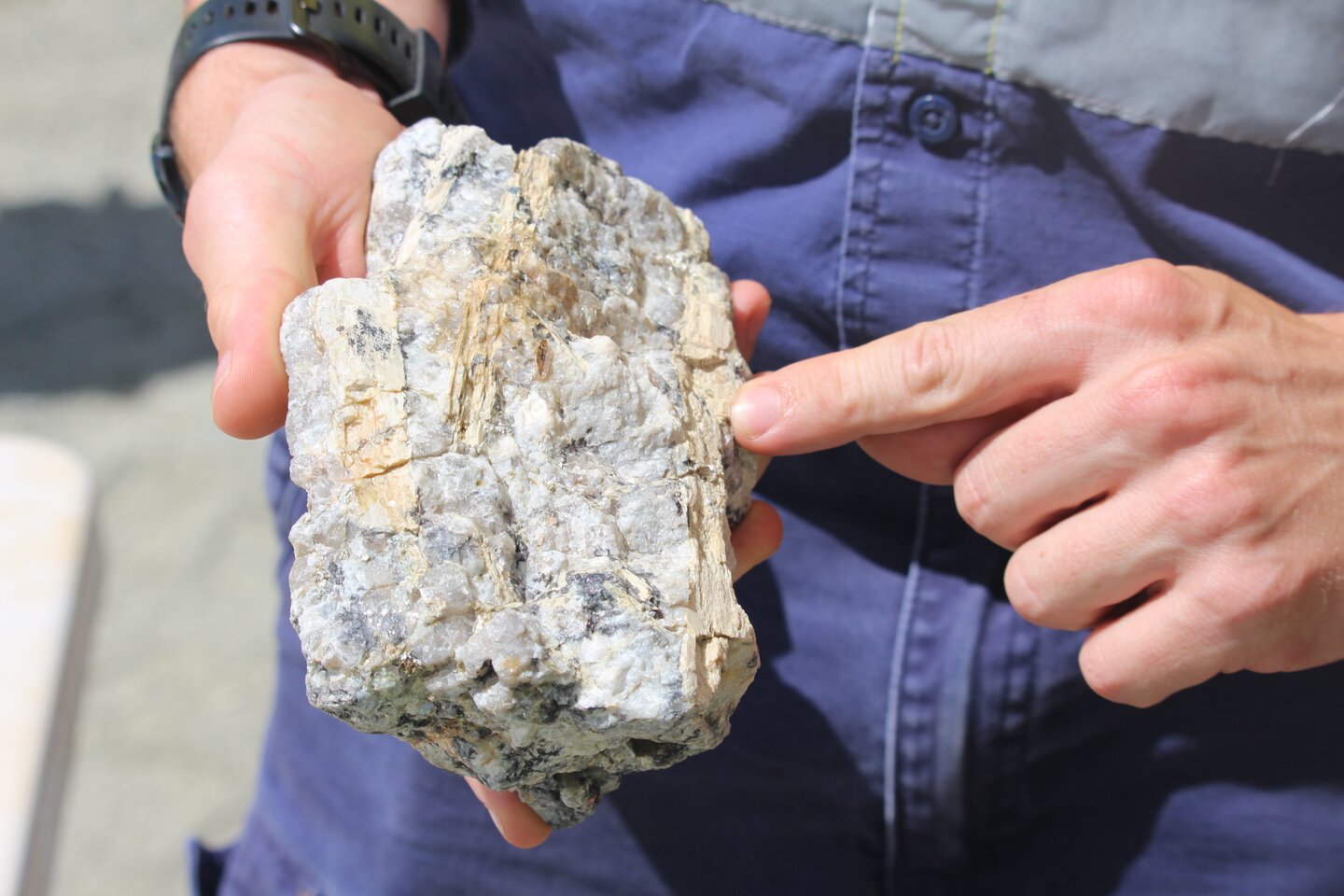
Western Australia has undergone enough commodity cycles to know that rising prices can quickly become a rising tide of optimism.
Lithium is providing the latest test.
After a punishing downturn, spodumene prices have recovered strongly enough to bring mothballed capacity back into production.
Mineral Resources has restarted Bald Hill in the Goldfields, existing operations are lifting output and investment is returning.
The recent return of China’s Jianxiawo lithium mine to care and maintenance may add further support by tightening near-term supply.
So, the mood has shifted. But we should resist declaring another lithium boom.
This is not 2022 all over again.
At the peak of the last cycle, spodumene prices surged above $US7,000 a tonne, but subsequently collapsed by around 90 per cent.
Today, Australian SC6 spodumene is trading at a little over $US2,200/t, enough to make good assets attractive again, but far below the speculative heights of the previous cycle.
That distinction matters because lithium is both a structural growth story and an intensely cyclical commodity.
The structural case is compelling.
Lithium sits at the heart of the global net-zero transition, supporting electrified transport and, increasingly, grid-scale battery storage.
Five years ago, lithium demand was almost synonymous with electric vehicles. Now, batteries are becoming essential infrastructure for renewable energy, grid resilience, energy security and rising electricity demand.
The Australian government’s June 2026 Resources and Energy Quarterly projects global lithium demand to grow by more than 11 per cent a year to 2031.
That creates a substantial long-term opportunity for WA, with its world-class lithium resources, mining expertise, concentrators, ports, logistics and mining services capability.
But strong demand does not guarantee permanently high prices.
When prices rise, supply responds. Existing mines push harder, mothballed operations restart and lower-grade material becomes economic.
Developers pursue faster pathways to market through direct-shipping ore or existing infrastructure. Large greenfield projects take much longer, often requiring years of approvals, construction and commissioning.
Bald Hill is a textbook example. Placed on care and maintenance as prices fell in 2024, it restarted when conditions improved.
Higher prices usually first bring old mines back to life before prompting new ones.
That flexibility is also why caution is warranted.
The Commonwealth expects global lithium supply to grow by around 10 per cent annually to 2031, almost matching demand, with some near-term oversupply before the market moves closer to balance around 2030.
In other words, high lithium prices contain the seeds of their own correction.
For WA, the lesson is not to be pessimistic.
Quite the opposite. Lithium is likely to form an important part of the state’s long-term resources prosperity as the global energy system transforms.
The Bankwest Curtin Economics Centre’s recent report, Western Australia’s Resources Sector in Transition, argues that the next phase of WA’s resources prosperity must increasingly be about value, not simply volume.
Critical minerals offer substantial new mining opportunities, but the bigger prize lies in capturing more of the value chain through processing and downstream activity where WA can be genuinely competitive.
Lithium provides a good test of that ambition.
WA needs low-cost, high-quality resources backed by infrastructure and disciplined investment, while carefully testing where downstream activity makes economic sense.
A stronger lithium price can revive mining, but it does not settle the economics of lithium refining.
The healthiest lithium market for WA may, therefore, be something less spectacular than another boom but ultimately more valuable: prices high enough to support efficient production and sensible investment without unleashing another rush of marginal supply.
Lithium is back.
The opportunity is real.
The challenge is not to confuse recovery with euphoria.
• Professor Alan Duncan is Director of the Bankwest Curtin Economics Centre at Curtin University