This week's appointments include Clare Huppatz, Vanessa Torres, Stephen Moir, Stephen Smith, Leonie Browner, Jacinta Behrend, Clive Luck, Dan McAullay, Marie Smyth and Travis Robinson.
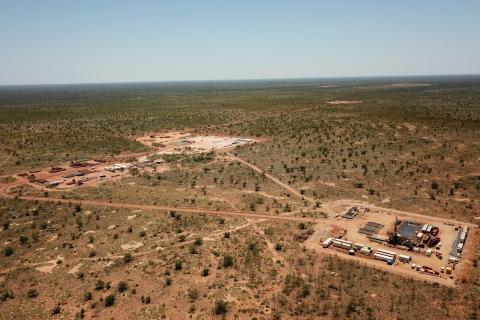
Buru Energy is inching closer to gas production in Western Australia after the Environmental Protection Authority approved exploration and well appraisal at the neighbouring Valhalla gas project in the Canning Basin. Buru received its own EPA approval in September last year and says the move is a major government endorsement of the onshore Canning Basin, where Buru's Rafael project is set to drill in the June quarter this year.
Buru Energy says it is courting global capital to fund a flow test and an independent resource certificate at the company's onshore Rafael gas discovery in Western Australia's Canning Basin. With approvals secured, multiple suitors running the rule over the opportunity and a development partner already locked in, the company believes it is steadily closing in on long-term gas cashflows from 2028.
Buru Energy has clinched the environmental nod from the Western Australian government for its Kimberley gas resource appraisal campaign in early 2026. The well environmental plan greenlights the company's next steps in unlocking the project in the Canning Basin, paving the way to drilling in the first half of next year.
Buru Energy has discovered a significant new gas prospect beneath its Rafael gas field in WA's onshore Canning Basin. Buru estimates its Flying Fox target, identified in recent Rafael 3D seismic data, contains 60-614Bscf of gas and 1.2-12.6MMstb of condensate. The discovery mirrors Rafael's contingent resources and could seriously boost the overall project's potential. Buru plans to drill next year.
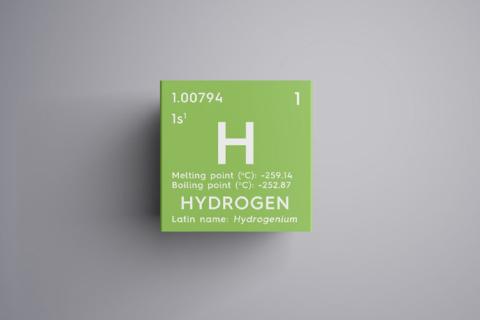
Buru Energy has shed another non-core strategic asset, inking a deal to offload its hydrogen and helium subsidiary 2H Resources to Denver-based natural hydrogen hopeful Koloma Australia. The transaction is valued at up to a tasty $2 million in cash and comes as Buru narrows its focus on its flagship Rafael gas and condensate project in Western Australia's Kimberley region.
Shares in Buru Energy soared as much as 36 per cent on the open to 4.9 cents after the company inked a game-changing deal with a private LNG processing and supply firm to fund and build an LNG plant at its Rafael-1 gas discovery in WA's Canning Basin. The deal could see Buru transition from explorer to producer with saleable gas potentially flowing from Rafael by the second half of 2027.
Buru Energy is putting an updated game plan into play to focus on its flagship Rafael gas project in Western Australia's Canning Basin. It has wasted no time selling off non-core assets by inking a deal to offload its 50 per cent stake in the Barbwire Terrace base metal project to joint venture partner Sipa Resources in exchange for a royalty over future production.
Buru Energy has rolled out a bold plan to focus attention and capital on its flagship Rafael gas and liquids project in WA's Canning Basin, set to begin production in 2027. To ensure Rafael's success as a future cash cow, the company has kicked off a $3 million cost-cutting program and the sell-down of non-core assets, directing capital where it matters most.
Kimberley gas aspirant Buru Energy will cut its workforce by 40 per cent, following a comprehensive review designed to reduce spending by $3 million each year.
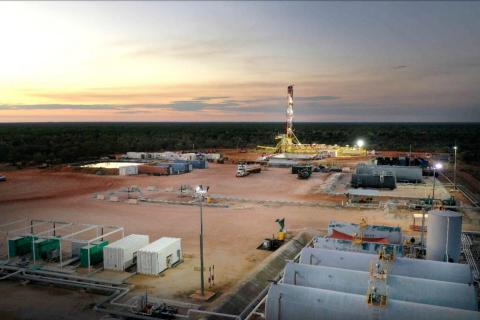
Buru Energy's hunt for onshore oil in Western Australia's mighty Canning Basin has moved up a gear with the spudding of the Rafael Shallow 1 exploration well. The drilling is targeting the Rafael Shallow oil prospect where a prospective resource of between 3.2 million stock tank barrels (MMstb) of oil and 79 MMstb has already been identified, including a best estimate of 19 MMstb.
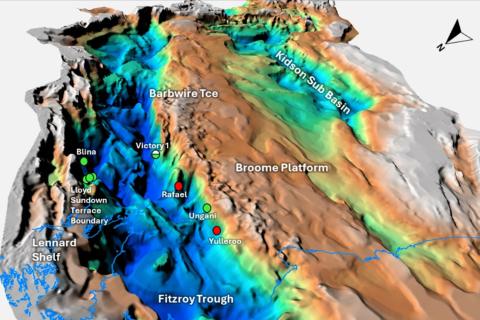
A gravity survey by Sipa Resources at the Barbwire Terrace project it shares with Buru Energy east of Broome in WA has unearthed a big anomaly and telltale structures to boost its chances of a lead-zinc find. Sitting on the southern margins of the Fitzroy Trough, the findings show geological similarities to the Lennard Shelf on the northern side of the trough.
Hot on the heels of kicking off the oil well pad construction at the Rafael Shallow 1 project in Western Australia's Canning Basin earlier this week, Buru Energy has named David Maxwell as the company's new chairman. Maxwell will replace retiring chairman and founding shareholder Eric Streitberg, who is regarded as an industry stalwart after compiling a 50-year career.
Buru Energy and Sabre Energy have kicked off oil well pad construction at their Rafael Shallow 1 joint venture in Western Australia's Canning Basin. The launch of the civil works for the project, which will be completed ahead of well spudding in late September, follows the receipt of heritage and environmental approvals and Sabre's recent $6 million commitment to drilling and testing costs.
Buru Energy has locked in a local drilling company to drill two oil wells in Western Australia's onshore Canning Basin that form the centrepiece of the company's farm-in joint venture with Sabre Energy. The campaign is set to test the promising Rafael Shallow and Mars exploration wells and binding drill rig hire agreements are to be executed shortly to enable drilling to kick off in September-October.
Sabre Energy has agreed to stump up $6 million in drilling and testing costs at Buru Energy's Rafael Shallow oil well in Western Australia's onshore Canning Basin to earn 50 per cent of any commercial discovery and production. If the drilling leads to a commercial discovery, Sabre will also compensate Buru for its prior Rafael exploration expenses with a further payment of $1.5 million.
Business News has significantly overhauled the BN30 index, a proxy for the WA economy, with seven new additions, prompted by the exit of takeover targets MMA Offshore, APM and Decmil.
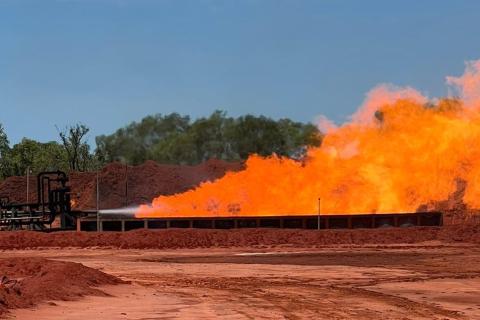
Buru Energy has significantly increased the contingent resource estimate for its Rafael discovery in Western Australia's onshore Canning Basin, with a 3D seismic survey boosting the company's projected gas and condensate volumes. Key findings have revealed that the gross recoverable 1C volumes have risen to 85 billion cubic feet of gas and 1.8 million barrels of condensate, enhancing management's hopes of pursuing an LNG development.
Buru Energy's Ungani oilfield is set for a new lease on life following the company's significant farm-in agreement with Sabre Energy that is designed to spearhead a production restart and continued exploration at the site in Western Australia's Canning Basin. Sabre will earn a 70 per cent interest in the Ungani oilfield and control of the operations for a $6 million outlay.
Buru Energy's interpretation of 3D seismic data from its wholly-owned conventional Rafael condensate-rich wet gas discovery has thrown up a new shallow resource in its exploration permit in the Canning Basin. The new target zone, which it has designated Rafael Shallow, consists of two clastic reservoirs sitting at less than 1200m depth, with one stacked about 130m to 170m above the other.
Buru Energy rounded out the past financial quarter with no debt and $18.4 million in the till as it prepares to drill an appraisal well at its 100 per cent-owned Rafael gas field in WA's Canning Basin. The company is eyeing a final investment decision in the second half of next year and first gas production in the last half of 2027.
Buru Energy rounded out the past financial quarter with no debt and $18.4 million in the till as it prepares to drill an appraisal well at its 100 per cent-owned Rafael gas field in WA's Canning Basin. The company is eyeing a final investment decision in the second half of next year and first gas production in the last half of 2027.
The first look at Buru Energy's Rafael well three-dimensional (3D) seismic cube shows data quality improvement and confirms the structure as a significant gas and condensate resource – with step-out prospectivity. Management says it can already see the reservoir and top-seal intervals in a structure similar to that mapped on historic two-dimensional data. The final volume is due by the end of February.
An independent carbon capture and storage study on Buru Energy's Canning Basin blocks has strengthened the “commercialisation pathway” for it to develop its Rafael conventional gas and condensate discovery. Buru's subsidiary GeoVault recently found the blocks to be capable of holding significantly more carbon dioxide than Rafael is modelled to produce, supporting the company's development strategy for the field.
Buru Energy's wholly-owned hydrogen-chasing business 2H Resources has picked up hydrogen and helium-prospective ground in South Australia – right next to the nation's first discovery well for the natural gas. The company is now the preferred applicant for seven petroleum and two gas exploration licences in SA, with its WA helium and hydrogen hunt expanding into six new “special prospecting authorities with an acreage option”.
A $5 million placement has helped Buru Energy advance preparations for its mission to appraise its 100 per cent-owned wet gas and condensate Rafael discovery in Western Australia's Canning Basin after the end of the Kimberley wet season mid-next year. It has now ordered long-lead items, advanced detailed well design and discussions with potential rig providers and has 3D seismic data processing on schedule.
Buru Energy has moved to fast-track the phase-one small LNG plant development at its Rafael gas-condensate project in Western Australia's Kimberley region by launching a pre-front end engineering design (FEED) study. Part of a multi-pronged strategy to monetise the asset, it is expected to be completed in the first half of next year, with the final FEED to follow soon after.
Buru Energy has started the hunt for an ally to help develop its Rafael conventional gas and condensate resource in Western Australia's Canning Basin after appointing Miro Capital as a key advisor for its strategic partner selection process. With the Canning Basin's first significant gas discovery, Buru believes the scope of its project will hep create a long line of suitors for Miro to assess.
Buru Energy is actively pursuing a joint venture partner to help it bring its Canning Basin gas interests into production, less than a year after buying out Origin Energy's share of its projects.
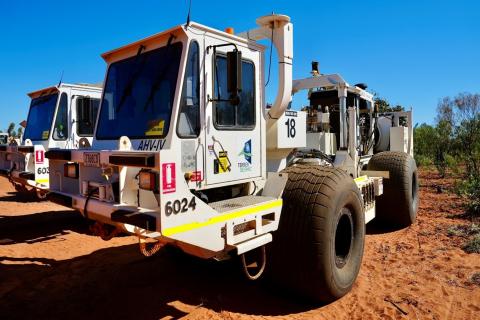
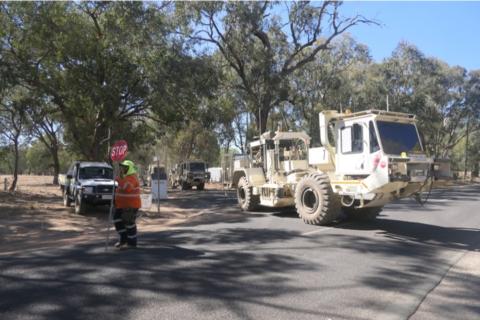
Buru Energy has acquired some 200 square kilometres of high-resolution 3D seismic data within and around its 100 per cent-owned prodigious Rafael gas-condensate project in Western Australia's Kimberley region. Once the data, which also includes several 2D lines in an adjoining permit, is processed and interpreted by year's end, it will provide enhanced clarity on the subsurface structure and will drive appraisal drilling for next year.
Buru Energy will feed appraisal drilling plans by collecting 200 square kilometres of 3D seismic data from its 100 per cent-owned Rafael gas-condensate project in the Kimberley region of Western Australia's Canning Basin. The company says interpretation of a fast-tracked volume, also using information from some 2D lines, will be complete in the last quarter of this year.