WA children in regional and remote areas will have cerebral palsy detected sooner, helping reduce the impact of severe disability, through a new program supported by Perth Children’s Hospital Foundation (PCHF).

As this year’s World Health Day draws attention to health inequities, Perth Children’s Hospital Foundation (PCHF) is proud to support a world-leading program tackling a gap in care – delayed diagnosis.
Cerebral Palsy (CP) is the most common form of childhood disability in Australia but children have previously had to wait months or years for a diagnosis.
Thanks to a world-leading Perth Children’s Hospital’s (PCH) early intervention service at Kids Rehab WA, babies can now be diagnosed as early as three months of age, when the brain has greater plasticity and the opportunity to rewire itself to improve movement and function.
Previously, children were not diagnosed until closer to two years of age, which misses key windows to take advantage of neuroplasticity. Finding out early is life-changing and can reduce the impact of severe disability and improve quality of life for children and their parents.
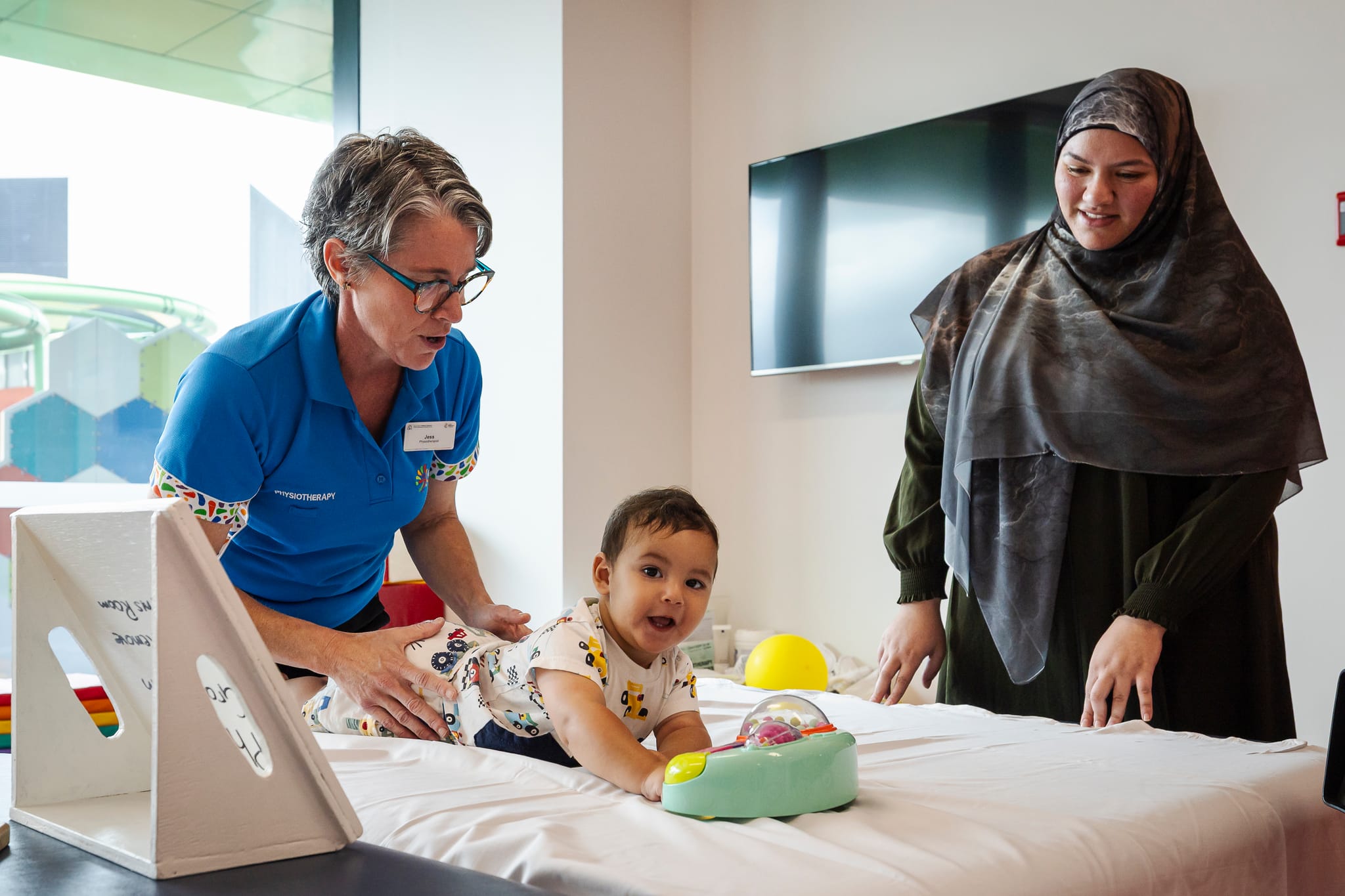
“For families, it means less fear and uncertainty; they get clarity early, instead of months and months of worry,” said Jess Morris, PCH Senior Physiotherapist.
“With early detection, we’re now minimising the negative impacts of disability on function and can maximise opportunities for successful participation.”
After receiving support very early in life, 15-month-old Ali Hadi is thriving.
Ali has CP affecting all his limbs, particularly the left side, and began therapy at PCH after being identified as high-risk from birth, following the loss of his twin in utero and early MRI findings of brain injury.
While Ali has similar physical abilities to a much younger child and can lift his head but can’t yet roll, sit independently or grasp toys, he’s a bright, engaged little boy who loves cars, being outdoors and enjoys story time.
His mother, Farah Alabsawi, incorporates physiotherapy and stretching into his every day play and credits the PCH team for giving Ali the best possible start in life.
“Intervening as early as possible to get the best supports possible, came into our life at the perfect time, pretty much as soon as Ali was born, before even seeing the true impact of CP on his life,” Ms Alabsawi said.
Children in regional and remote areas of WA will now have access to the life-changing benefits of early identification and intervention through the expansion of the PCH program to regional areas of WA.
Supported by PCHF and Stan Perron Charitable Foundation, CONNECT-CP will strengthen regional workforces and equip healthcare providers with specialist training and digital health tools to deliver best practice, culturally appropriate early assessments and referrals to reduce disability and improve outcomes for many children and families across the state.
PCHF CEO, Carrick Robinson, said: “It’s so important regional and remote WA children get the same access and same equity to healthcare that children in metropolitan areas get.”
“The program is tackling the urgent need for early CP detection and intervention across the state and will help ensure vulnerable children don’t miss out on opportunities that could transform their lives,” Mr Robinson said.
An earlier PCHF-funded pilot program in the Kimberley region has seen the average age of diagnosis reduce from 19 months to under five months, well within the timeframe for life-changing early therapy.
To help give more WA babies the best start in life visit www.pchf.org.au