



Many senior executives reach a point where technical expertise is no longer the biggest determinant of success.
Instead, their greatest challenge becomes leading people through uncertainty, complexity and constant change.
According to international management consultant and facilitator Dr Shaun Ridley, today’s leaders need to continually challenge their own thinking if they want to remain effective.
“In a world moving at warp speed, you will get left behind or overtaken very quickly if you are not constantly looking to learn and develop further,” he said.
Leadership has changed dramatically over the past five years as organisations navigate economic uncertainty, changing workforce expectations, rapid advances in artificial intelligence and increasingly complex operating environments.
While frameworks such as VUCA – volatile, uncertain, complex and ambiguous – have long been used to describe today’s business landscape, AIMWA leadership facilitator Dee Roche believes the pace of disruption has accelerated even further.
“Leadership has become less about having the answers and more about creating the conditions, where people can navigate uncertainty together and build the endurance to withstand the speed and weight of change.”
She describes this as a “BANI environment” – brittle, anxious, non-linear, and unpredictable.
Ms Roche said many leaders were not lacking capability, but capacity.
“What I see most often is not a capability gap, it is a capacity gap,” she said. “Many leaders are spending so much time responding to complexity, that they have little opportunity to step back and think strategically about the future.” Rather than teaching management fundamentals, AIMWA’s flagship Advanced Management Program is designed to help senior leaders rethink how they lead, influence and make decisions.
Dr Ridley said one misconception that can limit experienced executives is believing development is only for less experienced managers.
“Some leaders think they need to know everything and/or give the impression that they know everything. No one expects their leader to have all the answers, and we should celebrate the leader who is open to learning and exploring new ideas.”
Ms Roche agreed, saying experience can become a strength or a limitation depending on whether leaders continue challenging their assumptions.
“The biggest assumption is that what made them successful will keep them successful,” she said.
“Leadership growth starts when certainty gives way to curiosity.”
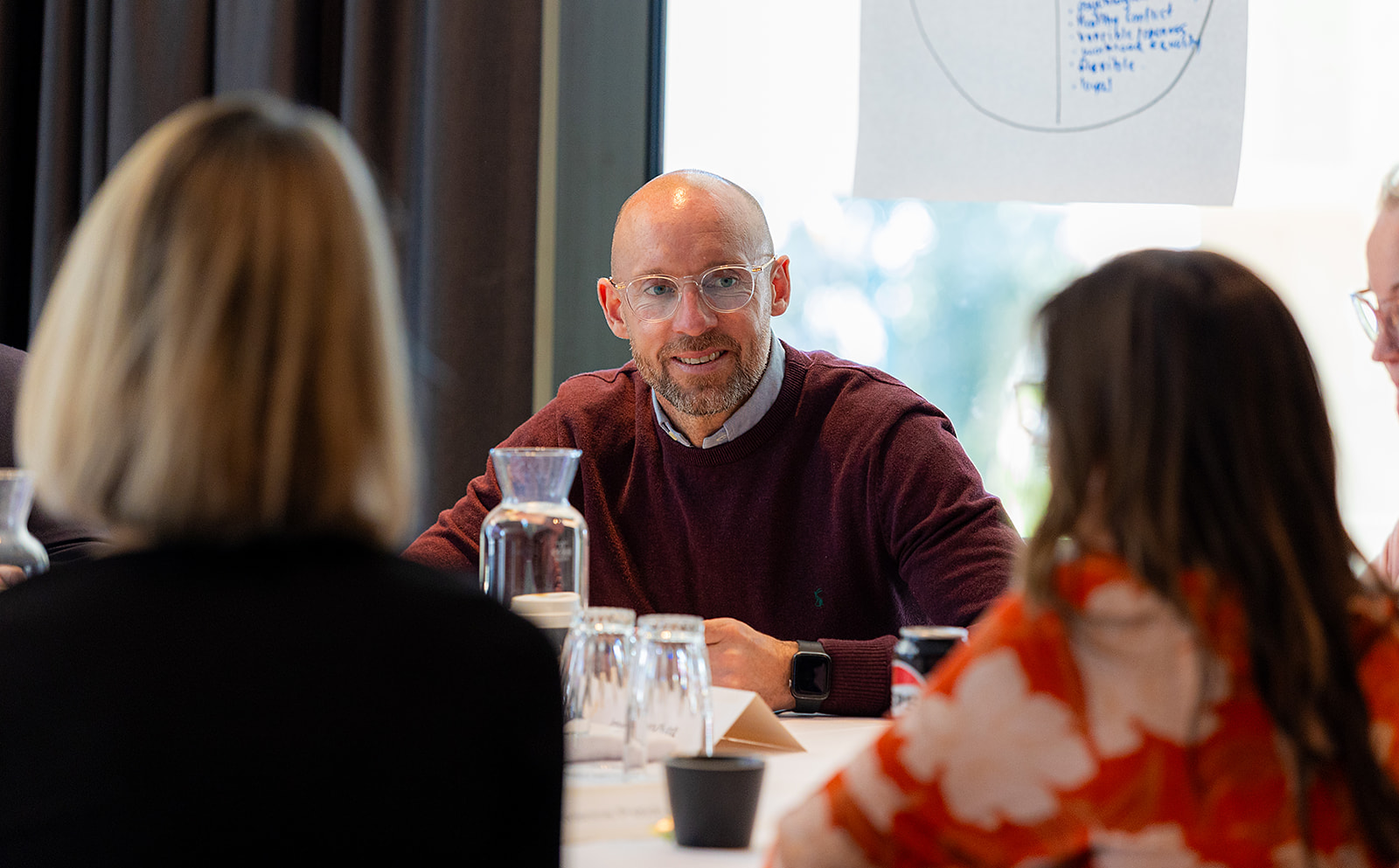
The six-day Advanced Management Program combines evidence-based leadership theory with practical executive application, using simulations, case studies, coaching and facilitated discussions to help participants apply new thinking to real workplace challenges.
Equally valuable, Dr Ridley said, is the opportunity to learn alongside senior leaders from different industries.
“Everyone is in a senior position, but their role and industry are very different, so this opens the conversations to learn how different industries tackle challenges differently,” he said.
Those discussions continue beyond the formal sessions, creating opportunities for participants to test ideas, challenge assumptions and gain perspectives they may not encounter within their own organisations.
For Ms Roche, those peer conversations are one of the program’s defining strengths.
“Leadership can become an echo chamber,” she said. “Many senior leaders spend their days surrounded by familiar challenges, familiar stakeholders, and familiar conversations. One of the most powerful aspects of the Advanced Management Program, is the diversity of the cohort.”
Held under Chatham House Rules, which encourages open and honest discussions with the understanding that conversations stay within the group, the program encourages leaders to openly discuss leadership dilemmas, organisational challenges and difficult decisions in a trusted environment.
The result, Ms Roche said, is often a shift in thinking that continues long after the program finishes.
“I often hear participants say they become more intentional,” she said. “They become more strategic in how they allocate their time, more thoughtful in how they engage stakeholders and more deliberate in how they develop their teams.”
Dr Ridley said participants frequently left with a deeper understanding of their own leadership style, fresh ideas to implement immediately and an expanded professional network they could continue drawing upon throughout their careers.
That impact is reflected in participant feedback. One executive described the program as having “exceeded expectations in all regards”, while another said it had inspired them “to engage more with the wider Perth business and non-profit organisation community”.
Other participants praised the quality of the presenters, describing them as “incredible”, while highlighting the opportunity to challenge themselves outside their comfort zone and take practical ideas back to their organisations.
As organisations continue to navigate disruption, Ms Roche said the leaders who succeed will be those who never stop learning and remain open to new perspectives.
“The leaders who continue to grow remain open to learning, regardless of how senior they become. They ask questions, they seek feedback and actively challenge themselves to different ideas and experiences.”
Dr Ridley said the next generation of executive leadership would be defined by agility as much as expertise.
“The best leaders of tomorrow will be highly agile and light on their feet. This agility will help them respond to the dynamic environment, relentless change and the unexpected challenges that will inevitably pop up,” he said.
“Whilst this flexibility will be vital, leaders will also need to maintain a strong values base to ensure they remain authentic and lead with integrity.”

