

WA is one of Australia's wealthiest states. Is its philanthropy keeping pace?




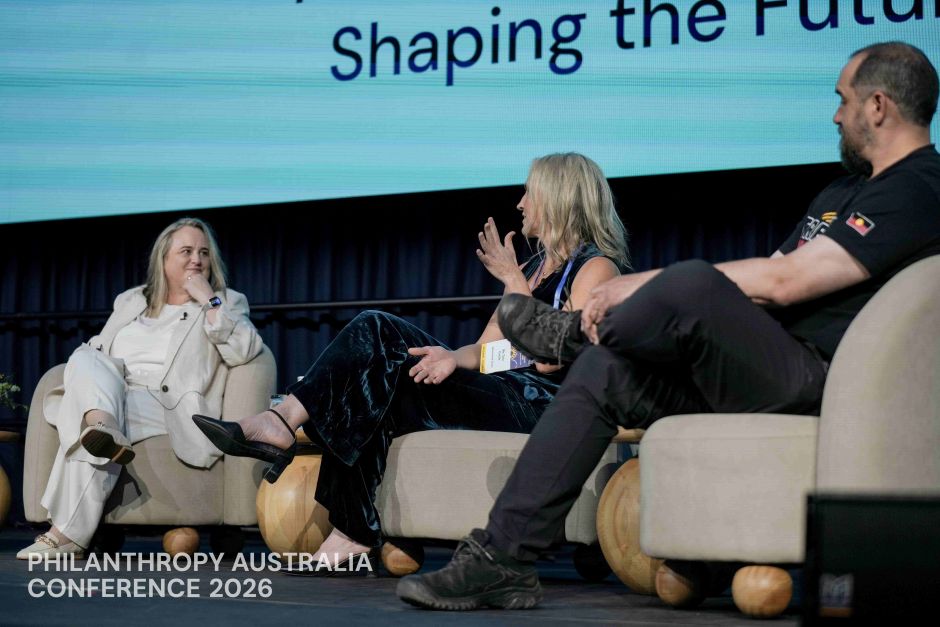
Western Australia generates extraordinary wealth, yet questions remain about how effectively that prosperity translates into lasting community impact. While new research places WA among the nation's most generous states, Philanthropy Australia Chief Executive Officer Maree Sidey believes there is considerable potential to strengthen giving and unlock greater benefit for communities.
Home to some of Australia's most successful mining companies, wealthy families and major private foundations, the state has built an economic powerhouse on the back of its natural resources.
In 2024-25, WA recorded gross state product per capita of approximately $152,500, almost 50 per cent above the national average.
But while WA leads the nation in economic output per person, does its philanthropic sector reflect the extraordinary wealth generated within its borders?
KPMG analysis released in January revealed that Western Australians recorded the highest average tax-deductible charitable donations nationally during the 2022-23 financial year.
Across Australia, 4.48 million taxpayers claimed $9.1 billion in donations, with WA accounting for an extraordinary $5.49 billion.
The average donation per WA donor reached $11,538, compared with $1,063 in New South Wales and $963 in Victoria.
However, the figures require context. In 2023, mining magnates Andrew and Nicola Forrest donated approximately $5 billion worth of Fortescue shares to their Minderoo Foundation, significantly influencing the state's results.
Even when KPMG excluded the postcode containing the Forrest donation, WA still recorded the nation's highest average donation, at $1,155 per donor.
Yet WA recorded just 271 donors claiming tax deductions for every 1,000 taxpayers, compared with 301 in Victoria and 283 in NSW.
The figures suggest that while Western Australians give, there is an opportunity to encourage greater generosity.
Philanthropy Australia chief executive Maree Sidey said WA had developed a strong philanthropic identity, distinct from its eastern state counterparts.
"Victoria and NSW have historically had larger philanthropic sectors and more established foundations," Ms Sidey told Business News.
“Western Australia has a growing culture of giving and enormous potential to strengthen its philanthropic footprint in the years ahead,” Ms Sidey said. “The state is already recognised for its collaborative approach to place-based philanthropy and practical community impact, with a growing network of metropolitan and regional community foundations helping to drive local solutions to local challenges.”
Ms Sidey pointed to Telethon’s almost 60-year legacy of bringing Western Australians together to support local causes, alongside Nicola Forrest’s recent contribution of more than $500 million to the Coaxial Foundation, as examples of the state’s capacity for significant and lasting philanthropic impact.
Research released in April by Philanthropy Australia and the University of Western Australia's Centre for Social Impact reinforces this picture.
The Western Australia Snapshot of Giving Study found 95 per cent of individual respondents had donated money during 2023-24, while more than 80 per cent had volunteered.
While the survey reflects respondents engaged in giving rather than the entire population, the findings highlight a strong commitment to supporting local communities.
More than 90 per cent of respondents directed their giving within WA, while almost 60 per cent expected to increase their contributions the following year.
Despite this generosity, Ms Sidey believes considerable potential remains untapped, particularly when it comes to structured philanthropy.
"There are many excellent examples of generous and strategic giving across WA," she said.
"WA corporate giving provides a unique case study for the rest of the country to reflect on, given the sizable capacity and direct community impact made in particular by the resources sector."
As private wealth continues to grow, she said there was a significant opportunity to expand structured giving and long-term community investment.
The April research found around half of individual donors had little or no understanding of structured giving vehicles, including charitable trusts, community foundations and giving funds.
"That's where Philanthropy Australia plays an important role," Ms Sidey said. "We support members to navigate giving structures, build their knowledge and connect with others so they can give more strategically and achieve greater impact over time."
WA is already home to some of Australia's most influential philanthropic organisations, however, significant donations do not necessarily translate into a stronger not-for-profit sector.
"Access to flexible, long-term funding remains a challenge, particularly for smaller organisations," Ms Sidey said.
She said perceived and actual competition between charities could also hinder progress, making collaboration essential.
"Collaboration improves productivity for both the funders and the changemakers, this leads to better community outcomes."
Across Australia, philanthropists are increasingly exploring approaches that prioritise long-term relationships, trust and community-led decision-making.
Ms Sidey said more funders were embracing the concept of Paying What It Takes, supporting not just individual projects but the leadership, staffing and organisational capability needed to deliver lasting outcomes.
She also highlighted the growing community of First Nations led funds across WA, which are investing directly in their communities and showing that self-determination over wealth and resources significantly improves community outcomes.
These developments come as Perth prepares to host the Philanthropy Australia Conference for the first time in September 2028, bringing hundreds of philanthropic leaders, foundations and funders from Australia and overseas to WA.
Ms Sidey said the event would provide an opportunity to create a valuable space for important conversations in Western Australia.
"We’re so excited to bring our conference to Perth. For the first time ever, it puts WA organisations in front of hundreds of funders, foundations and sector leaders from across Australia and overseas," she said.
"One lesson from Conference 2026 was that proximity matters, and seeing communities firsthand often leads to stronger relationships and investment."
For WA, the opportunity extends well beyond hosting a national conference.
The state has already demonstrated its ability to generate enormous economic wealth and support significant philanthropic initiatives.
But with fewer taxpayers claiming charitable donations, and many donors unaware of structured giving opportunities, there remains considerable room for growth in generosity.
For one of Australia's wealthiest states, the next challenge may be developing the same ambition when it comes to sharing its prosperity.

