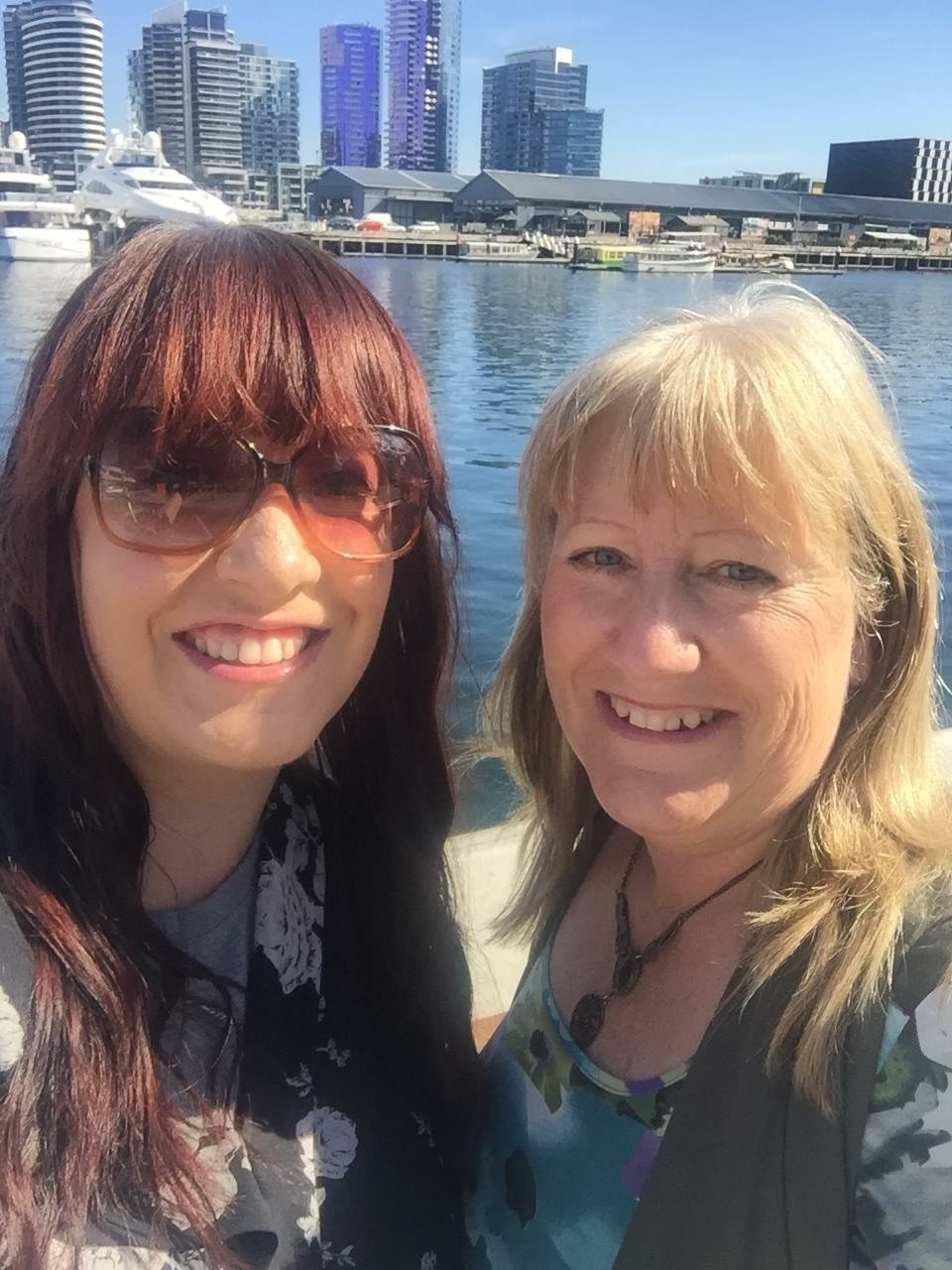
When Lyn Pow was diagnosed with motor neurone disease in 2018, life didn't simply change for her; it changed for everyone around her. Like so many families confronted with an MND diagnosis, everyday routines were replaced with medical appointments, care plans and difficult conversations, while the future became increasingly uncertain. Her husband, Frank made the decision to retire early so he could become her full-time carer, a sacrifice that speaks to the often-overlooked reality of this disease. MND doesn't only affect the person living with it. It reshapes entire families.
Lyn passed away in November 2019 at just 61 years of age, leaving behind a family navigating the grief that follows a disease for which there is still no cure.
For her daughter, Trudy Renshaw, that experience could easily have marked the end of her connection with MND. Instead, it became the beginning of something unexpected.
As Western Australia entered the uncertainty of the COVID-19 pandemic in 2020, Trudy found herself searching for a way to give back. She began volunteering with MND WA, initially helping wherever she was needed, supporting community events, assisting with charity golf days and contributing behind the scenes. It wasn't driven by the expectation of a career or even a long-term commitment. It was simply a desire to support an organisation that had supported her family through one of the most difficult periods of their lives.
Today, Trudy is MND WA's Operations and Fundraising Manager, overseeing the organisation's fundraising and events program, while leading operational improvements and process to help ensure Western Australian families living with motor neurone disease receive the specialist care, equipment and personalised support they need. Looking back, it feels less like a career move and more like a natural continuation of her own family's story.
"Not one journey is the same," she says.
It is a simple statement, but one that defines the philosophy underpinning MND WA's work.
At any given time, the organisation is supporting more than 200 Western Australian families living with motor neurone disease, with that number constantly changing as new diagnoses are made and other families lose loved ones. It is a continuous cycle of care that requires not only specialist knowledge but an understanding that no two families experience MND in the same way.
Some families need guidance immediately after diagnosis, trying to make sense of an overwhelming amount of information while processing life-changing news. Others require specialised equipment that enables someone to remain safely at home for longer, home modifications that make everyday living possible, respite care that allows exhausted carers a chance to rest, or education that helps families prepare for what lies ahead. Community initiatives such as the Gather program also provide something that cannot be measured in statistics alone: connection with others who understand exactly what they are experiencing.
While much of the public conversation around MND quite rightly focuses on the person diagnosed, Trudy believes equal attention must be given to the people standing beside them.
"The main carer is often a husband, wife or adult child," she says. "They're navigating the journey as well, and we're just as passionate about making sure they're supported."
It is an important reminder that behind every diagnosis is a network of people whose lives have also been irrevocably changed.
Providing that level of care, however, depends on something that is becoming increasingly difficult for charities across Australia to secure: sustained community support.
Each year MND WA delivers five major fundraising events alongside seasonal appeals and community fundraising initiatives that generate the income required to continue delivering essential services. The challenge is not simply raising money; it is ensuring those services remain available as demand continues to grow.
For Trudy, fundraising has never been about reaching financial targets for the sake of numbers. Every dollar represents practical support that can improve a family's quality of life, whether that means funding specialist equipment, providing respite services, supporting educational programs or helping someone remain in the comfort of their own home for as long as possible.
She also understands why many people hesitate to get involved. Life is busy, financial pressures are real and many assume someone else will step forward.
But she believes there has never been a greater opportunity for the community to make a difference.
"Everyone has a voice," she says. "Everyone can help."
For some, that may mean making a donation during the organisation's mid-year or end-of-year appeals. Others may choose to volunteer their time at fundraising events, assist with community activations or lend a hand behind the scenes. Sometimes the most powerful contribution costs nothing at all. Sharing a story, attending an event or simply starting a conversation about motor neurone disease can introduce the organisation to someone who may never have otherwise known it existed.
"You support what you connect with," Trudy says, and perhaps that observation explains why storytelling has become just as important as fundraising itself. The more people who understand the realities of living with MND, the more willing they become to stand beside families facing it.
Ask Trudy what continues to inspire her most and she doesn't begin by talking about fundraising totals or successful events. Instead, she talks about people. She speaks about the generosity of volunteers who freely give their time, donors who continue to support year after year and families who, despite everything they are carrying, still find ways to help others. She also speaks with admiration about her colleagues, whose professionalism and compassion allow them to walk alongside families through some of the most difficult moments of their lives.
Nearly seven years have passed since Trudy first walked through the doors of MND WA as a volunteer looking for a way to give back after losing her mother. Today, she leads the very fundraising efforts that make the organisation's work possible, helping hundreds of families across Western Australia navigate a journey she knows all too well.
There is something quietly powerful about that full-circle story. It serves as a reminder that volunteering is rarely just about giving time. Sometimes it becomes purpose. Sometimes it becomes a career. And sometimes, as it has for Trudy, it becomes a way of ensuring that the compassion shown to one family continues to ripple through hundreds more.