In choosing to become a Perkins Partner, local businesses are doing something that will benefit the future health of the people who matter most in their life.
A tax-deductible annual donation of $10,000 to support WA researchers at the Perkins could lead to a life-changing discovery, a breakthrough and one day, even a cure.
The Perkins future researcher support program, Lifeboat, funded as part of the Institute’s committed Perkins Partners program, gives peace of mind so that PhD research students in need can access funding to continue their studies, no matter what.
To date, five PhD students at the Perkins have been supported via the Perkins Lifeboat initiative.
The Perkins is home to more than 45 PhD students from universities across WA.
The Perkins provides training, guidance and real-world experience with each student receiving university stipend while writing their thesis.
A PhD can take up to four years to complete and sadly, that stipend barely keeps PhD students above the poverty line.
Many have rent, bills and families to support yet they’re restricted to working no more than eight hours a week outside of their full-time lab work.
Students from equity groups often have no other safety net.
"Medical research is not for the faint-hearted and 2025 proved that to be true," said Perkins CEO, Researcher, Doctor and Donor, Professor Peter Leedman, AO.
"Across the globe, scientists struggle to secure funding, with many abandoning their vital work.
"Here in Australia, national grant success rates fell below nine per cent. In WA, it was less than four per cent, an incredibly disheartening result.
"Thankfully Perkins programs such as Safe Harbour - which provides three years funding for early-to-mid-career researchers - and now Lifeboat, are shielding our new and future researchers from many of the funding challenges, allowing them to keep driving discovery and their passion for their research."
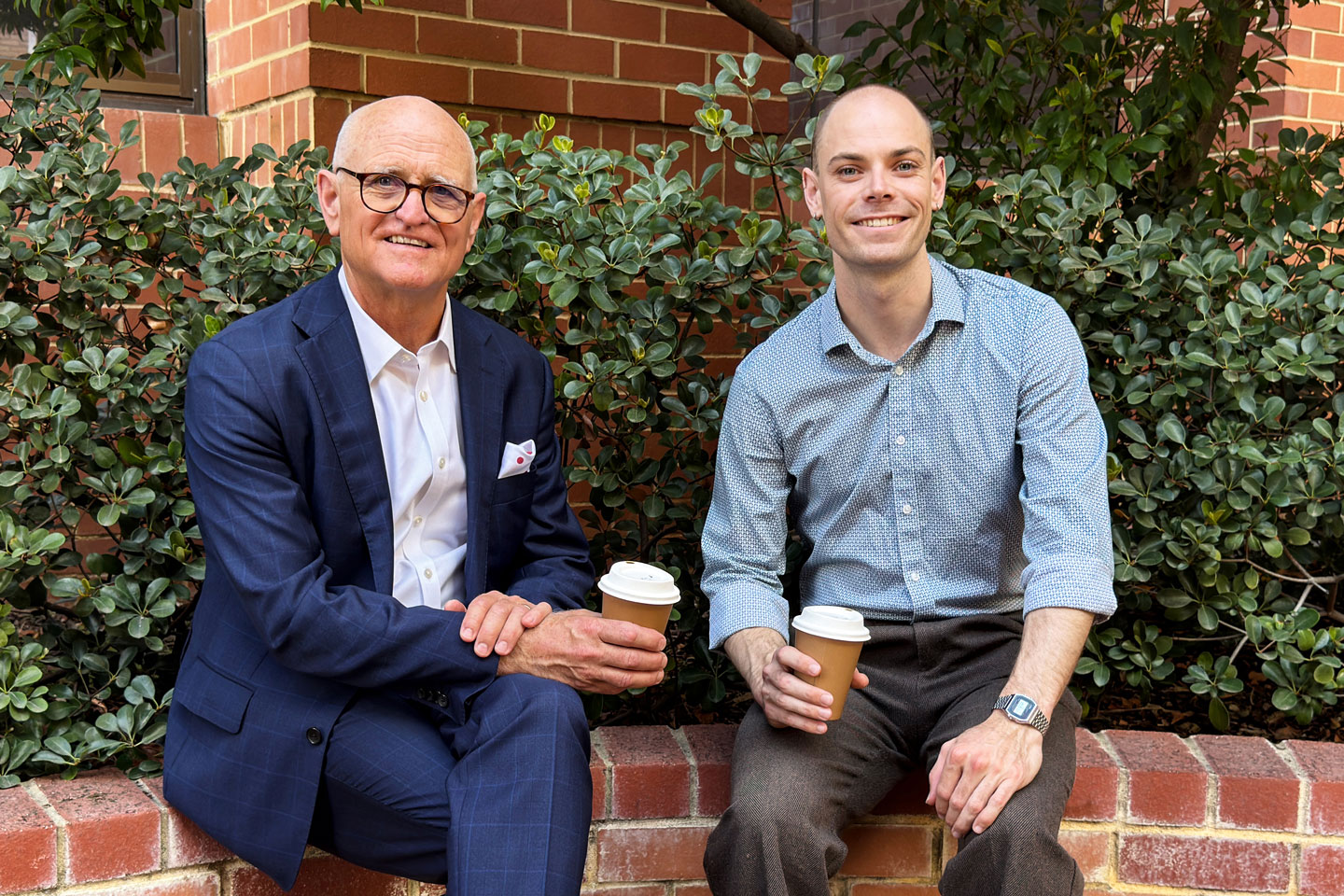
Capital Partners Private Wealth founder David Andrew is the most recent member to become a Perkins Partner and support a PhD student.
One of the first fee-based financial planning firms in Australia, Capital Partners Private Wealth has grown to $2.5 billion in assets under advice with 55 wealth management professionals.
They provide integrated wealth solutions for families with complexity, coordinating all areas of advice such as structuring, modelling, tax and estate planning, investing, business succession and family stewardship.
"I met Peter Leedman some years ago and was inspired by the work Perkins researchers do, and the role it plays in our community," said David.
"Since then, our family has become passionate supporters of the Perkins mission, and we value our involvement.
"My wife Robyn and our three sons are very fortunate to enjoy good health, but all around us we see people suffering from what will one day be curable diseases.
"The idea that we can have impact by supporting future researchers in the laboratory means we are helping to move medical science forward.
"Researchers are the unsung heroes of the progress we make as a society, and few people outside medical science understand the personal sacrifices they make to give all of us better health outcomes."
Darcy Pirotta is a PhD student at the Perkins in the Disease Models and Therapies team within the Preventative Genetics group and is the future researcher who will benefit from Capital Partners Lifeboat grant.
His focus is on patients who are often overlooked. Rare diseases are individually uncommon, but collectively they affect more than 400 million people worldwide, and they disproportionately impact children. Despite this, 95 per cent of rare diseases still do not have an approved treatment.
At the same time, developing new therapies is incredibly expensive, takes many years and historically has a very low success rate.
His PhD work focuses on patient derived induced pluripotent stem cells to create models of skeletal muscle disease. These models retain the real human genomic context of the patients themselves and provides a platform for testing next generation genetic therapies with much greater relevance.
Darcy strongly advocates other future researchers apply for the Lifeboat Grant.
"It is tough out there for PhD students," he said.
"Most of us are supported by The University of Western Australia Research Training Program scholarship, which is $37,000 p.a. while working workloads that are effectively more than full time.
"For context, the Australian National Minimum wage for adults is about $49,000. Combine that with the current housing and cost of living crisis and there is substantial financial stress on top of an already demanding period.
"I plan to use this Lifeboat grant to build a small financial safety net.
"Everyday life throws curveballs, and they add up quickly - having a buffer means those unexpected expenses do not derail everything else.
"I would like to thank David from Capital Partners for his commitment to the Perkins mission and for supporting WA research.
"Thank you also for giving PhD students like me a vital lifeline to get started in my career."
To learn more about how your business might join the Perkins Partners program, please contact Shelley Mason, Senior Manager, Key Relationships, on 0409 380 881 or via shelley.mason@perkins.org.au.