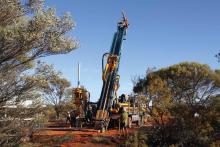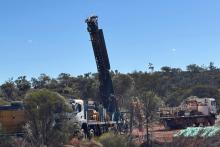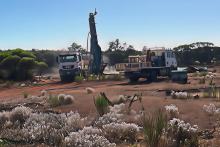


Terrain Minerals’ aircore drilling has confirmed the presence of a broad clay-hosted rare earths system at its Lort River project near Esperance, with 71 per cent of the holes returning anomalous mineralisation. A standout intercept delivered 8m assaying 3349ppm total rare earth oxides from 27m, with its 33 per cent heavy rare earth oxide component pointing to potentially higher value in the emerging system.

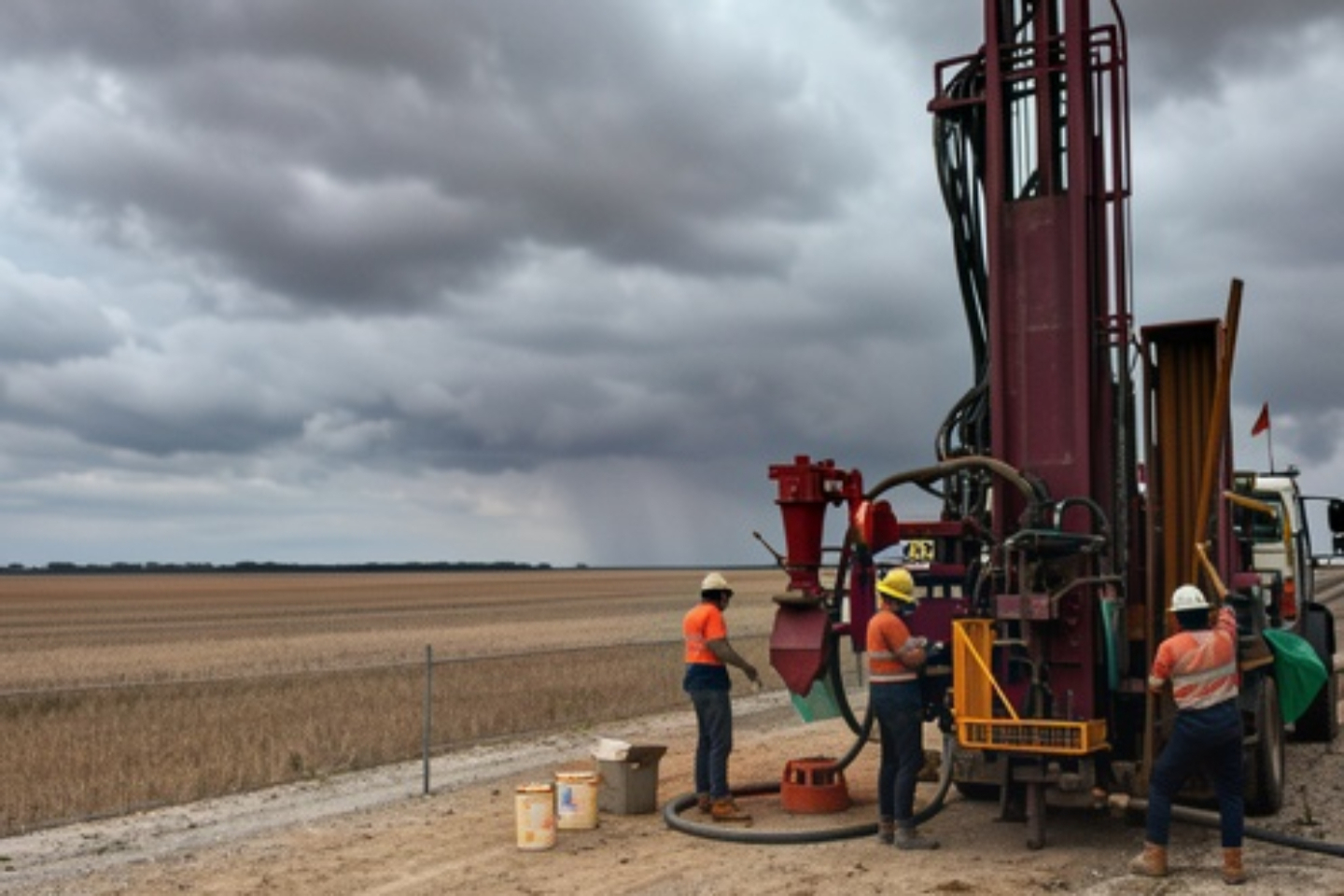
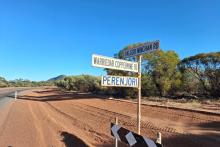
Terrain Minerals says a broad rare earths mineralised system is emerging at its Lort River project, 50 kilometres northwest of Esperance in WA’s Albany-Fraser Belt, after its recently completed aircore drilling hit anomalous mineralisation in 71 per cent of the drill holes.
The program received further encouragement from a notably higher-grade rare earths-rich zone intercepted in one hole, which returned 8 metres assaying 3349 parts per million (ppm) total rare earth oxides (TREO) from 27m depth, with heavy rare earth oxides (HREO) making up 33 per cent of the interval. The hit included a 6m slice going 4230ppm TREO, with a best run of 3m at a convincing 5568ppm, accompanied by a 37 per cent HREO component.
Heavy rare earth elements such as dysprosium and terbium are prized in the manufacture of permanent magnets because they help the magnets cope with heat in applications such as electric vehicle motors, wind turbines and some defence equipment. Given that they’re less readily available outside China than the more ubiquitous lighter rare earth elements, their local presence could be significant.
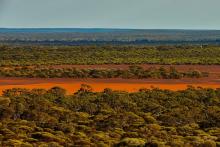
The latest 35-hole, 897m program tested a 66-square-kilometre clay-rich regolith basin first outlined by airborne electromagnetic surveying. The company’s previous geophysics had mapped conductive, weathered horizons that Terrain believed could host clay-style rare earth mineralisation, and its latest drilling has provided solid support for that model.
Other broader zones also help flesh out the system's scale. A second hole returned 60m at 530ppm TREO from 27m depth, while another gave up a 45m intercept going 455ppm TREO from 12m. Ten of the holes bottomed out in mineralisation, suggesting the system may extend below the depths tested by the aircore drilling.
Terrain Minerals executive director Justin Virgin said: “This program does two things for Lort River. First, it confirms the presence of a genuinely broad system, with rare earths in 25 of 35 holes, and secondly, it has found a high-grade interval in LTAC028 that we intend to chase. The basket of rare earths minerals is a sensible mix of a solid neodymium-praseodymium magnet component that underpins value, together with heavy rare earth zones that add a good component of high-value heavy rare earths and lift the value of the system in places.”
Lort River's rare earths basket is shaping up as one of its biggest selling points. Neodymium and praseodymium account for almost a quarter of the project's rare earth oxide mix, placing it firmly within the range reported by Australia's better clay-hosted deposits. Throw in pockets rich in high-value dysprosium, terbium and yttrium, and Terrain could be building far more than just another rare earths project.
Terrain is also trying to get ahead of the processing question that often hangs over many clay-hosted rare earth projects. It is working on a beneficiation and acid-leach route with support from the Western Australian Government-backed Minerals Research Institute of Western Australia (MRIWA) and Curtin University.
The work so far has picked up an important distinction. The MRIWA-backed test work using ammonium sulphate leaching - a process typically used to recover ionic rare earths from clays - returned negligible recoveries from Lort River samples, supporting Terrain’s view that the mineralisation is non-ionic and mainly hosted in clay-bound minerals such as monazite, rather than simply adsorbed onto clay surfaces.
Terrain says it is re-splitting all the better-than-200 ppm total rare earth oxide hits from the original composite samples, with analyses from the resulting one-metre re-split samples pending.
The results are expected to home in on the downhole grade profiles from the latest aircore program before planning is finalised for a follow-up reverse-circulation (RC) drilling program. The rig can drill deeper than aircore and is expected to help resolve the depth and local lateral extent of the mineralisation to a level sufficient to support future resource definition.
The company’s forward program includes reviewing the pending one-metre assays to rank its best zones and assessing how the high-grade and heavy rare earth areas hang together. It will also revisit another intercept in which a 3m surface composite returned a hefty 5725 ppm TREO.
It will then move to RC drilling of the broader shallow corridor towards a possible future resource. Lort River-specific metallurgical test work is also slated to begin later this year and continue into 2027.
For now, Lort River has moved from a big geophysical idea to a scout-drilled rare earths system with grade, width and a heavy rare earths kick. The next assays should show whether Terrain has a tidy, clay-hosted rare earths discovery story taking shape in the paddocks northwest of Esperance.
Is your ASX-listed company doing something interesting?
Contact: matt.birney@businessnews.com.au