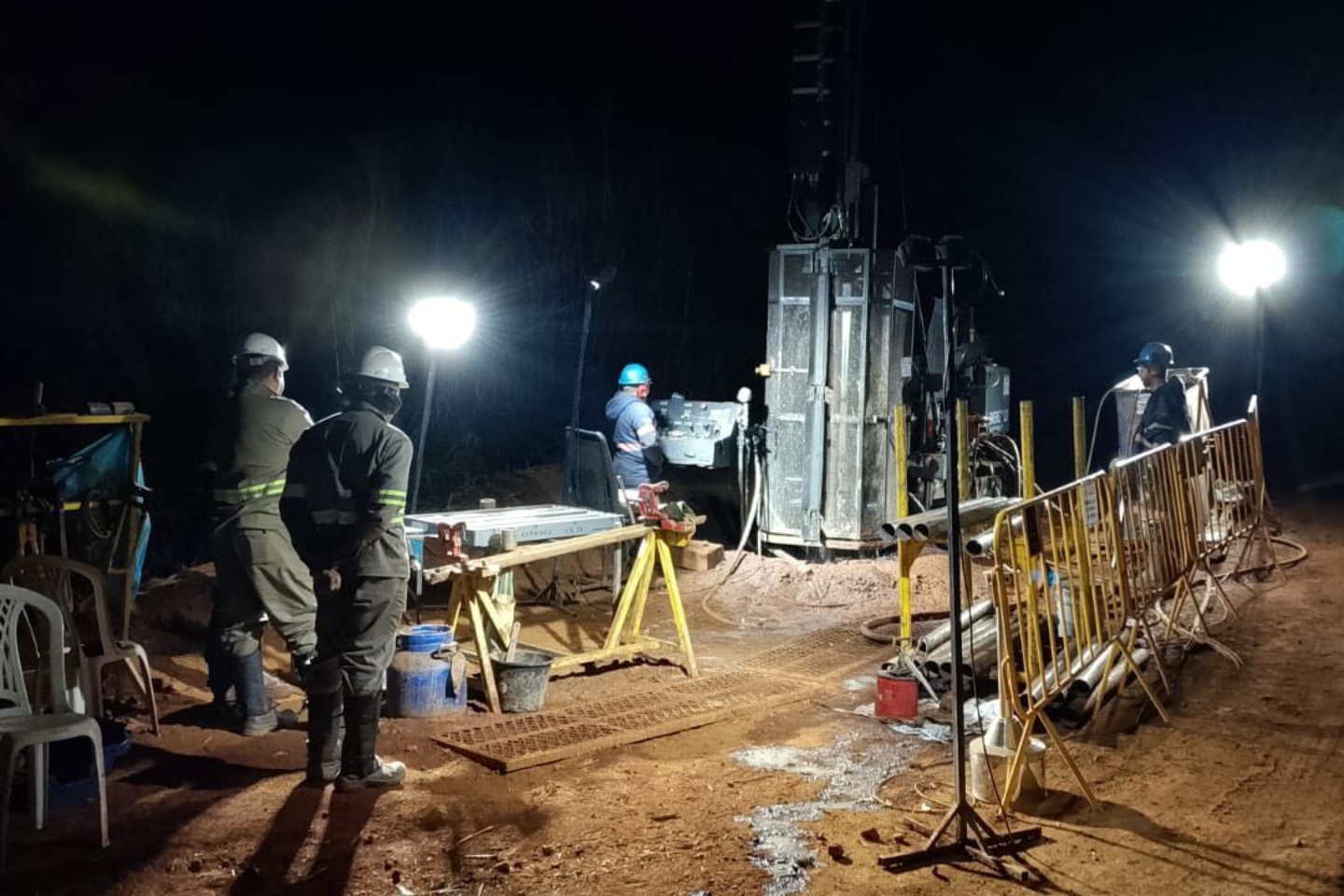
St George Mining has landed its longest rare earths and niobium drill intercept to date at its Araxá project in Brazil, with a near-200m run from surface adding more heft to an already chunky critical minerals system.
The company’s latest batch of 23 diamond holes returned a headline hit of 199.5m grading 2.86 per cent total rare earth oxides and 0.44 per cent niobium pentoxide from surface.
The monster intersection included 60m at 3.96 per cent total rare earth oxides (TREO) and 0.52 per cent niobium pentoxide from surface. The same hole also delivered 15m at 3.30 per cent TREO and 0.97 per cent niobium pentoxide from 36m and 28.8m at 1.76 per cent TREO and 0.70 per cent niobium pentoxide from 116.2m.
Importantly, the hole remained mineralised to the end, with a final 1-metre hit grading 4.8 per cent TREO from 198.5m. St George says the hole entered fresh rock at 198m, reinforcing the vertical extent of the weathered mineralised profile and the potential for a large-scale open-pit development.
Not to be left out of the party, a second hole intersected 121.55m at 3.47 per cent TREO and 0.39 per cent niobium from surface and featured 40m at 5.87 per cent TREO and 0.48 per cent niobium and 15.5m assaying 8.07 per cent TREO and 0.75 per cent niobium pentoxide.
A third hole bored through 96m at 4.19 per cent TREO and 0.31 per cent niobium pentoxide from surface. The intercept included 46m at 6.14 per cent TREO and 0.35 per cent niobium from 16m and 22.95m at 8.93 per cent TREO and 0.18 per cent niobium from 37.05m.
A fourth hole added another big run of 80.5m at 4.62 per cent TREO and 0.33 per cent niobium from surface.
Niobium also continued to flex its muscles throughout the system, with broad hits of 90m at 0.54 per cent, 145.75m at 0.49 per cent, 171.4m at 0.48 per cent and the headline 199.5m intercept at 0.44 per cent, all from surface.
Eight of the 23 holes were drilled outside St George’s current mineral resource estimate, pushing the known mineralised footprint an estimated 200m further north. The company says the northern part of the system is emerging as an important area for both resource growth and definition, while still remaining open.
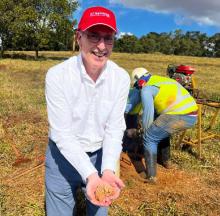
St George Mining executive chairman John Prineas said: “The remarkable result for AXDD120, which delivered almost 200 metres of continuous mineralisation from surface, highlights the tremendous scale and consistently high grade of the mineral system at Araxá. “Importantly, this result is not isolated. Many drill holes in our program, including seven drill holes in the latest batch of results, have returned more than 150 metres of mineralisation from surface.
Drilling is now set to swing towards East Araxá, a separate discovery about one kilometre east of the main deposit, where St George expects resource definition work to support another resource upgrade later this year.
St George’s existing Araxá resource stands at 70.91 million tonnes grading 4.06 per cent TREO and 0.62 per cent niobium, with additional niobium-focused material taking the total niobium inventory associated with the resource to 95.47 million tonnes.
The results follow a busy June for the company, which reported early metallurgical testwork that produced high-grade concentrates of 40 per cent niobium pentoxide and a rare earth concentrate up to 15.7 per cent TREO.
St George also secured firm commitments for a $60 million placement, including $20 million from Hancock Prospecting, which will accelerate the company’s feasibility and development work at the burgeoning Araxá project.
Araxá sits in the mining-friendly Brazilian state of Minas Gerais, 3km north of the world-leading niobium mine operated by Companhia Brasileira de Metalurgia e Mineração (CBMM). The region has a long mining history, established infrastructure and a skilled workforce.
With thick assays, a larger footprint, metallurgical wins, a new discovery nearby and fresh funding all moving in the same direction, St George clearly has momentum at Araxá.
The next resource update should show just how much bigger the company’s Brazilian rare earths-niobium prize is becoming.
Is your ASX-listed company doing something interesting? Contact:matt.birney@businessnews.com.au


 By Doug Bright