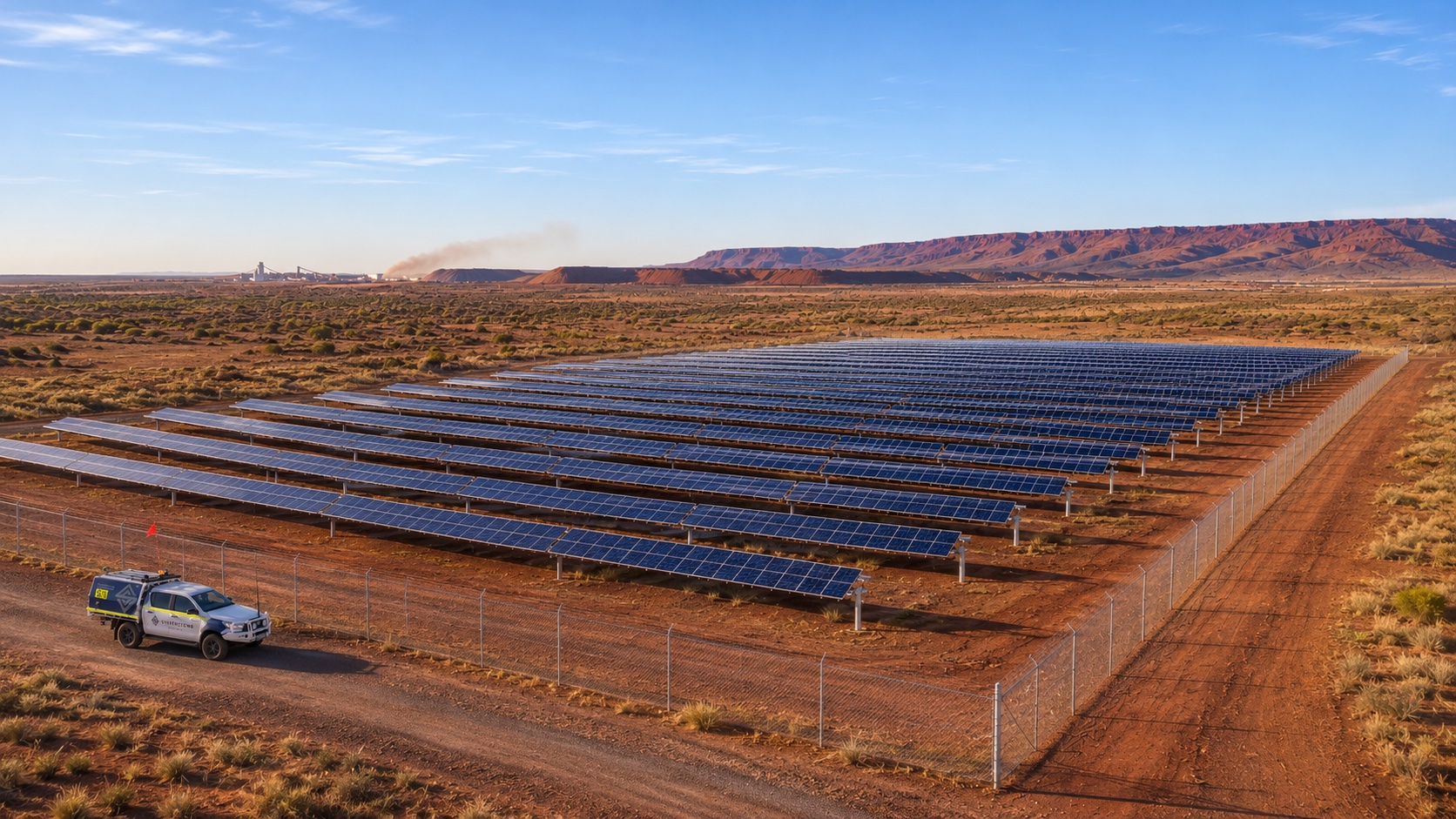
With experienced renewable energy specialist Darryl Bower appointed to lead its Renewables division, Silverstone is strengthening its capability to optimise existing power infrastructure through integrated solar, battery storage and conventional generation.
Silverstone has launched its dedicated Renewables division, expanding its offering to help mining and remote operations reduce diesel consumption, improve efficiency and lower operating costs.
Building on its established power generation business, the new division provides end-to-end engineering, procurement and construction (EPC) services for hybrid power systems integrating solar, battery storage and conventional generation.
The expansion responds to growing demand for cost-effective, reliable energy solutions as mining operators face increasing electricity requirements, fuel price volatility and pressure to decarbonise.
Leading the division is General Manager – Renewables, Darryl Bower, who brings more than 15 years of experience in off-grid power and renewable energy.
Mr Bower founded CDI Energy in 2009 at the age of 19, growing the business into a specialist provider of remote power infrastructure and delivering more than 75 hybrid power systems across remote Western Australia.
The new division represents a natural progression for Silverstone, building on its existing diesel generation fleet and established experience servicing mining clients.
"Renewables is the next step in providing alternative energy solutions to our mining clients, helping them reduce diesel consumption and operating costs," he told Business News.
Power optimisation
For remote operations, improving energy efficiency does not necessarily mean replacing existing power infrastructure.
By integrating solar and battery storage with conventional diesel or gas generators, mining companies can reduce fuel consumption, generator operating hours and maintenance requirements, delivering operational savings while maintaining reliable power.
A key objective is achieving what the industry calls 'diesel off', allowing generators to be shut down when solar and battery storage can meet a site's electricity demand.
Conventional generation remains part of the system, providing power when renewable generation and battery storage cannot meet demand.
"You go from your traditional diesel-only supply to diesel and renewables, providing an additional level of redundancy and enhancing the reliability of the power supply," Mr Bower said.
However, achieving these benefits requires careful planning and system design.
Every remote operation has different energy demands, operating conditions and infrastructure requirements, making detailed load modelling essential to determining the optimal combination of generation, solar and storage.
Commercial benefits
Technological advancements and declining equipment costs have transformed the commercial viability of renewable energy over the past 15 years.
"We've seen significant advancements in technology and reductions in pricing, making renewables more financially viable than ever before," he said.
Where solar was once considered an unlikely solution for remote mining operations, it has now become a common component of power infrastructure projects.
"There’s not many power systems that go out to tender that don’t have a solar component to them," Mr Bower said.
Growing electrification across the mining sector is increasing electricity demand, while fuel price volatility and concerns about future diesel availability are strengthening the business case for hybrid systems.
Unlike diesel generation, where ongoing fuel costs fluctuate with market conditions, renewable energy can provide greater long-term cost certainty.
"Renewables provides them a fixed cost of energy that they can model or work from," Mr Bower said.
While decarbonisation remains an important consideration, reducing exposure to fuel price volatility and improving operating efficiency are becoming increasingly significant commercial drivers.
Integrated delivery
Silverstone's established power generation expertise provides a strong foundation for its expansion into renewable energy project delivery.
The company already designs, supplies, installs and maintains power generation infrastructure for mining clients, giving it a practical understanding of how hybrid systems must perform in demanding remote environments.
As an EPC contractor, Silverstone's Renewables division will manage projects from engineering and equipment procurement through to construction and installation.
A key advantage is the company's vertically integrated model, bringing together expertise across power, civil works, water, surveying and recruitment.
"We have access to everything we need from a vertical integration perspective to deliver renewable or hybrid power projects," he said.
Remote projects can present significant logistical and geotechnical challenges, making proven delivery experience, strong safety systems and clearly defined scope, costs and performance expectations important considerations when selecting an EPC contractor.
The new division will strengthen Silverstone's offering to existing clients, providing greater flexibility in how they source and manage power, from short-term diesel generator rental to longer-term hybrid energy solutions under power purchase agreements.
By combining renewable energy expertise with its existing generation and infrastructure capabilities, Silverstone aims to deliver more integrated, efficient and cost-effective power solutions for remote operations.