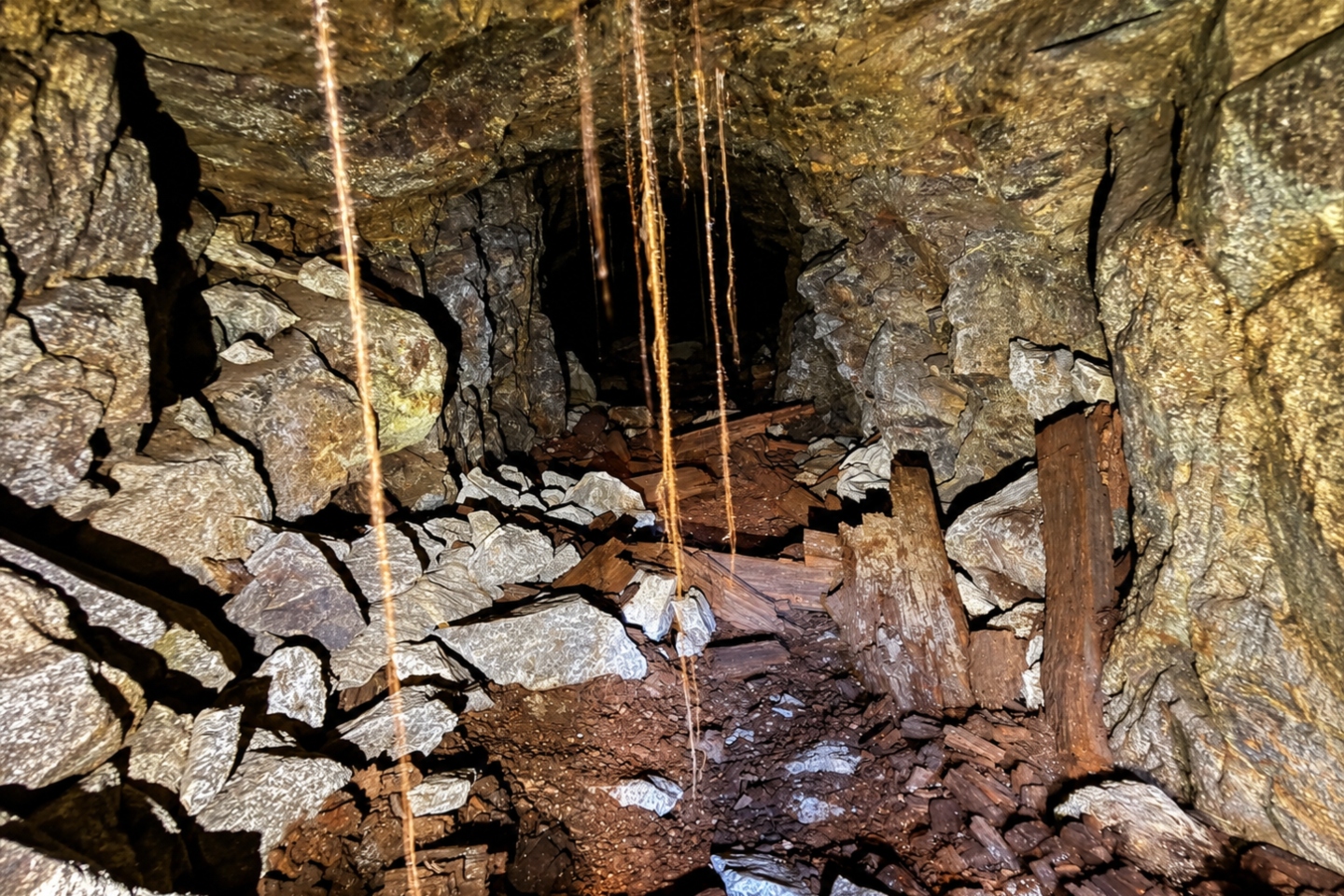
Right Resources has put some old-fashioned goldfield waste through a modern metallurgical workout and emerged with an encouraging result, extracting 89.9 per cent of the precious metal in just 24 hours from material collected at its Pilot gold project in southern New South Wales.
The preliminary laboratory results have provided the company with its first indication that gold-bearing material from the historic mine may respond favourably to conventional processing methods, potentially simplifying the technical pathway should future exploration establish an economically viable deposit.
The testing, undertaken by Fremantle Metallurgy in Western Australia, involved a 29-kilogram composite sample collected from a mullock dump beside the old Pilot mine shaft, 20 kilometres southeast of Tumbarumba.
Mullock is essentially rock discarded during historical mining operations, making the results particularly interesting given the material was never intended to be a modern processing feedstock.
Using a conventional cyanide bottle-roll test, the laboratory extracted 50.2 per cent of the gold within just two hours, climbing to 79.3 per cent after seven hours before hitting its hefty 89.9 per cent peak at the 24-hour mark.
The final 48-hour extraction figure came in slightly lower at 88.1 per cent, with the laboratory flagging analytical variability or possible gold reabsorption by the sample as potential explanations.
Importantly, the test also delivered relatively modest chemical consumption, using just 374 grams of sodium cyanide and 239 grams of lime per tonne of material over the 48-hour period.
Low reagent consumption can be a valuable ingredient in the economics of a future gold operation, potentially helping keep processing costs under control.
The company also put the material through a three-stage Falcon gravity separation process to concentrate heavier gold particles before chemical treatment.
The exercise produced individual concentrates with calculated grades ranging from approximately 29 grams per tonne (g/t) to 66g/t gold, a substantial upgrade from the original sample's roughly 0.7g/t to 0.8g/t gold.
The results have raised the intriguing possibility that Pilot contains a coarse-gold component, although further laboratory work is needed to reconcile the results and establish reliable gravity recovery figures.
Right Resources managing director Graham Howard said: “Achieving 89.9% gold extraction after 24 hours and 88.1% after 48 hours using conventional cyanide leaching is an encouraging initial result for Pilot, particularly alongside the low laboratory reagent consumption.”
The company identified Pilot's potential during exploration work in 2024 before making the historic goldfield the centrepiece of its successful $10 million ASX float in October 2025.
The exploration junior is led by managing director Graham Howard, who has more than 35 years of resources industry experience, including senior roles in major mining developments such as the Telfer and Boddington gold-copper mines in WA and the Silangan copper-gold project in the Philippines. He also served as managing director and chief executive officer of ASX-listed VHM Limited.
Pilot sits within the company's extensive NSW exploration portfolio, covering 2459 square kilometres across the historically productive Tumbarumba and New England goldfields.
The historic Pilot Reef mine reportedly produced 2662 tonnes grading a remarkable 38g/t gold, equivalent to more than an ounce of gold per tonne, highlighting the high-grade nature of the mineralisation exploited by the old-timers.
Management believes Pilot may form part of a reduced intrusion-related gold system, a style of mineralisation associated with certain granite-related geological systems and potentially accompanied by tungsten.
The company has already completed widely spaced diamond drilling across Pilot and systematically investigated a 2.4km by 2.9km area using geological mapping and geophysics.
Beyond Pilot, Right Resources holds a substantial 2459-square-kilometre exploration portfolio across 10 wholly owned licences in New South Wales, targeting gold, tungsten and copper. Its other key asset is the Blue tungsten-gold-bismuth project, also near Tumbarumba, where scheelite-bearing quartz veins highlight the area's critical minerals potential. A maiden air-core drilling campaign is currently underway at the project.
The company's broader Tumbarumba holdings sit within the prospective Lachlan Fold Belt, near the regionally significant Gilmore Fault Zone, while two additional exploration licences in the historically mineral-rich New England district provide further exposure to gold and critical minerals.
Next on the agenda is further mineralogical investigation to better understand the distribution and size of gold particles, alongside additional gravity testing and potentially larger, more representative samples.
For Right Resources, the latest encouraging findings represent an early technical tick rather than a commercial breakthrough. However, with historical high-grade production, an evolving geological model and now promising preliminary metallurgy, the promising Pilot project has given the company another reason to keep digging into its golden potential.
Is your ASX-listed company doing something interesting? Contact: matt.birney@businessnews.com.au