

Neometals’ latest induced polarisation survey has lit up multiple drill-ready copper targets around the historic Rinaldi workings at its Barrambie project in WA’s Mid West, headlined by a standout anomaly stretching more than 300m vertically. The company is preparing to fold copper testing into a June drilling campaign centred on the nearby Ironclad gold prospect, while neighbouring success at Solstice Minerals’ Nanadie project adds weight to the broader copper story.

Neometals has doubled down on the copper chase at its Barrambie project after a fresh induced polarisation (IP) survey lit up multiple drill-ready targets around the historic Rinaldi copper workings. The results were headlined by a powerful anomaly stretching more than 300m vertically and 200m laterally.
The new targets sit within the company’s sprawling 357-square-kilometre Barrambie ground package, 80km northwest of Sandstone in WA’s Mid West. The lightly explored project covers 40km strike along the Archaean Barrambie Greenstone Belt, a mineral-rich corridor already charged with gold, copper and one of the world’s highest-grade titanium-vanadium deposits.
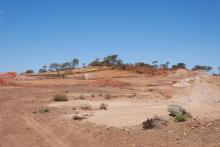
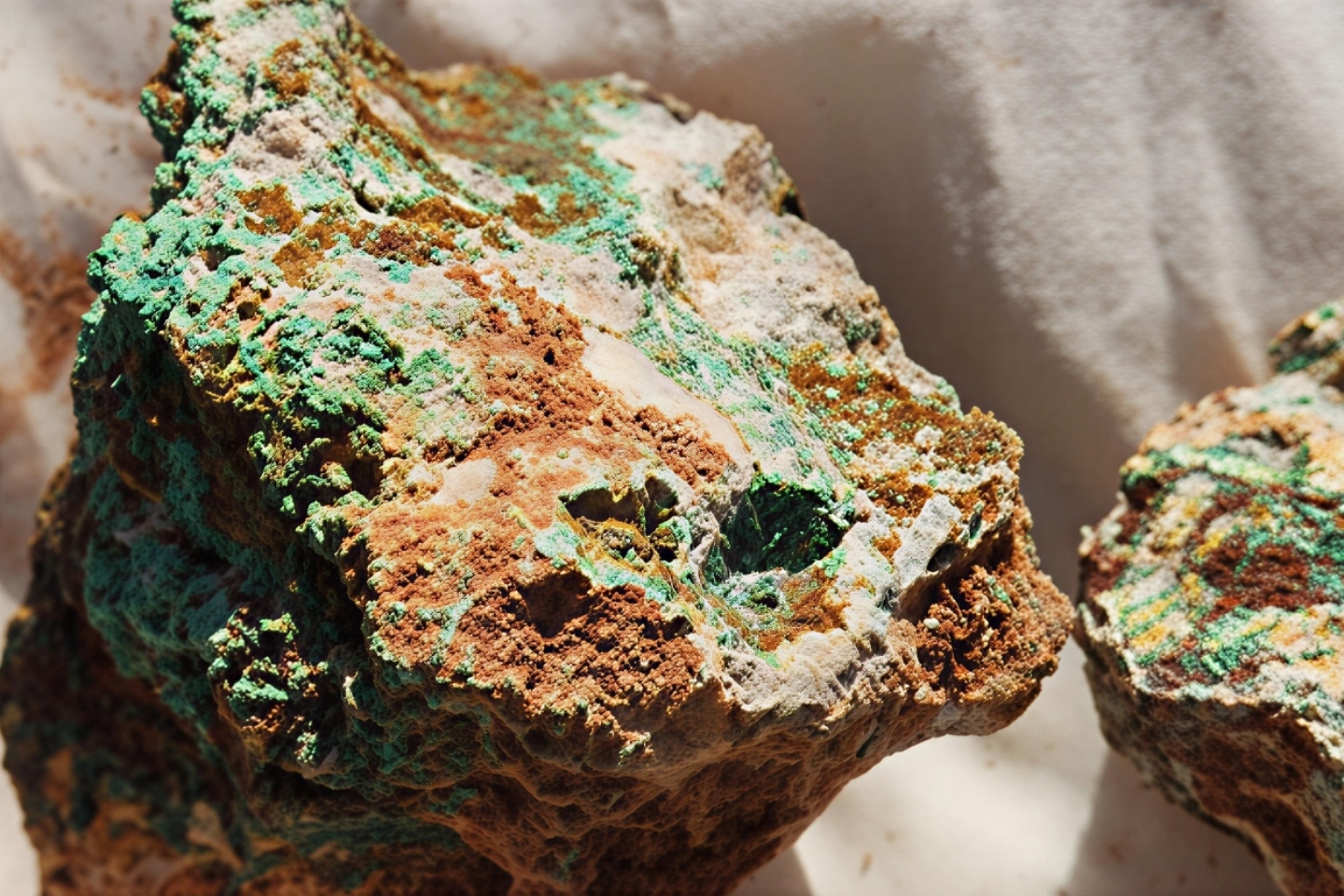
Historic mining at Rinaldi between 1956 and 1961 reportedly produced 138 tonnes of copper at an average grade of 9.8 per cent copper from shallow oxide ore, pointing to a fertile mineralised system that remains largely untested at depth.
Momentum at Barrambie really caught fire in March after drilling unearthed impressive sniffs of copper beneath the old Rinaldi workings, 20km southeast of the emerging Ironclad gold deposit and in the project’s prime gold corridor.
The drilling confirmed primary sulphides and sharpened management’s belief it may be on to a much larger hydrothermal copper-silver system alongside the project’s growing gold story.
The standout hit delivered 7m grading 1.72 per cent copper and 25.9 grams per tonne (g/t) silver from 82m, including a 1-metre hit grading 5.06 per cent copper and 88.2g/t silver. Earlier rock-chip sampling also returned grades of up to 24.4 per cent copper.
In April, the company ran two oblique east-west IP lines, 200m apart, across Rinaldi that lit up three drill-ready anomalies tied to quartz-sulphide mineralisation within the broader Barrambie Sill intrusive system.
The standout response landed 700m northeast of the historic workings and combined coincident chargeability and resistivity anomalies, a classic geophysical signature often linked to sulphide-rich mineralisation. The anomaly extends more than 200m across strike and more than 300m vertically, making it the highest-priority drill target.
Two additional anomalies also emerged. The first extends beneath the northern projection of the historic workings to a depth of 150m and appears larger and stronger than the central extension zone. The next target sits directly below the old workings and coincides with a lower resistivity zone interpreted as a sub-vertical structure potentially extending down dip from known mineralisation.
Neometals Limited managing director Chris Reed said: “The results identify responses below and along strike from known copper mineralisation, reinforcing the potential for the Rinaldi system to extend beyond the historical mining area.”
The company is now designing copper drill holes to test the new Rinaldi IP targets. That drilling will be part of a broader reverse circulation (RC) campaign scheduled to begin in June around the nearby Ironclad gold deposit, where management is also preparing approvals for infill and extension drilling.
While copper is quickly stealing the spotlight at Barrambie, the Ironclad gold prospect remains the project’s near-term cashflow engine, with Neometals recently locking in a 50:50 joint venture (JV) with BML Ventures to fast-track the shallow free-milling gold deposit into production from its 15,000-ounce resource base.
Neighbouring action is also turning heads. Rinaldi sits directly along strike from Solstice Minerals’ Nanadie copper-gold project. The deposit already hosts an inferred resource of 40.4 million tonnes at 0.4 per cent copper and 0.1g/t gold for 162,000 tonnes of contained copper and 130,000 ounces of gold.
Copper’s central role in electrification, renewable energy buildouts and grid expansion continues to drive demand for new discoveries in established mining belts, particularly in Western Australia, where existing infrastructure, haul roads, processing options and export pathways can quickly shorten the road from drill hit to development.
For Neometals, the latest geophysical hits suggest Barrambie is fast morphing from a legacy titanium and gold play into a serious copper contender.
Beneath the old Rinaldi workings, the company may now be closing in on a broader buried copper beast with all the right geological hallmarks.
Is your ASX-listed company doing something interesting? Contact: matt.birney@businessnews.com.au