


Maya Angelou, the renowned author, poet and activist, once said, “I have great respect for the past. If you don’t know where you’ve come from, you don’t know where you’re going.” She went on to add, “I have respect for the past, but I’m a person of the moment. I’m here and I do my best to be completely centred at the place I’m at, then I go forward to the next place.”
This quote resonates deeply with me as I work on the third Strategic Plan for St Stephen’s School during my Principalship. Whilst responsibility for the Strategic Plan rests with the Governing Body of the School (the School Council) it is developed in partnership with the School through a consultative and collaborative process. It is this process that has prompted me to revisit past Strategic Plans, both those I have written and those authored by Principals before me. At times, it felt like travelling back in time. For example, in 2011 the School identified ‘the need to explore the role of social media in teaching and learning’. Facebook was still in its infancy then, and it is remarkable to reflect on the pace of technological change since. Similarly, in 2012 the School set an objective for all enrolment paperwork to be online, an operational shift that is now standard practice in 2026.
What stands out most in reviewing these plans is the consistency of purpose. Successful strategic plans are underpinned by a clear vision, and it was heartening to see that St Stephen’s School has never wavered from its mission or values since its inception in 1984. Our values have remained central to every plan and now form the pillars that strengthen the outcomes of our strategic themes. In 2026, our mission is succinctly expressed as “to inspire learning that transforms and empowers lives.” In 2015 it was “changing the world one mind at a time,” and in 2009 it was “to provide an environment in which inspirational teaching and learning transforms and empowers lives.” Three statements, written by different Principals, yet each carries the same core message: our students are the reason we are here. It's why I wrote in 2017 that we are “a Christ-centred, student-focussed, community-based school”, this statement solidifies our intent and our direction. Nearly a decade later it is part of the lexicon of our School.
All leaders understand the importance of strategic planning. The process demands a significant investment of time and resources, securing genuine buy-in from multiple stakeholders can sometimes be challenging. However, if we are to move from doing good work to great work, this investment is essential.
Whilst taking my walk down memory lane I was reminded that the roots of business strategy are from the military. Military strategy is all about setting objectives, collecting intelligence and then using that intelligence to make informed decisions to achieve your objectives. After World War II the business world applied this formula to their own strategic planning and it worked reasonably well from the 1950s right through to the 1980s. However, as globalisation accelerated in the 1990s and technology advanced rapidly, the future became far less predictable. Intelligence could no longer reliably inform long-term decisions, and plans needed to become more adaptable and responsive. This shift saw a move away from five-year modelling towards triennial planning. St Stephen’s School adopted triennial planning in 2012 and the value of a flexible three-year roadmap remains.
Without sounding like a broken record, COVID19 reinforced the critical importance of adaptability. Reviewing our 2018–2020 Strategic Plan, Staying True and Moving Forward, I noted objectives relating to international student enrolments and global service-learning opportunities. No-one could have anticipated the once-in-a-lifetime pandemic that would close borders and shut down much of the world. Yet the School remained agile, adjusting intent while staying true to its purpose. Similarly, our 2022–2024 Strategic Plan, Shaping the Future, was developed when borders were still closed and uncertainty remained high. While actions were adapted to suit the climate of the time, our mission, values and themes remained consistent, and we readjusted as circumstances changed.
In their 2015 book Strategy Rules, David Yoffie and Michael Cusumano examine the strategic approaches of Apple, Intel and Microsoft. A common thread among these organisations was their commitment to setting ambitious long-term goals. Leaders were encouraged to start with these goals and work backwards to determine the immediate decisions required for future success—a process described as “looking forward and reasoning backward,” or “bringing the future into the present.”
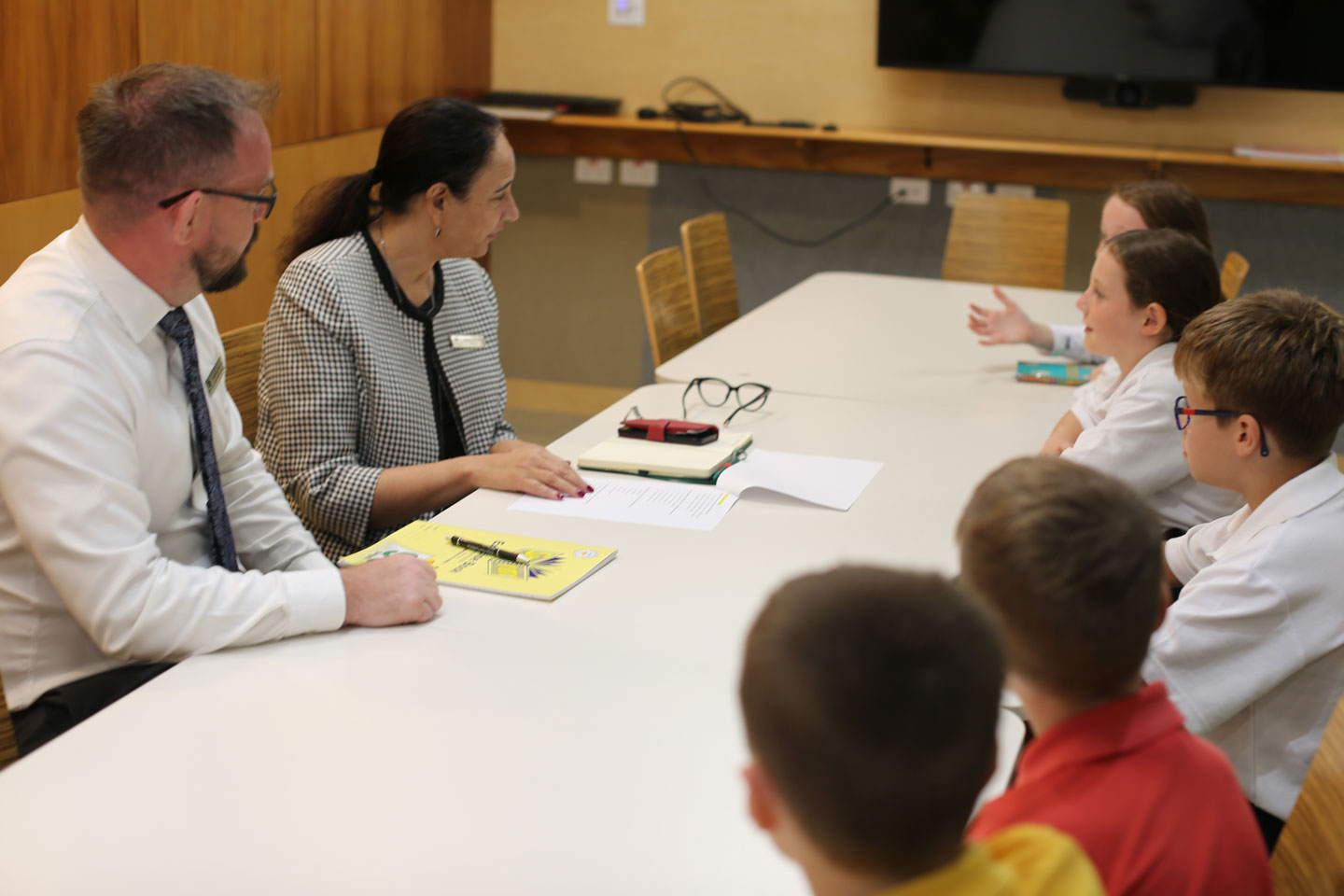
Our 2026–2028 Strategic Plan, Guided by Values, Driven by Imagination, will adopt this same mindset. While we have already consulted with parents and continue to engage with staff on upcoming action plans, it is the upcoming student sessions that excite me most. It is our youngest minds who will help shape our future, ensuring we achieve our objectives while remaining firmly grounded in our mission and values.