




Kalgoorlie Gold Mining has kicked off an impressive 10,750m aircore drilling program at its Pinjin gold project 140km east of Kalgoorlie, targeting a large-scale bend in the prolific Laverton Tectonic Zone. The campaign follows the discovery of encouraging new rock outcrops and is designed to test for a major gold system along strike from Ramelius Resources' 1.4-million-ounce Rebecca deposit.

Kalgoorlie Gold Mining has deployed the drill bit for a massive 10,750-metre aircore campaign at its Pinjin gold project 140km east of Kalgoorlie.
The company says the 225-hole program is designed to systematically test a major regional-scale flexure in the celebrated Laverton Tectonic Zone (LTZ), along strike from Ramelius Resources’ 1.4-million-ounce Rebecca gold deposit.
The program covers an extensive 3km by 1km target area and is centred just 3.5km southeast of the company’s flagship Kirgella Gift and Providence gold deposits.
The LTZ is a well-known beast of a structure, a crustal-scale plumbing system that hosts some of the Eastern Goldfields’ biggest gold mines.
KalGold’s exploration model suggests a distinct bend in this structure, running from a north-northwest trend to a north-south orientation, could have created the right architecture for gold-bearing fluids to be trapped. Such flexures along major regional formations are considered prime real estate in the hunt for Western Australian gold deposits.
For KalGold, this aircore campaign is a return to a tried-and-true method. KalGold’s Lighthorse discovery last year was a substantial, low-cost ounce creator, highlighting just how effective aircore drilling can be in uncovering blind gold deposits.
The virgin gold discovery near the famed Kalgoorlie mining hub drove KalGold's share price up more than fivefold at the time, after it landed a spectacular intercept of 17 metres at 4.81 grams per tonne (g/t) gold from 48m, featuring 8m at 9.21g/t from 52m.
Better still, the hole finished in mineralisation, fuelling investor hopes the shallow gold system could grow into a significant commercial discovery in the ever-active Eastern Goldfields.
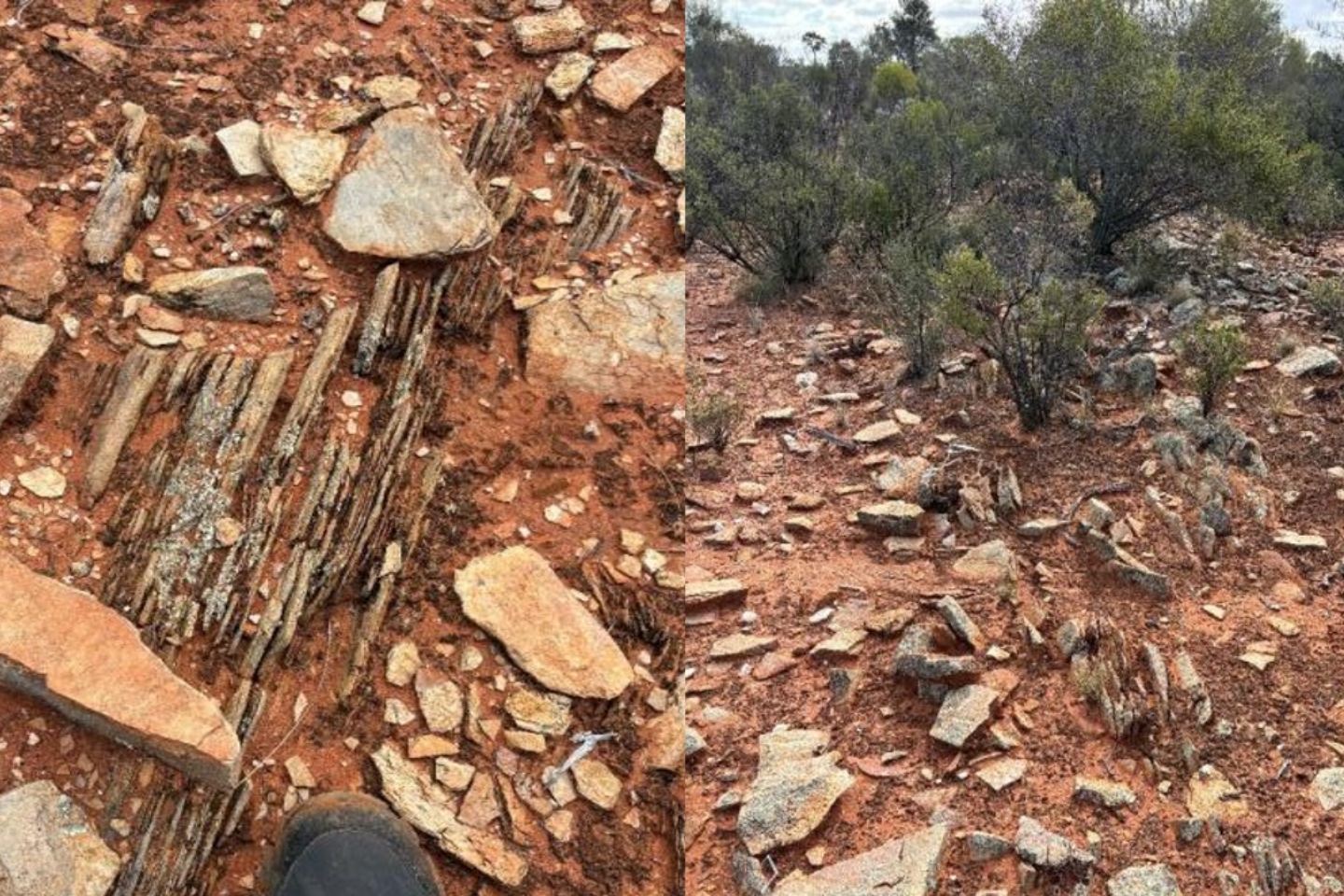
Adding a solid dose of geological intrigue to the drilling program this time round, field crews preparing access have already stumbled upon previously undocumented outcrops of highly sheared granitic gneiss. The company says the rocks are likely part of the highly sheared margin of the Rebecca Sequence, the host rock for Ramelius Resources’ 1.4-million-ounce Rebecca gold deposit, just 20km along strike to the south of KalGold’s new drill targets.
The discovery of these rock types at surface inside KalGold’s ground is likely to reinforce the company’s structural interpretation and add a significant layer of prospectivity to the campaign.
The new aircore program will consist of widely spaced holes on a nominal 320m by 80m pattern, a classic first-pass strategy designed to detect near-surface gold and anomalism in pathfinder elements. Any sniffs of mineralisation will then be targeted with deeper reverse circulation (RC) drilling.
The company says the mammoth program is expected to take about six weeks to complete. With the new drilling results likely to come to hand around the time the program wraps up.
It’s a busy schedule for KalGold at Pinjin. The company is still awaiting assay results from a recent RC program at its Kirgella Gift and Providence deposits, where a 76,400-ounce gold resource has already been defined.
Additionally, RC drilling is scheduled to restart shortly at its Lighthorse discovery to test for strike extensions and follow up on the previous stunning gold hits.
With the aircore rig now turning on a textbook structural target that has just been upgraded by compelling surface clues, KalGold will be hoping to replicate its success at Lighthouse last year and uncover yet another Kalgoorlie gold discovery.
Is your ASX-listed company doing something interesting? Contact: matt.birney@businessnews.com.au

