


The global mining sector continues to power economic growth, underpinning energy transition materials and large-scale infrastructure development. But while demand remains strong, a critical constraint is emerging across the industry – people.
Labour shortages are now one of the most significant barriers to project delivery, affecting not only mining operations but also the broader construction and infrastructure pipeline.
Peloton Workready chief executive Brett McPhee said the issue is no longer cyclical – it is structural. “The mining sector remains a cornerstone of economic growth, but workforce shortages are now constraining both resource projects and broader infrastructure delivery,” he told Business News.
The pressure is being felt across Australia, where demographic shifts, declining trade participation and rising project demand are widening the skills gap.
Structural workforce gap
The issue stems from a structural imbalance between labour supply and demand.
Australia’s trades workforce is ageing, fewer young people are entering skilled trades, and competition for talent is intensifying across mining, construction and energy sectors.
At the same time, a strong pipeline of projects linked to both traditional resources and the global energy transition is accelerating demand.
“Australia is facing a structural workforce gap,” Mr McPhee said. “An ageing trades workforce, declining entry into skilled trades, and demand outpacing local supply across mining, construction and energy are all contributing to the challenge.”
The consequences are already visible, with stretched project timelines, rising costs and productivity constraints as companies compete for limited skilled labour.
The impact extends beyond the resources sector. “The same labour shortages impacting mining are also directly affecting housing construction, slowing down the pace at which new homes can be built,” Mr McPhee said.
“The housing crisis cannot be solved without addressing the skilled labour shortage. Materials and funding are not the only constraints – labour availability is now a critical bottleneck.”
Delays in securing workers are flowing directly into housing delivery, compounding affordability pressures across the country.
Global workforce solutions
As the talent gap widens, traditional recruitment approaches are proving insufficient, forcing companies to rethink how – and where – they source labour.
Global workforce solutions are increasingly moving from supplementary support to a core strategic requirement.
“International recruitment provides immediate access to qualified tradespeople,” Mr McPhee said. “Workforce mobility helps maintain project continuity across sectors.”
This reflects a broader recognition that domestic talent pipelines alone cannot meet current demand, with organisations increasingly turning to international markets to access job-ready, trade-qualified workers who can be mobilised quickly.
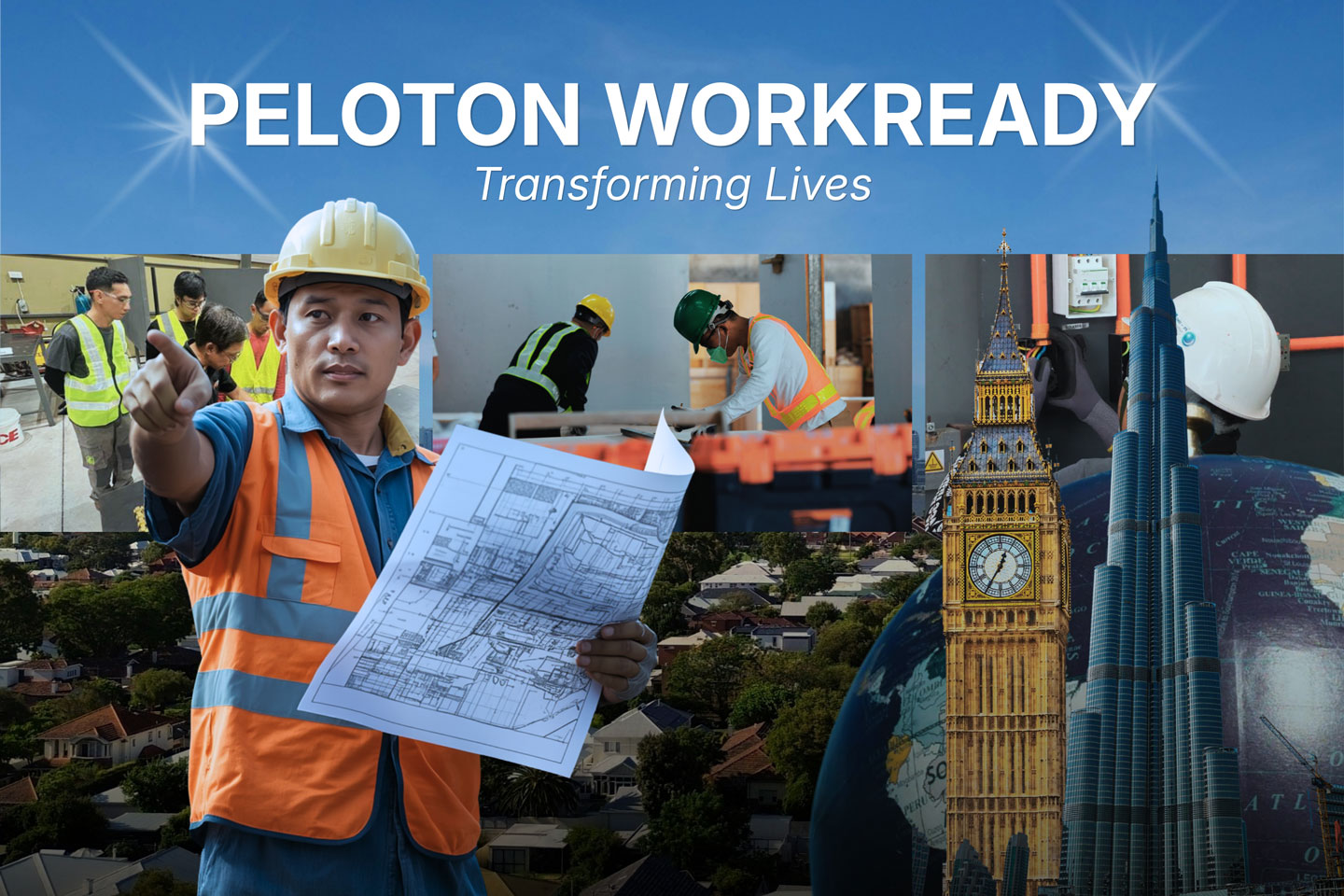
Peloton Workready has positioned itself within this shift, using a global recruitment and mobilisation model tailored to high-demand sectors such as mining and construction.
A key component is its Dubai hub, which provides access to multinational talent pools.
Workers undergo trade testing and verification of competency processes to ensure they meet Australian standards for safety, compliance and performance before deployment.
The result is a workforce that is qualified, compliant and job-ready from day one.
While global recruitment is becoming more widely adopted, timing is also emerging as a key competitive differentiator.
Companies that invest in early workforce planning are better placed to secure talent, while those that delay face rising costs and disruption.
“Early workforce planning is becoming a key differentiator,” Mr McPhee said.
“Companies that plan ahead secure talent. Those that react late face escalating costs and project delays.”
In a tight labour market, access to skilled workers can determine whether major projects proceed on schedule or stall before mobilisation.
This is reshaping workforce strategy into a core component of project planning and risk management, rather than a downstream operational function.
Building a sustainable workforce
As reliance on international labour grows, ethical recruitment is becoming increasingly important to long-term workforce stability.
Transparency, fairness and worker wellbeing are now viewed as essential to retention and operational continuity.
“Ethical recruitment is central to long-term success,” Mr McPhee said. “Transparent processes improve worker retention, and better retention leads to more stable project delivery.”
This approach supports stronger workforce retention and reduces turnover across projects, while aligning with growing expectations from regulators, investors and communities around responsible sourcing practices.
Workforce shortages are now influencing broader economic outcomes, extending beyond individual projects or companies.
“Workforce strategy is now directly linked to national outcomes,” Mr McPhee said.
“Mining productivity, infrastructure delivery, and housing supply and affordability are all being impacted.”
As Australia continues to invest heavily in resources and infrastructure, addressing the skills gap is becoming critical to sustaining growth. For businesses, the direction is increasingly clear.
“Global workforce solutions are no longer optional – they are essential,” Mr McPhee said. “Businesses that adopt these models will be better equipped to support economic growth and deliver the critical projects Australia needs.”
In a market defined by sustained demand and constrained supply, the ability to secure and mobilise skilled labour is emerging as one of the most significant competitive advantages in mining and beyond.