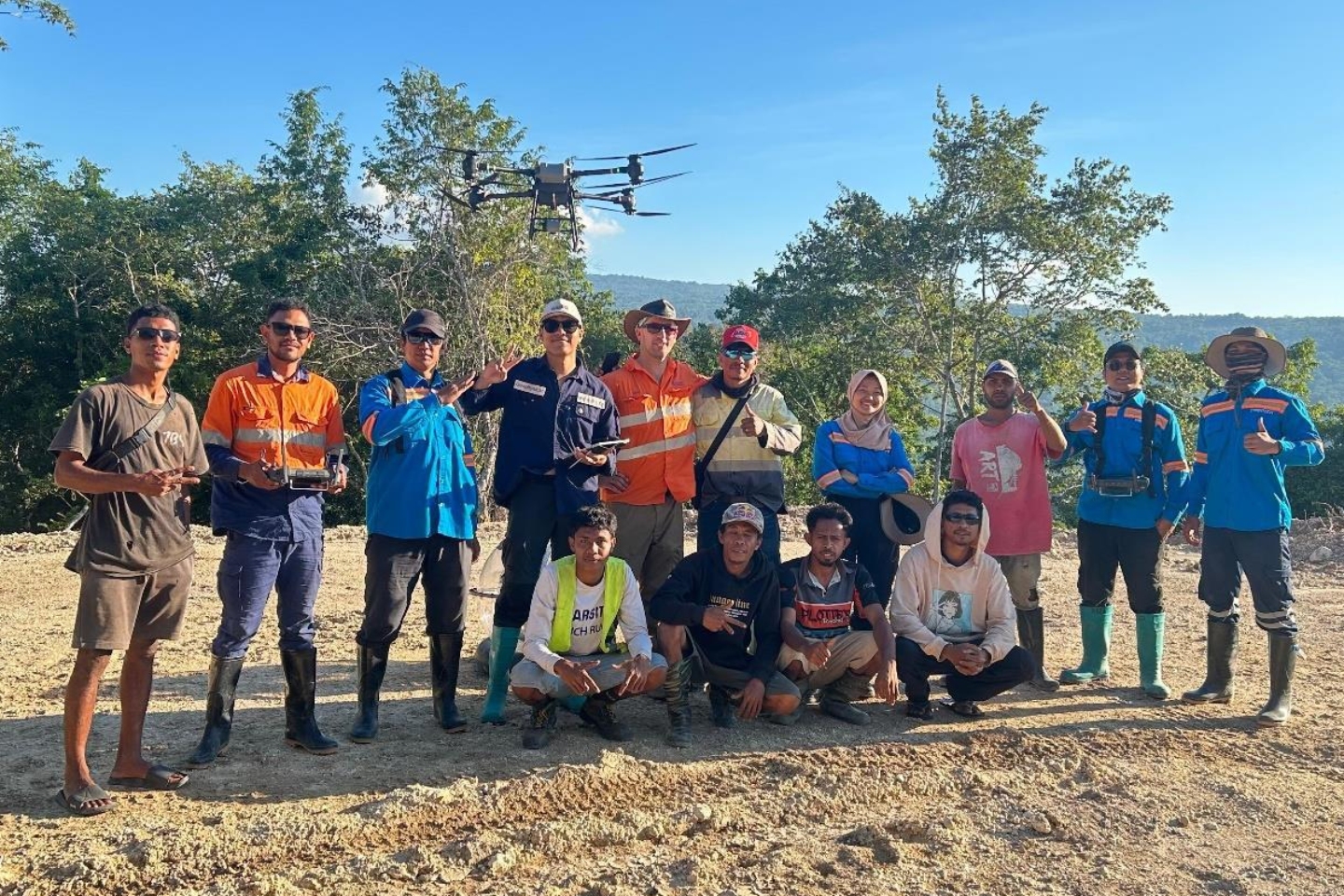
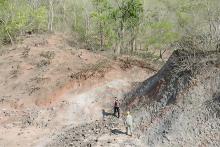
A recently completed drone-based aerial geophysical survey has lit up a grab-bag of new drill targets for Estrella Resources it plans to test during an upcoming initial 3000-metre drill campaign which will be the deepest mineral-exploration drilling ever completed in the country.
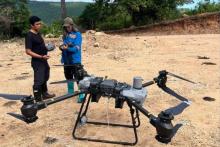
The Mobile Magneto-Telluric (MTd) drone survey was flown across a 4.2km-by-3.5km area in the northeastern corner of the company's Ira Miri manganese project in Timor-Leste. The results have given Estrella a glimpse beneath the surface of the virtually unexplored nation, revealing what could be the geological plumbing for a significant mineralised system.
MTd is a portable and mobile geophysical method that detects and measures variations in the Earth's natural electromagnetic fields to map sub-surface electrical resistivity. The technology helps locate deep mineral deposits, fault zones and geological structures from the surface to depths that can exceed one kilometre.
The results of the survey could prove particularly relevant as the global appetite for critical minerals remains robust, with major economies looking to diversify supply chains for key commodities such as copper and manganese.
The survey has identified two distinct types of targets. The first are described as strong, high-conductivity “plumes” that appear to extend upwards from great depth. Management says these plumes have a spatial relationship with the mammoth Laleno Dome, a 10km-wide geological feature that dominates the local landscape. Estrella’s geologists believe the plumes may represent hydrothermal fluid pathways which could have deposited sulphide mineralisation – a theory bolstered by the company’s previous discovery of high-grade copper mineralisation on the northern flank of the dome.
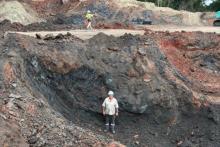
The second type of target identified by the survey are shallow-dipping conductivity anomalies the company believes could represent extensions of manganese-bearing horizons within the local prospective Noni Formation.
With a set of compelling targets now in its sights, Estrella is wasting no time in getting the drill rods spinning. Its initial 3000m reverse circulation (RC) and diamond drilling campaign will test three of the most promising targets, with drilling expected to kick off in the first week of September.
Estrella Resources managing director Robert Mencel said: “The results of the Mobile MTd survey have provided Estrella with a compelling new set of drill targets at Ira Miri. “The identification of strong conductivity anomalies extending from depth towards surface, particularly where they coincide with the Laleno Dome, provides an important new exploration vector for the Company. While the conductivity anomalies are not, by themselves, proof of mineralisation, their geometry and geological setting provide a strong basis for drill testing."
The program will include a series of deep, vertical “proof-of-concept” holes designed to test the conductive plumes. Each hole will consist of a 100m RC pre-collar before a diamond tail continues to a depth of around 500m. These will be the deepest mineral exploration holes ever drilled in Timor-Leste.
A further three holes will test the most promising of the shallow-dipping anomalies for potential manganese mineralisation.
While the deep drilling gets underway, Estrella is also advancing on other fronts. The company is planning a 4000m combined RC and diamond drilling program in the Sagadate region to complement its massive Werumata Limestone deposit, where it already has an inferred resource of more than 600 million tonnes.
In addition, a large regional helicopter MT survey is slated to begin in September, extending the company's geophysical coverage its entire tenure. The company says this survey will complement the recent drone work and is expected to identify further drill targets before the end of the year.
Estrella is also moving closer to its first revenue, having completed the customer selection process for a maiden trial parcel from its manganese stockpile. The company expects to sell the entire stockpile, estimated at 27,000 wet tonnes, in a single shipment and is now awaiting final export approval from the Timor-Leste Government.
Decades of conflict and the widespread destruction of vital infrastructure during the Indonesian occupation, which lasted from December 1975 and ended in 1999, followed by Independence in May 2002, have left Timor-Leste with a shattered foundation, severely delaying its economic growth and trapping the young nation in chronic poverty.
Estrella began active exploration in Timor-Leste in March 2024 following a historic issuance ceremony in the Lautém Municipality where the company received its initial exploration and evaluation licences and reconnaissance permits, making it first-mover in a country that has seen little in the way of modern, systematic exploration.
Now, two years on, Estrella's application of modern geophysical and other mineral exploration methods is peeling back the layers to reveal a suite of tantalising targets beneath the surface and it is about to find out what treasures may lie at depth. What it discovers could make a material difference to both the company and the nation.
Is your ASX-listed company doing something interesting? Contact: matt.birney@businessnews.com.au