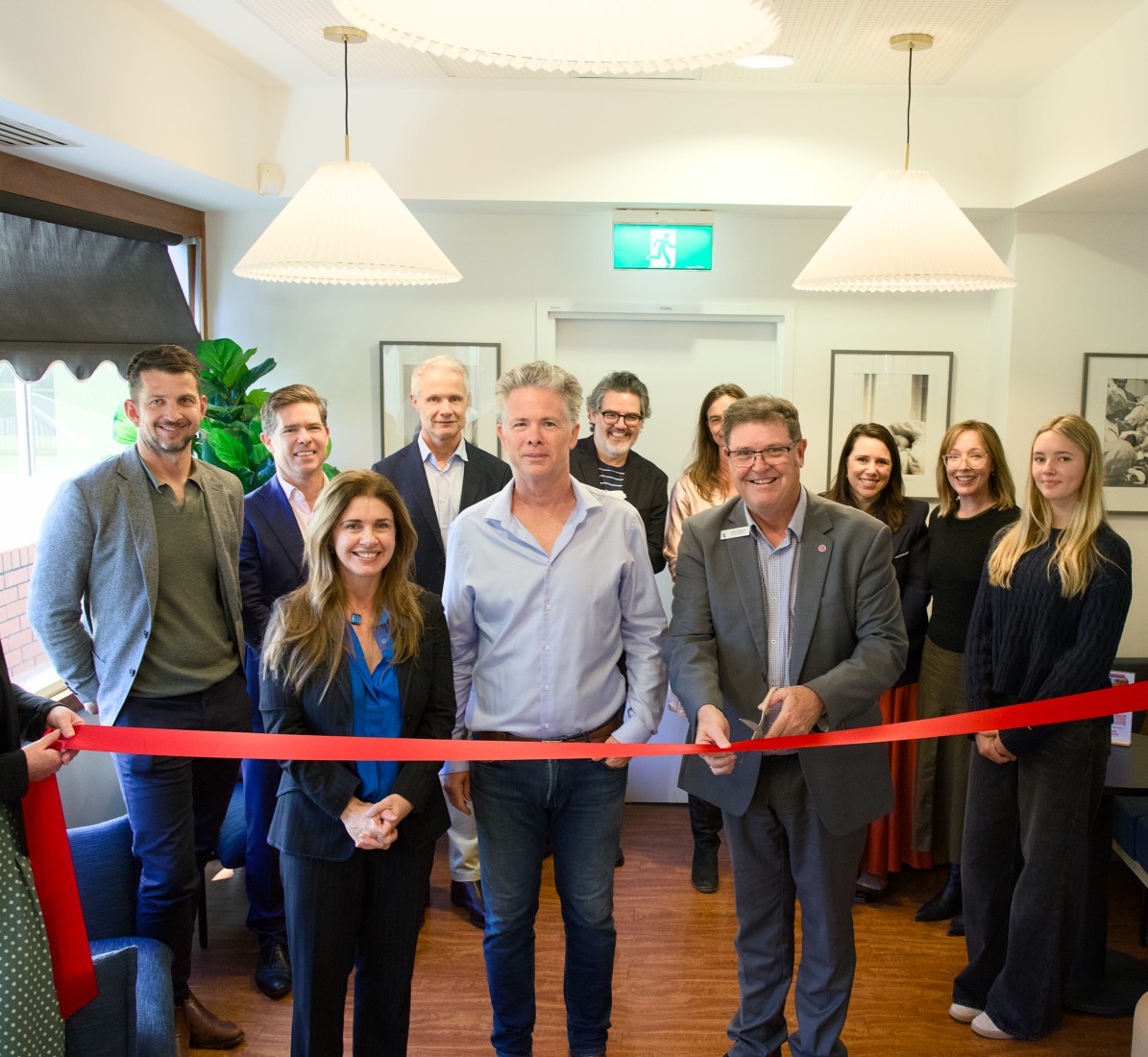
WIRF has recently unveiled the newly refurbished café at King Edward Memorial Hospital as part of its 50th anniversary celebrations, transforming an everyday space into a welcoming sanctuary for patients, families and staff.

When organisations invest in healthcare, the focus is often on funding groundbreaking research, purchasing cutting-edge technology or supporting life-saving medical equipment. These investments undoubtedly save lives, but they are only part of the patient experience.
Equally important are the moments between medical appointments, treatments and difficult conversations, the moments when families need somewhere to sit, collect their thoughts, support one another and simply breathe. These spaces rarely make headlines, yet they play a critical role in the wellbeing of patients, families and the healthcare professionals who care for them every day.
It is this often-overlooked aspect of healthcare that sits at the heart of the newly transformed WIRF Café at King Edward Memorial Hospital (KEMH), unveiled as part of the Women and Infants Research Foundation's (WIRF) 50th anniversary celebrations.
The refurbishment, generously gifted by Castledex, the Egerton-Warburton family, North Metropolitan Health Service and The Montauk Lighting Co., is more than a fresh coat of paint or a modern fit-out. It represents what can happen when business, philanthropy and community come together with a shared purpose to improve not only health outcomes, but the human experience that surrounds them.
For many visitors, the café is simply somewhere to grab a coffee. But for parents with babies in the Neonatal Intensive Care Unit (NICU), families navigating complex pregnancies, and loved ones waiting anxiously for updates, it becomes something much more significant. It is where difficult conversations take place, where moments of hope are shared, where tears are shed, and where families find the strength to continue during what may be the most challenging period of their lives.
Recognising this, the refurbishment was designed with people not just patients in mind. Historic photographs of King Edward Memorial Hospital by renowned Western Australian photographer Geoff Fisher now line the walls, complemented by contemporary furnishings, improved lighting, refreshed interiors and a dedicated breastfeeding area. Together, these thoughtful additions have transformed what was once a tired and ageing café into a warm, welcoming environment that reflects the compassion delivered throughout the hospital itself.
It is also a timely reminder that creating healthier communities extends well beyond clinical care.
As businesses continue to strengthen their environmental, social and governance (ESG) commitments, there is growing recognition that meaningful corporate investment is not always measured by the size of a donation, but by the lives it touches. Increasingly, organisations are looking for opportunities that create lasting social value while leaving a tangible legacy within the communities they serve.
Healthcare provides one of the clearest opportunities to achieve both.
Joanne Beedie, Chair of WIRF's Community and Consumer Panel and Chief Executive Officer of Helping Little Hands, understands first-hand the importance of these spaces for families facing uncertainty.
"Parents of premature and unwell babies often spend weeks, sometimes months, at the hospital. During that time, the café becomes a space to pause, reflect, connect and find a sense of everyday calm during an incredibly stressful period," she says.
"Supportive spaces like this have a real impact on the wellbeing of parents and families. When people come together to improve these facilities, they are helping create a more compassionate and family-centred hospital experience."
Her comments reinforce a principle many business leaders already understand. Whether designing workplaces that foster collaboration or customer environments that encourage trust, organisations know that the spaces people occupy influence how they feel, think and perform. Healthcare environments are no different.
For WIRF Chief Executive Officer Deb Portughes OAM, the café also represents the power of collaboration between the corporate sector and the not-for-profit community.
"For 50 years, WIRF has worked to improve the health and wellbeing of women, babies and families through research, healthcare programs and support services," she says.
"Every dollar we raise goes directly towards advancing that mission. Projects like this refurbishment are only possible because businesses and community partners choose to invest in something bigger than themselves. Their generosity has created a lasting legacy for the hospital staff who care tirelessly for women and babies, and for every family who will find comfort within these walls."
In an era where stakeholders increasingly expect businesses to demonstrate authentic social impact, the most valuable investments are often those that improve everyday human experiences. While research changes futures and medical innovation saves lives, creating environments that support emotional wellbeing is equally important to the delivery of exceptional healthcare.
As WIRF celebrates 50 years of advancing the health of women and babies through world-leading research, healthcare programs and support services, the revitalised café stands as a symbol of what purposeful partnerships can achieve.
It reminds us that lasting impact is not always found in the largest building, the biggest cheque or the most ambitious project. Sometimes it is found in a quiet corner, a comfortable chair and a welcoming space where families can pause, reconnect and gather the strength to face whatever comes next.
For business leaders looking to leave a legacy, there is perhaps no greater investment than creating places where compassion is felt long after the ribbon has been cut.