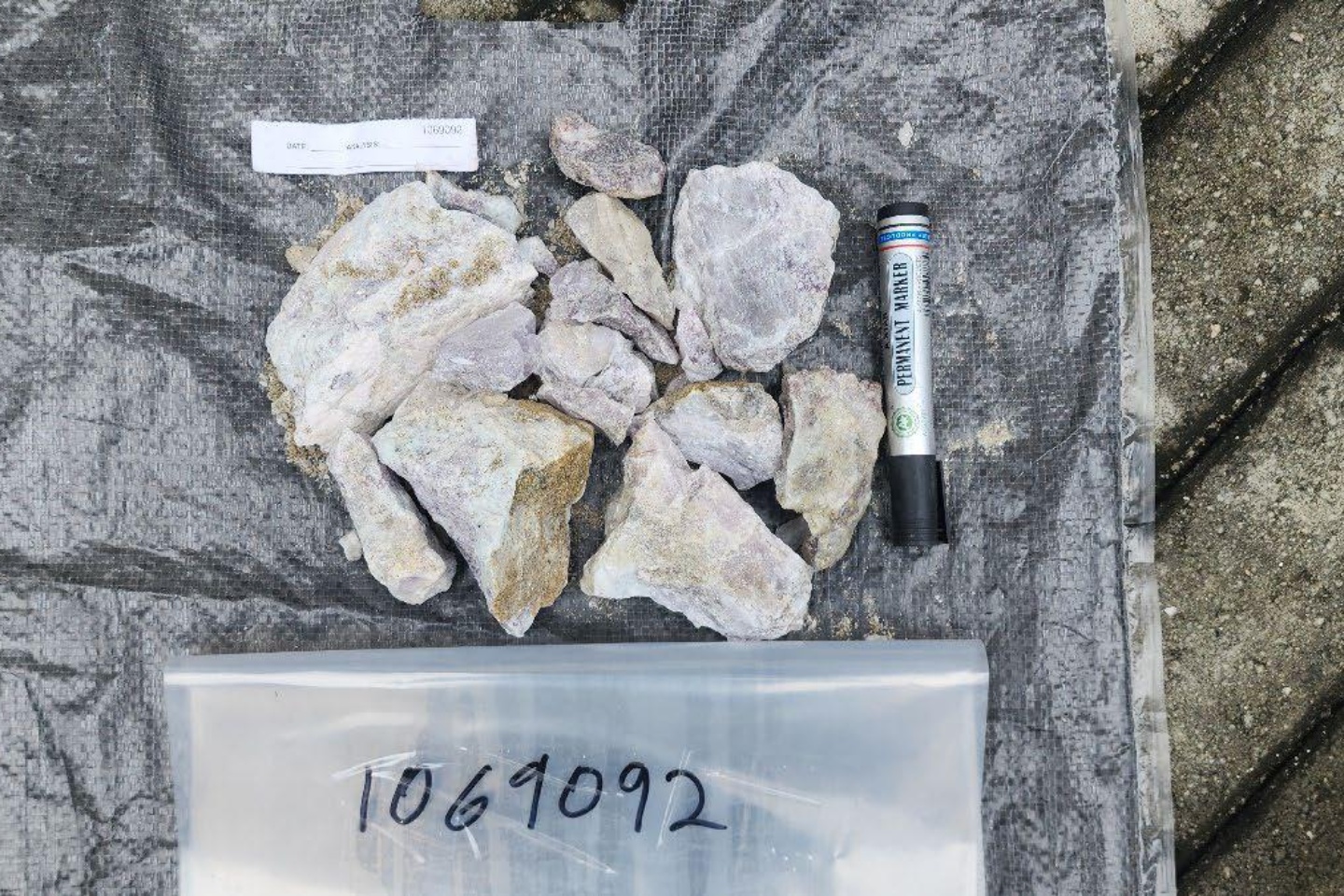
Chariot Resources has confirmed the presence of valuable spodumene in all six of its previously announced high-grade lithium samples taken from its green Fonlo and Iganna projects in Nigeria.
Independent quantitative mineralogical analysis, completed by the University of British Columbia, identified easily processable spodumene, accounting for between 28.4 per cent and a whopping 75.3 per cent of the overall weight in crystalline phases.
The confirmation is a serious boost for the company’s Nigerian ambitions, with the presence of the simple, recoverable spodumene being a major contributing factor for any hard-rock lithium hopeful.
Spodumene is far more amenable to conventional processing methods than other lithium-bearing minerals, such as the common lepidolite, which is complex and full of impurities. Notably, lepidolite was not identified in any of Chariot’s test results.
The six samples also returned impressive lithium oxide grades between 2.66 per cent and 5.96 per cent, with management insisting that the new mineralogical data now provide the necessary technical input for its development plans to eventually produce a direct-shipping lithium ore.
Test work also identified the caesium-rich mineral pollucite, with one sample from Iganna notching up 9.5 per cent of the mineral. The company says this explains the elevated caesium values previously reported and strengthens its interpretation that Fonlo and Iganna are the most favourable lithium-caesium-tantalum (LCT) pegmatite systems.
Notably, the confirmation of mineralogy has substantially cleared the metallurgical pathway for Chariot’s Nigerian assets, allowing high-confidence planning to accelerate technical studies and field programs.
The Fonlo and Iganna projects form part of a four-project portfolio in southwest Nigeria in which Chariot is currently acquiring a 66.67 per cent interest. The portfolio covers 254 square kilometres and has a documented history of artisanal lithium mining.
The acquisition of the assets was materially de-risked last month when the Nigerian Government approved the transfer of six exploration and mining licences into C&C Minerals. This new joint venture entity will be majority-controlled by Chariot.
The company says it will continue to integrate all mineralogy, assay, mapping and field observations to refine its geological targeting for drill programs at both Fonlo and Iganna.
With mineralogy now in hand, Chariot plans to press ahead with its announced exploration activities, including more surface work and drill planning. The work is expected to run in tandem with its assessment of phased, small-scale mining options.
Whilst the new findings have clearly improved the outlook for its African assets, Chariot says it's keeping a foot in both camps, pushing forward with exploration at the company’s projects in the United States, including its hard-rock Black Mountain project in Wyoming and the claystone-hosted Resurgent project in Nevada.
With metallurgical testwork next on the agenda, Chariot has ticked off one of the major de-risking boxes in Nigeria as it looks to accelerate development of its emerging West African lithium play.
Is your ASX-listed company doing something interesting? Contact: matt.birney@businessnews.com.au


 By Andrew Todd