The state’s economic outlook is underpinned by significant investment across resources, defence and infrastructure.
Having opportunities ahead is one thing, but being ready to deliver them is another.
Businesses are operating amid workforce constraints, technological disruption, geopolitical uncertainty and growing pressure on infrastructure and supply chains.
For BDO Partner, Project and Infrastructure Advisory Jenelle Forrest, preparing for that environment requires organisations to become comfortable making decisions without having all the answers.
“There’s a bit of a paralysis, I think, that people are potentially waiting for perfect information,” she said.
“Clarity is probably only going to get to 80 per cent, and it’s up to us to be able to support our people to be okay with that.”
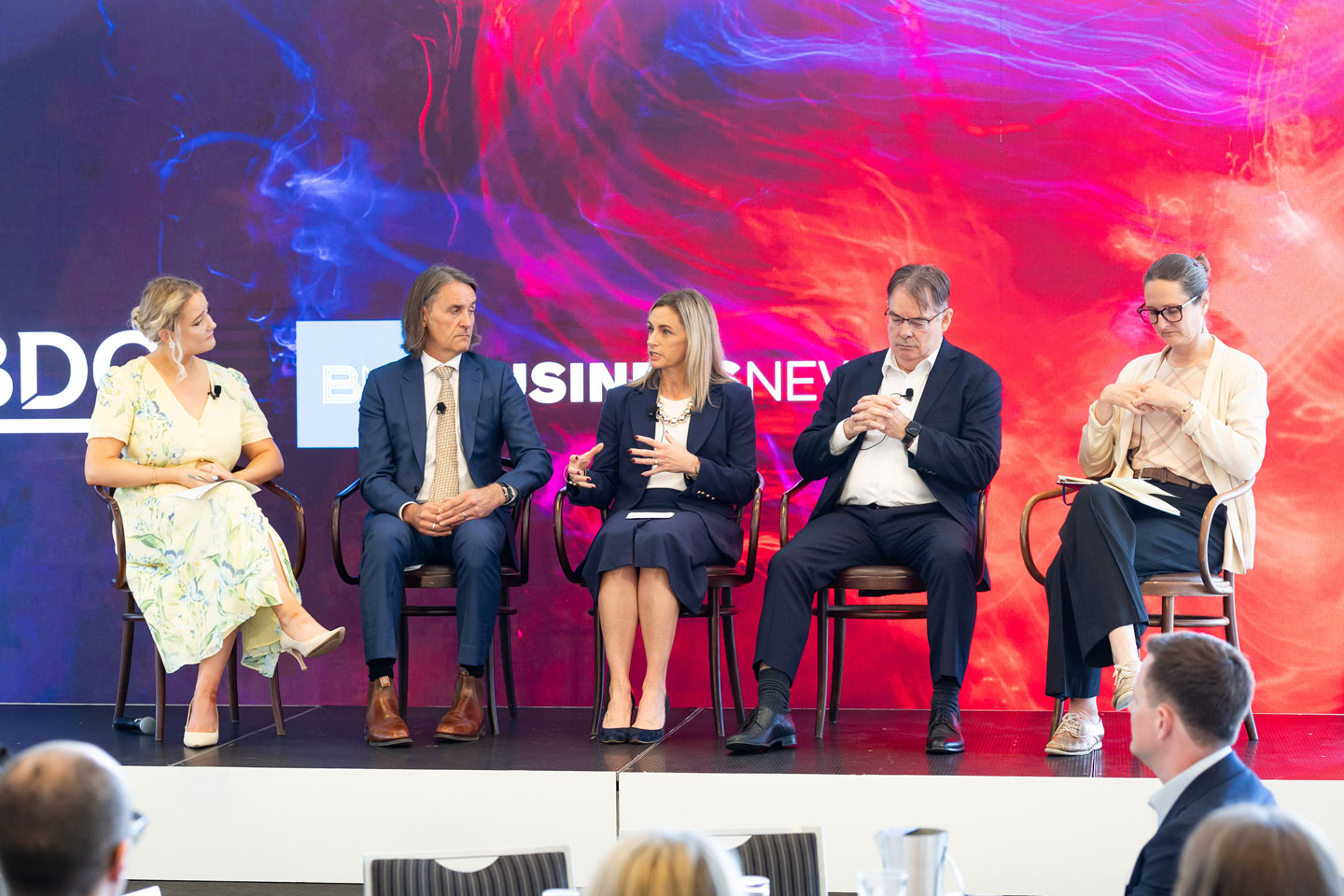
The insights came during BDO Outlook 2026 – Future Fit, presented in collaboration with Business News, where panellists considered what WA businesses could do now to prepare for the opportunities and risks ahead.
Ms Forrest said organisations could use scenario planning not to predict precisely what would happen, but to consider different regulatory, policy and capital-market environments and identify actions they could take now.
The aim was to leave an organisation well placed across a range of possible futures.
That becomes particularly important when some of the capabilities required to respond to growth, particularly skills and workforce, cannot be created overnight.
“Fast mover might work, but there’ll also be an advantage to being the first mover,” Ms Forrest said.
She said there were three elements important in preparing organisations for the future.
“Capital is absolutely important. Capability is important,” she said. “And I think probably my earlier comments are really alluding to another C, which is the culture of the organisations.”
She likened it to a sporting team: capital can provide the infrastructure and players, but culture contributes to whether those components ultimately work together successfully.
The distinction is particularly relevant for WA as the state prepares for investment programs that will place new demands on its workforce, infrastructure and industrial capacity.
Infrastructure under pressure
Western Australia Transport Industry Association chief executive Cam Dumesny said WA needed to think differently about the infrastructure underpinning its economy.
Asked whether WA was attracting the investment required to prepare its freight and logistics system for the future, his answer was succinct. “Short answer, no,” he said.
Mr Dumesny argued freight should be considered as an interconnected system rather than a collection of individual transport modes.
“Our narrative needs to change. It’s not just about trucks,” he said.
“We need road, rail, sea and air. We need storage, warehousing and data. We need that operating as a symphony, not a cacophony.”
The challenge was not simply building more infrastructure, but improving how the entire freight network worked together.
“We need to look at how we can make a productive freight system, not just the individual modes, but the way that it flows together,” Mr Dumesny said.
That system is also being reshaped by technological change, decarbonisation, labour shortages, fuel security and cyber risk.
For businesses, Mr Dumesny said one of the most practical responses to technological uncertainty was investing in people.
“The best way to deal with uncertainty is to upskill your people so they’re not intimidated by technology, but can make informed decisions on its application,” he said.
Employees needed to understand where AI could and could not be used, and be equipped to identify opportunities for it within their work.
The emphasis on capability was echoed by Gold Industry Group chair Wayne Bramwell.
Mining has already experienced several waves of technological change, with automation and remote operations becoming increasingly embedded across the sector.
“The mining sector was really an early adopter in automation and remote operations,” Mr Bramwell said.
The drivers included safety, productivity and efficiency, with technology allowing operators to reduce costs and mine lower-grade ore bodies.
But Mr Bramwell offered a more measured assessment of AI. “We are certainly not early adopters in that space,” he said. “We are fast followers.”
His description elsewhere in the discussion was even simpler: “We’re curious but careful.”
The different approaches underline the importance of businesses considering technology in the context of their own operations, risks and opportunities rather than treating adoption itself as the objective.
Preparing for uncertainty
The need to prepare rather than predict is also becoming increasingly important as geopolitical risks flow more directly into business operations.
Australian Submarine Agency WA State Manager Dr Kate O’Shaughnessy said uncertainty was likely to remain a feature of the operating environment.
“You can’t know the specific thing that will happen,” she said.
“But I think you can know that uncertainty is part of the business environment for the medium to long term.”
That could include cyber attacks, fuel disruptions and other shocks capable of affecting businesses and supply chains.
Dr O’Shaughnessy said that uncertainty should inform how organisations approach issues such as relationships and capability, including diversifying relationships and developing greater sovereign capability.
The scale of the AUKUS program also illustrates the workforce challenge involved in turning major investment into economic activity.
Dr O’Shaughnessy said about 20,000 jobs were expected around the broader AUKUS enterprise, requiring a substantial pipeline of people with the skills to support it.
Work is already under way to build that workforce, including training Navy personnel and ASC employees, defence industry pathway programs through South Metropolitan TAFE and Commonwealth-supported university places.
The challenge is not unique to defence. Across sectors, businesses are competing for skilled workers at the same time as technological change is altering the capabilities those workers require.
That places greater emphasis on developing the people already within organisations as well as attracting new talent.
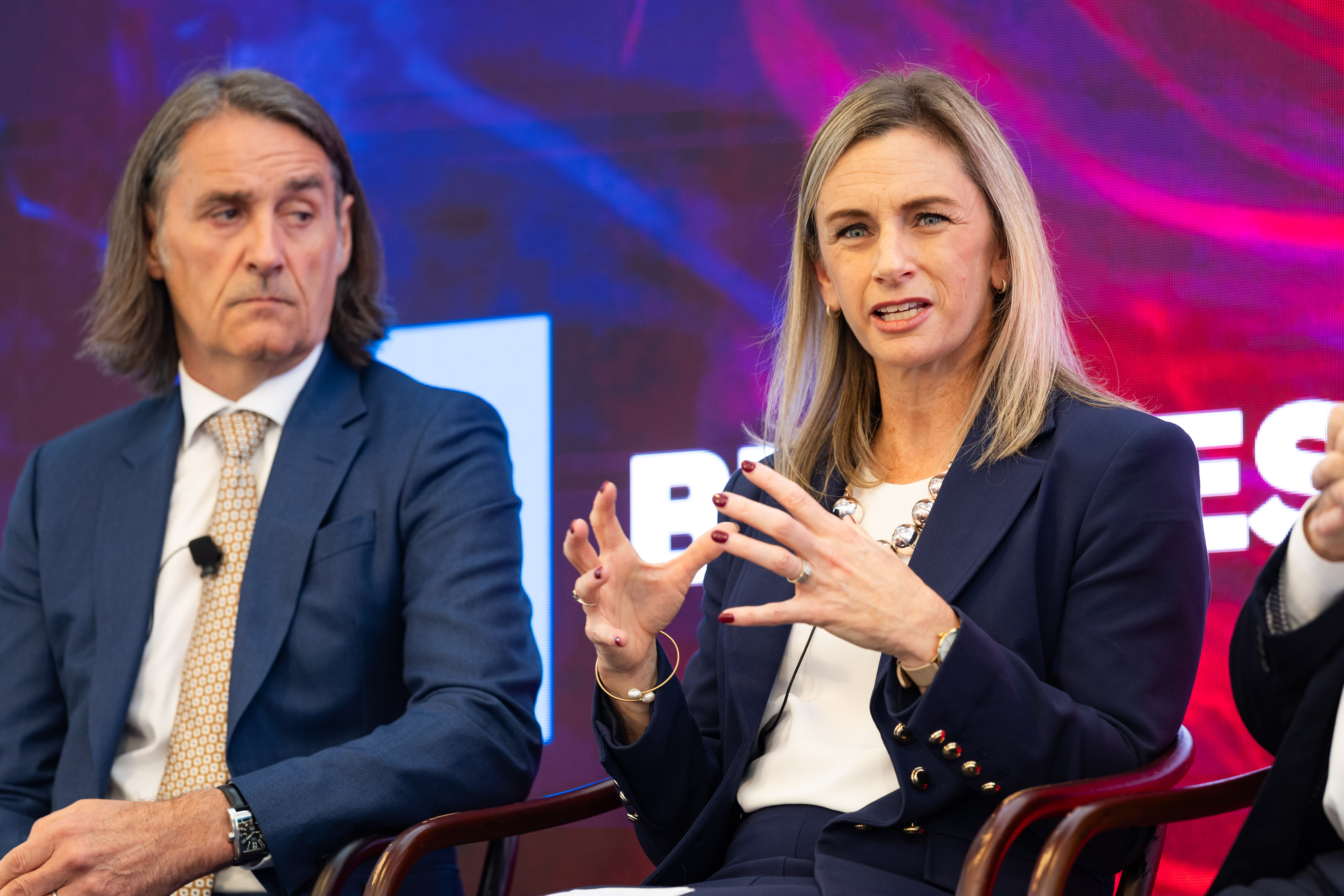
BDO Partner, Project and Infrastructure Advisory Jenelle Forrest
Ms Forrest said leadership was an important part of creating the confidence for people to work differently.
That included creating an environment in which teams, SMEs, researchers and larger organisations could collaborate and contribute ideas, particularly when the way forward was not completely clear.
Mr Dumesny brought a manufacturing perspective to the discussion, having held senior executive roles with three Australian manufacturing and technology companies and currently serving as a director of a WA manufacturer that exports to 25 countries.
He said building WA’s manufacturing capability required stronger connections between industry, government and research.
“We’ve got to start to connect our people doing it,” he said. “We need to collaborate together, all aspects of industry, government, research.
“Above all, we’ve got to build our confidence in ourselves, that our manufacturing is world class.”
Mr Dumesny said SMEs were an important source of innovation, but WA needed an ecosystem that connected businesses with research and support while recognising that local manufacturers ultimately needed to compete in global markets.
For businesses, the environment ahead will contain events they cannot predict, technologies where the full impact is not yet understood and constraints that cannot be solved by capital alone.
Being future fit therefore becomes less about forecasting exactly what comes next and more about creating organisations capable of responding when it arrives.
That means investing in infrastructure and technology, but also in skills, productivity, collaboration and organisational culture.
It means testing decisions against different scenarios rather than waiting for certainty.
It also means recognising that resilience and adaptability are increasingly part of the capability businesses need to grow.
Ms Forrest’s three Cs – capital, capability and culture – provide a useful framework for the task.
WA has significant capital and economic opportunities ahead. Whether organisations can convert them into lasting growth will increasingly depend on the other two.