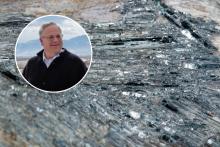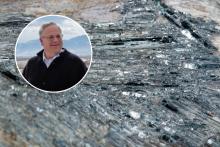


Bulls N’ Bears Big Hits looks at notable drill intercepts recently reported to the ASX, led by Lac Gold in Quebec with an eyewatering 0.5m assaying 1580g/t gold, American Tungsten & Antimony in Utah with up to 42.1% antimony sulphide and Breakthrough Minerals in Queensland with 3.2% copper equivalent.


LAC GOLD (ASX:LAC)
Project: Rouyn gold project, near Rouyn-Noranda, Quebec, Canada.
Hit: 5.65m at 141.29g/t gold from 148.15m, including 0.5m at 1580g/t gold.
Lac Gold has burst into this week’s Big Hits frame with a spectacular bonanza-grade gold result from the Astoria deposit at the company’s Rouyn gold project in Quebec, where one drill hole punched through 5.65m at 141.29 grams per tonne (g/t) gold from 148.15m, including a staggering 0.5m at 1580g/t gold.
The headline result confirms Lac’s recently reported visible gold between 152.05m and 152.20m downhole in quartz veining in the pre-assay core.
Other drilling results weren’t too shabby either. A second hole, 385m east-southeast of the headline hit, returned 9.1m at 6.31g/t gold from 123.4m, including 4m at 10.41g/t, while a third hole 240m southwest of the big hit delivered 9.5m at 2.25g/t from 178m, including 3m at 6.72g/t gold.
The collars of the top three holes outline a triangular area of 3.7 hectares, indicating the broad extent of the high-grade gold occurrence across multiple structures.
Notably, a pair of holes put in to test the deeper mineralisation from a common drill site, this time 140m north of the big hit and outside the northern margin of the 3.7-hectare area, also returned long intercepts.
One of those holes intercepted a healthy run of 97.5m at 1.04g/t from 554.65m, including 17m at 3.58g/t, while its partner hole gave up 49.95m at 1.12g/t from 623.15m with several higher-grade internal zones.
Viewed in concert, all the results suggest that the Astoria deposit is not just randomly throwing up isolated gold spikes but rather pieces of a jigsaw steadily building a picture of a large, structurally controlled gold system with broad mineralised halos enclosing steeper, higher-grade shoots.
That style of gold distribution is consistent with Rouyn’s position on the renowned Cadillac-Larder Lake Break, one of the biggest and best-known gold-bearing structures in Canada’s Abitibi Greenstone Belt.
The Abitibi Belt spans the Ontario-Quebec border and is recognised as one of the world’s most prolific gold mining regions, endowed with immense quantities of gold, silver, copper and zinc.
The belt has developed over eons from ancient folded volcanic and sedimentary rocks through tectonic and submarine volcanic activity. It has provided Canada with more than 90 per cent of its gold production and has yielded more than 190 million ounces of gold since the first discoveries in the early 1900’s.
Lac Gold’s project lies in the same geological setting as other nearby major operations on the Cadillac Break, including LaRonde-Bousquet, Lapa and Westwood. Lac’s own October 2025 mineral resource estimate for Rouyn points to a combined 15.8Mt indicated and inferred resource grading 3.28g/t gold for 1.67 million ounces already defined across the company’s greater project area.
Lac’s current drilling is prioritising Astoria, where the company believes it has the best chance of building ounces quickly through down-plunge and along-strike extensions. Notably, the latest drilling results also support Lac’s structural model.
Management says the highest-grade mineralisation is associated with brittle zones, which have acted as fluid pathways inside a much bigger hydrothermal gold system.
Broad alteration halos, coarse gold, visible gold and repeated screen fire assays to address the regular occurrence of coarse gold all hint at a fertile system with room to keep delivering.
The top 1580g/t gold intercept lies at a vertical depth of 150m. While that might seem deep to some readers, it is only 25m below historical underground mine development, adding further intrigue to the intercept.
Lac has wrapped up its initial 15,000m phase one program and has already kicked off a second 15,000m campaign, with two diamond drill rigs on the job and a substantial batch of assays pending.
If more of those pending results come up with anything like the headline Big Hit, Lac Gold’s Quebec play could remain in the Big Hits conversation for a while yet.

Lac Gold has identified prominent visible gold in quartz veining from 152.05m depth in diamond core from a hole drilled into its Astoria target at Rouyn in Quebec.
AMERICAN TUNGSTEN & ANTIMONY (ASX:AT4)
Project: Antimony Canyon project, Utah, USA.
Hit: 10.37m at 3.98 per cent antimony from 3.35m, including 4.57m at 8.56 per cent antimony from 6.71m.
American Tungsten & Antimony has locked in a strong second place in this week’s Big Hits after delivering its best antimony result yet from diamond drilling at the Little Emma prospect at its Antimony Canyon project in Utah, USA.
The best intercept returned 10.37m at 3.98 per cent antimony from just 3.35m depth, including 4.57m at 8.56 per cent antimony from 6.71m.
That intercept also included a 0.30m interval grading a sizzling 42.10 per cent antimony in massive stibnite from 10.67m, the peak grade for the 17-hole drilling program, along with a further 0.31m in massive stibnite also burning a hole in the rug with an assay of 36.16 per cent antimony.
A second hole delivered a respectable hit with 5.7m at 2.80 per cent antimony from 48.68m, including 1.95m at 8.09 per cent antimony from 51.21m in a high-grade breccia core.
Stibnite is an antimony sulphide mineral and a key ore of the metalloid antimony, now classified as a critical element because of its importance in many industrial, military, and modern technical applications.
The shallow intercepts point to a sizeable and expanding antimony system. Both holes build on previous strong intercepts and confirm that the mineralised zone remains open in multiple directions, extending the known footprint of what the company now believes is a large hydrothermal antimony system.
The geology is a bit different from the usual narrow vein story in the area. At Antimony Canyon, the stibnite occurs as stratabound mineralisation in a shallow, sub-horizontal sedimentary unit the company calls the Salt & Pepper horizon. American Tungsten & Antimony says the highest grades occur in pod-like zones within a broader mineralised envelope, suggesting there could be more high-grade centres still to be identified as drilling steps out across the project.
That future possibility is important because antimony has become one of the more strategically sensitive critical minerals, with Western countries scrambling to secure a reliable supply outside dominant overseas sources.
The company says Little Emma is just one of more than 20 historic workings on its claims and it represents less than one per cent of the total project footprint, implying that there is plenty of scope within ATA’s tenure for the system to grow.
The phase one drilling program at Little Emma put in 30 holes for 1970m, with assays still awaited for six holes.
The company has completed soil sampling across its suite of patented claims and new drilling areas such as Blackjack are being lined up, as the company pushes to test how far its Utah antimony system might really run.
BREAKTHROUGH MINERALS (ASX:BTM)
Project: Barbara copper-gold project, North Queensland.
Hit: 35m at 1.34 per cent copper (1.40 per cent copper equivalent) from 204m, including 18m at 2.18 per cent copper and 11m at 3.02 per cent copper.
Breakthrough Minerals rounds out last week’s trio of big hits, with a thick copper-gold result from its Barbara copper-gold project (BCGP) in North Queensland, where the first hole from its maiden 2000m diamond drilling campaign returned 35m at 1.34 per cent copper (1.40 per cent copper equivalent) from 204m.
That interval included 18m at 2.18 per cent copper (2.34 per cent copper equivalent) from 204m, including 11m at 3.02 per cent copper (3.23 per cent copper equivalent) from 204m, underscoring the strength of the high-grade system.
The next two holes also came up with the goods. A down-dip step-out hole reamed out 36m at 0.52 per cent copper (0.54 per cent copper equivalent) from 343m, including 3m at 2.17 per cent copper (2.23 per cent copper equivalent) from 347m, while a separate 8m delivered 1.07 per cent copper (1.12 per cent copper equivalent) from 368m, confirming the Barbara mineralised system extends below the current resource boundary.
A third hole in the North Pit area hit 18m at 0.82 per cent copper (0.90 per cent copper equivalent) from 100m, including 6m at 2.16 per cent copper (2.35 per cent copper equivalent).
Those first three holes were designed to test gaps in the existing resource model and probe depth extensions, and the company said all of the holes achieved their objectives, confirming the resource growth potential inside the current resource footprint and the possibility of extending the mineralised system beyond existing boundaries.
Barbara already hosts a 6.5Mt resource grading 0.9 per cent copper, 0.08g/t gold and 1.57g/t silver for a copper equivalent grade of 0.97 per cent and 63,000 tonnes of contained copper equivalent metal.
The Barbara resource comprises roughly one third of the company’s greater Queensland copper-gold (QCGP) project’s global mineral resource of 18.8Mt at 1.07 per cent copper equivalent, containing 200,000 tonnes of copper equivalent metal.
With copper demand still a big long-term theme in an increasingly electrified world and with the Barbara resource still open at depth and along strike, these first holes have given the company a promising start to its push to increase resource scale.
Breakthrough is continuing to drill the Barbara project as part of its broader 10,000m North Queensland campaign, with more assays still to come. If the next batch keeps landing broad copper-rich lodes like these, Breakthrough could potentially have a bigger Barbara story on its hands before too long.
Is your ASX-listed company doing something interesting? Contact: matt.birney@businessnews.com.au