There is something fundamentally wrong with a system that encourages Aboriginal communities to become self-determining, financially independent and economically empowered, yet continues to place barriers in their way when they attempt to do exactly that.
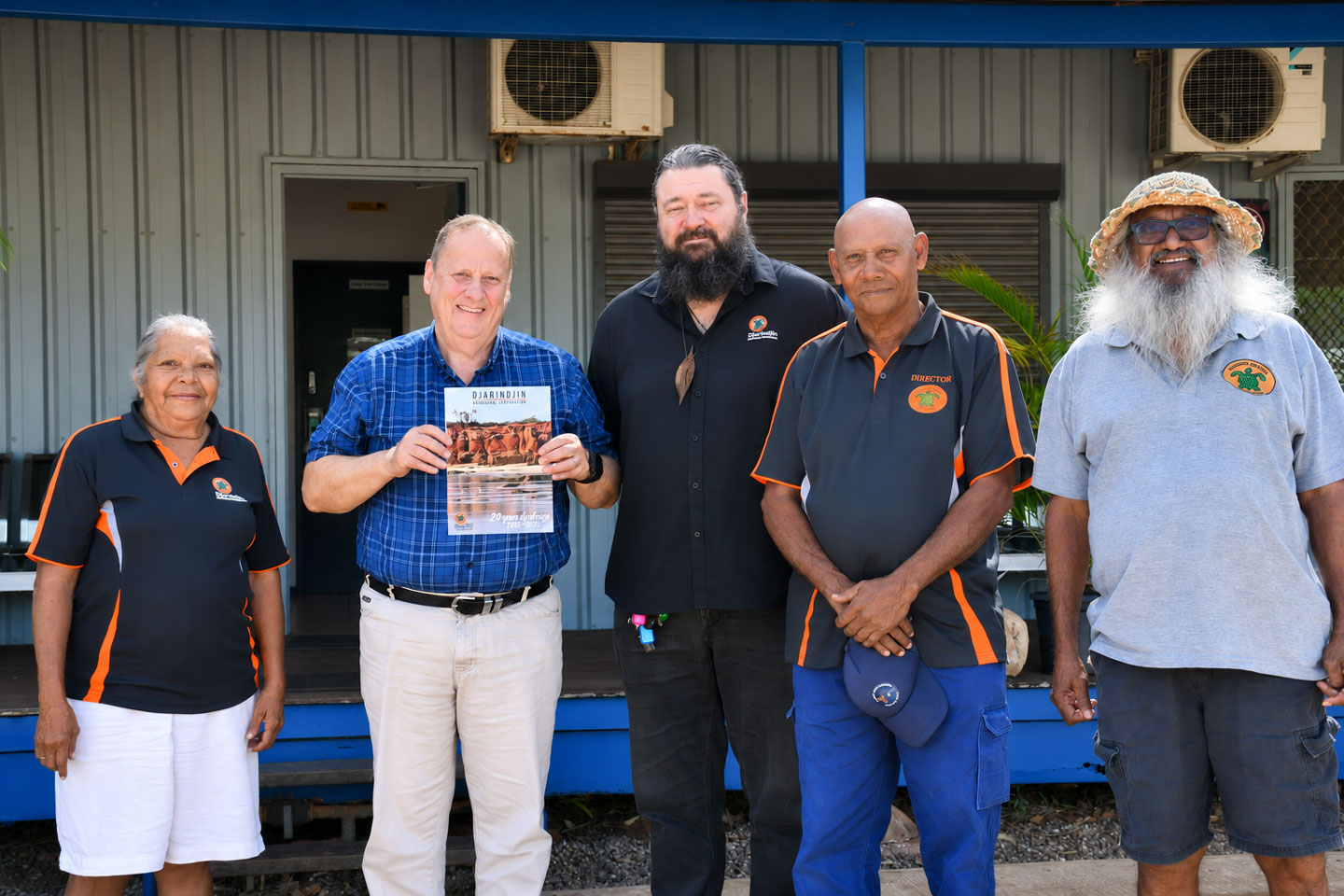
At Djarindjin Aboriginal Corporation, in Western Australia's Kimberley region, we have spent years challenging this contradiction. We are constantly told Aboriginal communities need to build capacity, improve governance, create employment, develop commercial enterprises and reduce their reliance on government funding. But what happens when we actually do? What happens when a community stops waiting for somebody else to determine its future and starts building its own?
We have discovered that the greatest challenge is not necessarily a lack of capability within our communities. It is often the inability of established systems to recognise capability when it does not conform to their expectations.
When Systems Become More Important Than People
For decades, Indigenous Affairs have been managed through disconnected government programs, departments, funding agreements and policies that address individual symptoms without confronting the systems creating them.
Housing sits in one department. Health in another. Employment somewhere else. Education, culture, infrastructure and economic development are treated as separate responsibilities. Yet the person living in the community experiences all these things together.
Australia has become so specialised in managing individual issues that we have lost the common sense required to understand the whole. I call this the disease of complication.
We have created systems so consumed by processes, compliance and institutional boundaries that achieving meaningful outcomes can become secondary to administering the system itself. And when something falls between departmental responsibilities, we hear the familiar response: "That's not our responsibility." But the issue hasn't disappeared. Neither has the person living with its consequences.
Financial Independence Is About Freedom
At Djarindjin, we believe financial independence is fundamental to genuine self-determination. Through our commercial activities, including Djarindjin Airport, we are demonstrating that Aboriginal corporations can operate successful enterprises, generate revenue, create employment and reinvest in their communities.
Our Goolboo Jawal Financial Hub is one example of this philosophy. Rather than waiting for government to establish a program, we recognised a need and committed our own resources to providing financial counselling and support. That is what self-determination looks like.
It is the ability to identify a need, make a decision and respond without constantly seeking somebody else's permission. But financial independence must mean something more profound. It must also provide the freedom to challenge the institutions and policies that have historically controlled our communities.
Speaking Up Is Not the Problem
One uncomfortable reality of working within Indigenous Affairs is that speaking openly about systemic injustice can be perceived as confrontational. We are encouraged to collaborate, but sometimes collaboration means accepting decisions already made.
We are invited to consultation, but consultation rarely guarantees authority. We are told our voices matter, yet those voices are often only welcomed when they align with institutional expectations.
At Djarindjin, we refuse to confuse silence with cooperation. We will challenge policies that perpetuate disadvantage, question decisions that undermine community authority and speak openly when systems fail the people they were designed to serve. Not because we oppose government, business or institutions, but because we believe they can and must do better. Importantly, this is not simply an Indigenous issue. It is a human issue.
When bureaucracy prevents a family from accessing safe housing, when institutional boundaries delay essential services, or when policies become more important than people, the failure is fundamentally one of humanity. These are symptoms of systems disconnected from the people they exist to serve.
The Djarindjin Way: A Different Approach
At Djarindjin, we are not simply challenging the existing system. We are demonstrating an alternative. We call it the Djarindjin Way. At the centre of our 20-year strategic vision sits Binimal Aambooriny, our Strong People and Healthy Living Strategy. Its premise is simple: strong communities require strong people, and strong people need cultural identity, healthy homes, education, employment, financial security and authority over their futures. We call this thinking Beyond the Silos.
Rather than creating disconnected services, we are building an interconnected ecosystem where commercial enterprise, community wellbeing, cultural governance and economic empowerment reinforce one another. Our airport operations, renewable energy ambitions, housing initiatives, financial counselling and community services are not isolated activities. They are connected parts of a larger vision.
Because economic development means little if the people who own the businesses continue experiencing unacceptable living conditions. And community empowerment is difficult without the financial independence to make meaningful decisions.
The Djarindjin Way is not about rejecting partnerships. It is about redefining them through shared authority, genuine collaboration and respect for cultural governance. We do not want to remain perpetual recipients of assistance. We want to be owners, employers, investors, innovators and decision-makers.
Our sovereignty was always here. What has too often been missing is the willingness of others to respect it. Perhaps the real question is no longer whether Aboriginal communities are ready for self-determination. It is whether Australia's institutions are prepared to accommodate it. At Djarindjin, we are not waiting for that question to be answered. We are building our future anyway.